Long Sleeve Bridesmaid Dresses in Australia: Styles for Every Season
Why Long Sleeves Work
Long sleeve bridesmaid dresses have moved well beyond the old idea of “winter-only” wedding wear. In Australia, they make sense for crisp Southern Highlands afternoons, windswept coastal ceremonies, formal city receptions and wedding parties wanting a more polished silhouette. They also offer a useful middle ground: more coverage than a strapless or spaghetti-strap dress, while still feeling light and celebratory if the fabric is chosen well.
The appeal is partly practical. A ceremony that starts at 3 pm can be warm in the sun and noticeably cooler by 6 pm, especially from April to September. Sleeves remove the scramble for mismatched wraps in the group photos. More importantly, they help bridesmaids feel at ease. A dress that lets someone lift a glass, hug family and walk down uneven grass without tugging at the bodice is usually the dress that photographs best.
Long sleeves can also bring balance to a wedding look. A high neckline with a sheer sleeve feels refined without being severe. A deep V-neck with soft blouson sleeves adds romance but still gives structure. For a wedding with black-tie leanings, a clean fitted sleeve can make a simple floor-length dress look deliberate rather than plain. Browse the wider bridesmaid dress collection first, then narrow the shortlist by sleeve and fabric rather than trying to choose everything at once.
There is no rule that every attendant must wear an identical cut. One person may feel brilliant in a fitted cuff while another needs a looser bishop sleeve. Keeping the same colour and fabric family makes the group look coordinated, not uniformed. That distinction matters, particularly in photos taken from the side, where sleeve volume and bodice shape are much more obvious than people expect.
Choosing Your Dress
Start with the wedding setting and date, not a saved social post. A satin long sleeve dress may suit an evening reception in Melbourne, but it can feel heavy at a humid Queensland ceremony. Conversely, a lightweight chiffon dress can look floaty in photos but may leave everyone cold at an exposed autumn vineyard. The goal is not maximum coverage. It is an outfit that works from ceremony to dance floor.
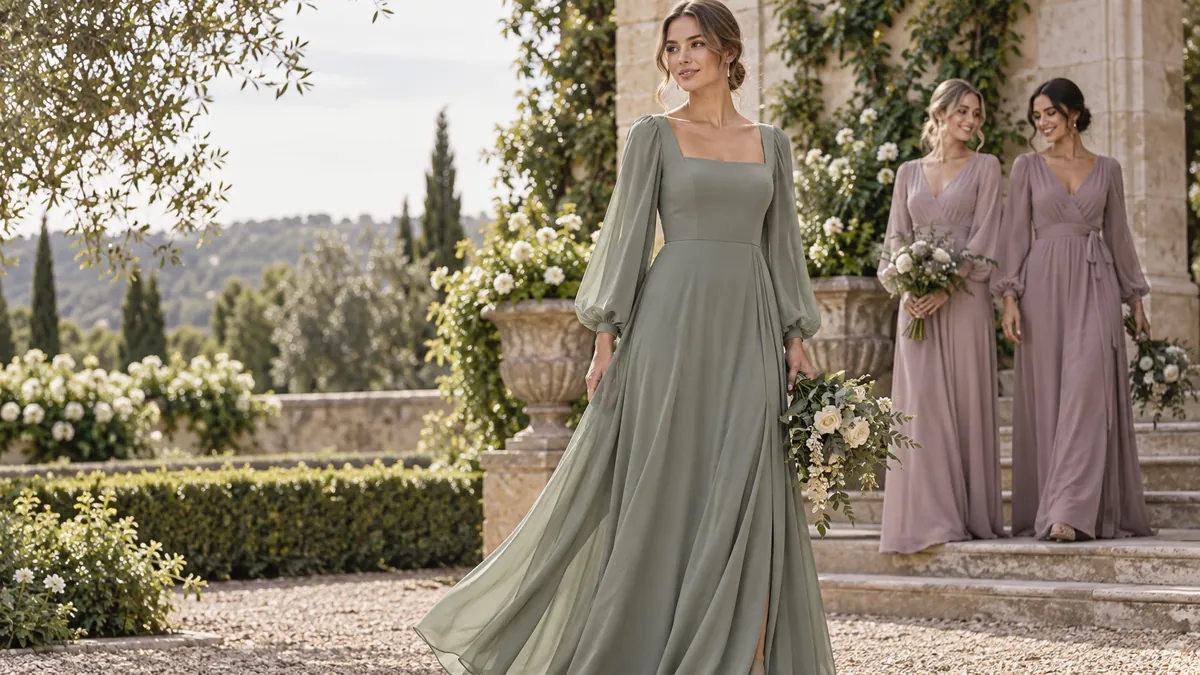
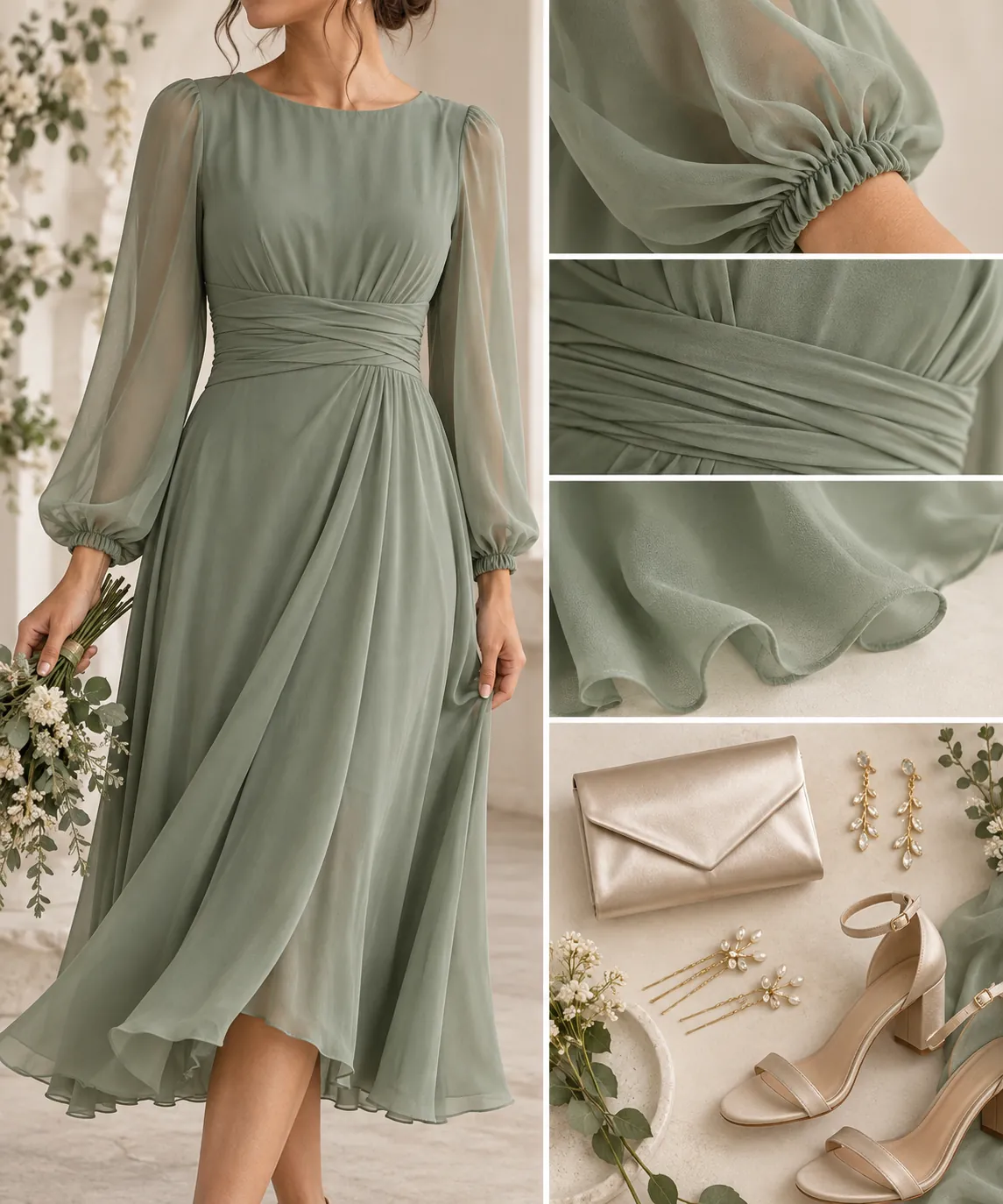
Then consider proportion. Fitted sleeves tend to suit sleek, minimalist dresses and work neatly under coats if the weather turns. Bishop sleeves are fuller through the arm and gather at the wrist, creating softness around a simple skirt. Fluttering chiffon sleeves are forgiving and move beautifully in a breeze, though they should be checked during fittings to make sure the cuff does not sit too low on the hand. Sheer lace sleeves add detail, but the lace tone should be compared beside the chosen dress colour in daylight.
Neckline and sleeve need to cooperate. A high neck plus a heavy long sleeve can look wonderfully dramatic for a formal winter wedding, but it may feel overly closed-in for a daytime garden ceremony. A square neck, V-neck or wrap bodice gives a long sleeve design some visual breathing room. If the bridal party has different body shapes, choose one feature to keep consistent, such as the skirt length, colour or fabric, and let the neckline vary within that framework.
Colour deserves its own practical check. Deep tones often make a long sleeve silhouette look especially elegant. A black bridesmaid dress is sharp for evening weddings and can be re-worn after the day, while a blue bridesmaid dress offers everything from soft dusty hues to rich navy. For spring or relaxed summer celebrations, a blush bridesmaid dress keeps the mood light, particularly with a sheer sleeve rather than an opaque one.
It is worth asking every bridesmaid to sit down, reach forward and raise both arms during a try-on. That sounds obvious, yet it catches tight underarms, restrictive linings and cuffs that slip over the knuckles. A dress should look lovely standing still, but weddings are long days. Nobody wants to spend 10 hours carefully negotiating a sleeve.
Styles and Fabrics
The strongest long sleeve bridesmaid looks usually come from fabric choices that suit the season. Chiffon is the easy favourite for a reason: it is light, drapes well and makes a sleeve feel airy rather than covered up. It works beautifully for late spring, summer evenings and early autumn. Look for a lined bodice and a sleeve that is intentionally sheer, rather than a dress that simply has a thin, unlined construction everywhere.
Satin has more sheen and structure. It is a great option for evening weddings, restaurants, galleries and formal hotel venues. A satin sleeve is more noticeable than chiffon, so it suits a clean silhouette, a simple cuff and jewellery that does not compete. Wrinkles can show, especially in pale colours, so allow enough time to steam the dresses before photographs. This is not glamorous admin, but it makes a difference.
Crepe and matte stretch fabrics are excellent for a tailored look. They tend to skim rather than cling and are often easier to wear across a broad mix of body types. A long crepe sleeve with a modest shoulder line can look modern in black, olive, navy or chocolate tones. Velvet has a place too, particularly for winter receptions, although it is best kept for genuinely cool conditions. It photographs richly under evening light but is not a fabric to put on a bridal party during a 31-degree outdoor ceremony.
For something softer, lace or mesh sleeves add texture without much bulk. They are especially useful if the bride wants a classic mood but does not want every dress to feel vintage. Keep the rest of the dress restrained. Detailed lace sleeves, a beaded belt, statement earrings and dramatic shoes all at once can tip from elegant to overly busy very quickly.
Accessories should support the dress, not fight it. A fine earring, small clutch and comfortable shoe are often enough. The bridal party accessories collection is a useful place to coordinate finishing details once the dresses are confirmed. For the getting-ready photos, matching blue and navy bridesmaid robes can complement a cooler palette without becoming part of the ceremony outfit.
Before You Buy
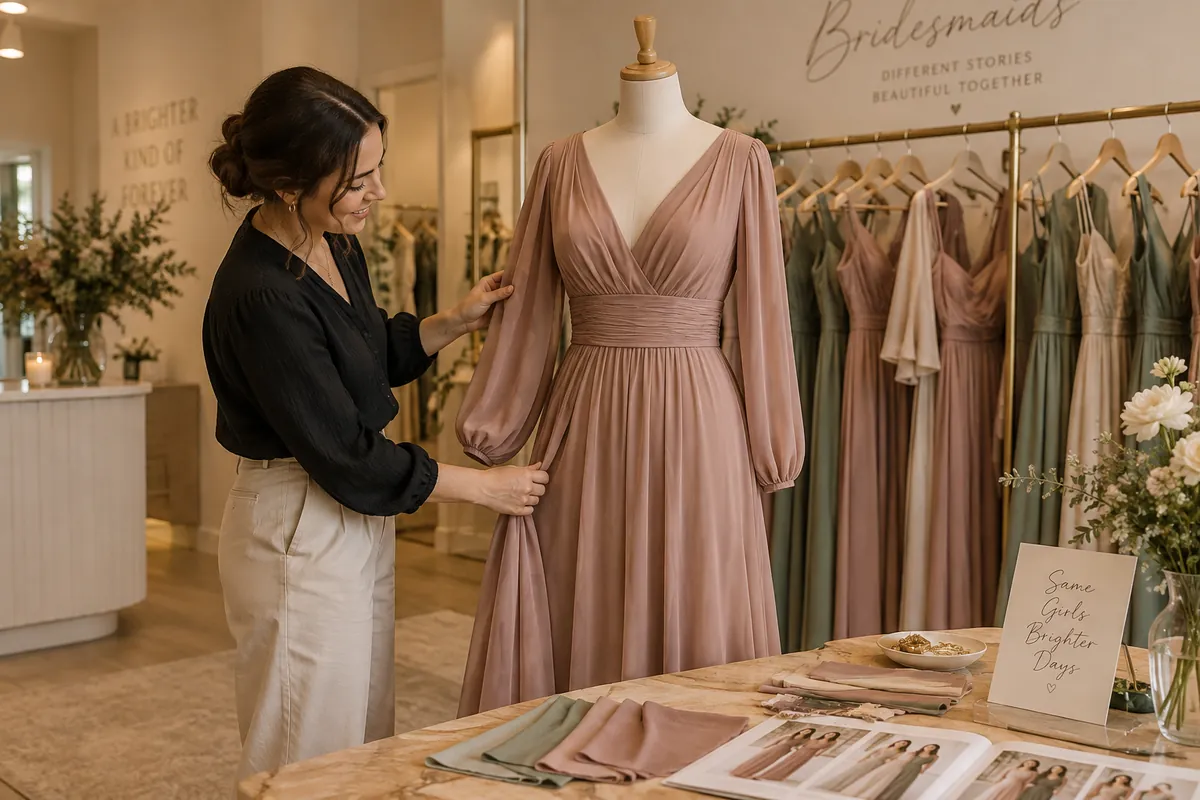
Ordering early is the kindest thing a bridal party can do for itself. Aim to settle the dress direction before shoes, jewellery and hair trials, because the sleeve and neckline affect every one of those decisions. A fitted wrist cuff may make stacked bangles impractical. A high neck might call for an updo. These are small choices, but they create a calmer final month.
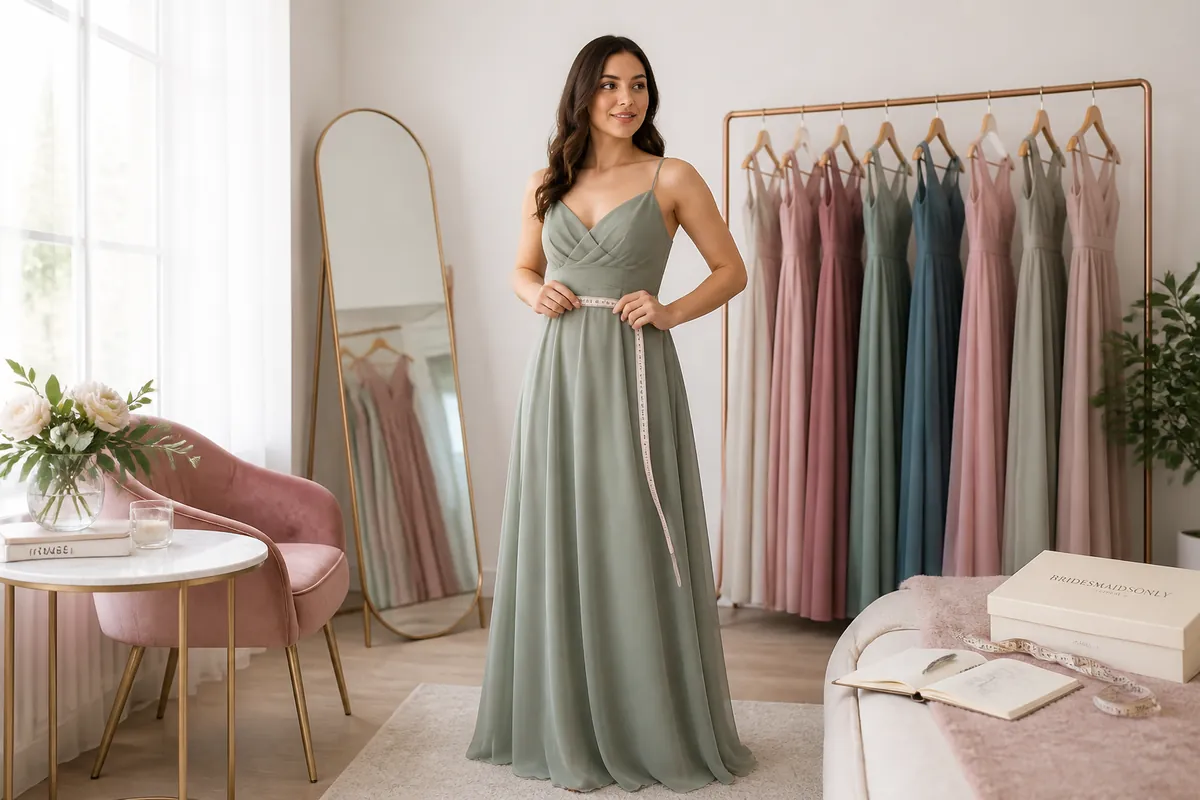
Use each person’s current measurements and compare them with the size guide rather than relying on their usual Australian clothing size. Formal dress sizing varies, and choosing the size that fits the widest measurement is normally safer. A tailor can take in a waist or hem a skirt far more easily than they can create extra room at the shoulder or bicep. Leave time for one fitting after alterations, especially if sleeves have been adjusted.
Check the lining and closure details. A sheer sleeve can be comfortable while an unbreathable bodice lining is not. Invisible zips should lie flat, buttons should be secure, and the seam under the arm should not rub. If the ceremony is outdoors, consider how the skirt moves in wind and whether the fabric becomes sheer in direct sunlight. A quick phone photo outside is often more revealing than a fitting-room mirror.
Budget is not just the listed dress price. Include alterations, undergarments, shoes and possible postage. A carefully selected option from the affordable bridesmaid edit can leave room for professional hemming and still feel considered. It is also sensible to check the sale selection if your group has flexible colour preferences or a short timeline. A lower price is only a bargain if every bridesmaid can get a size and the dress works for the setting.
Wedding planning sources consistently recommend thinking about the comfort of the people wearing the clothes, not only the finished colour palette. Brides’ guide to bridesmaid dress etiquette is a helpful reminder that practical communication with the group is part of good planning. In plain terms: send the options, share the budget early and listen if a sleeve style does not work for someone.
Expert Tips
Choose the sleeve after choosing the fabric. This is the shortcut that avoids many expensive near-misses. A bishop sleeve in chiffon looks soft; the same volume in satin can look theatrical. A slim sleeve in crepe feels tailored; in very thin mesh it can look like an afterthought. Ask for photos of the exact style in motion if possible, not only posed studio images.
For Australian seasons, keep the approach simple. In summer, choose sheer sleeves, breathable lining and open necklines. In autumn, chiffon over a lined bodice gives enough coverage without too much warmth. Winter welcomes crepe, satin and velvet, plus closed-toe shoes if that suits the wedding. In spring, floral-toned colours and light sleeves work well, but do not assume spring means warm weather. Canberra and the Yarra Valley have fooled plenty of optimistic bridesmaids.
Build a visual reference that includes full-length photos, close-ups of cuffs and a picture of the venue. The advice from Martha Stewart’s bridesmaid dress planning guide aligns with what experienced bridal parties learn quickly: consistency does not require identical dresses. A united palette, length and level of formality can be more flattering than forcing one cut onto everyone.
Finally, plan the wedding morning around the dresses. Long sleeves should go on after hair and most makeup to avoid foundation marks and sleeve creasing. Button-front robes or pyjamas make this much easier. If you are organising a matching pre-ceremony look, the bridesmaid pyjamas collection keeps that separate from the dresses, which is exactly how it should be.
FAQ
What is the best long sleeve bridesmaid dresses Australia?
The best choice depends on the season, venue and comfort of the bridal party. For most Australian weddings, a lined chiffon or crepe dress with a soft long sleeve gives a polished look without feeling too heavy.
Which long sleeve bridesmaid dress is right for me?
Consider the wedding weather first, then test the neckline, sleeve fit and skirt movement in person. Choose a size based on measurements, and make sure you can sit, raise your arms and move comfortably before committing.
What should I look for in a long sleeve bridesmaid dress?
Look closely at fabric weight, lining, sleeve construction and the alteration options. Check how the colour appears outdoors, confirm the delivery and fitting timeline, and allow room in the budget for hemming if needed.
Are there budget-friendly long sleeve bridesmaid dresses?
Yes. Simple chiffon, crepe and matte-finish styles often give the most versatility for the price, especially in colours the bridal party can wear again. Sale and affordable collections are worth checking, but confirm that all required sizes are available before choosing a style.