How to Measure Yourself at Home for an Online Bridesmaid Dress Order
What Measuring Yourself Really Means
When you buy a bridesmaid dress online, there’s no fitting room and no shop assistant pinning fabric at your waist. The tape measure does that job instead, and it only works if you use it properly. Measuring yourself for a bridesmaid dress means recording your actual body measurements in centimetres, not guessing at your usual dress size from Cotton On or Zara, because bridesmaid gowns are cut on a completely different block.
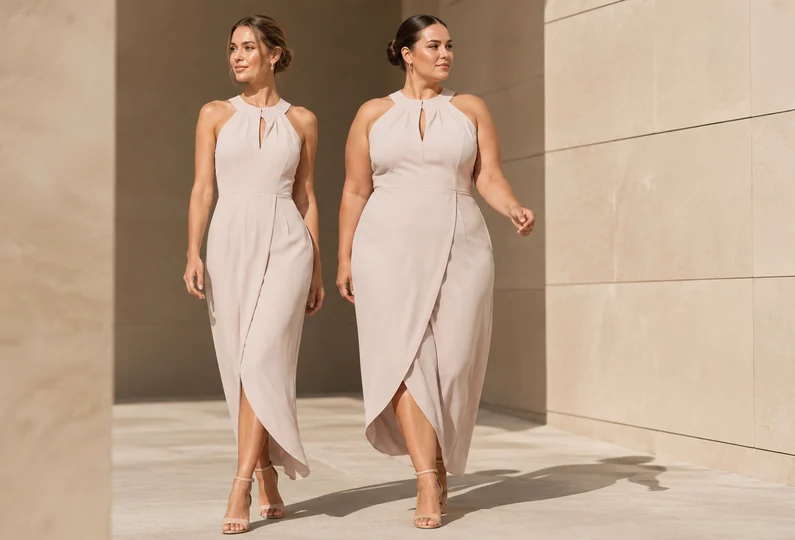
This matters more than most brides-to-be expect. A bridal party is usually made up of women with different body shapes wearing the same style in the same fabric, and the dress has to look intentional on all of them, not just okay. If one bridesmaid orders a size based on her regular jeans size and another measures properly, you end up with a lineup where the fit is inconsistent in every photo. Accurate measurements are what make six or eight very different bodies look like a matching set.
There’s also a practical reason: reordering takes time. Most made-to-order bridesmaid dresses need four to twelve weeks depending on the style and whether alterations are involved. Get your measurements wrong, and by the time the wrong size arrives, gets sent back, and a replacement is cut, you could be down to a fortnight before the wedding with no room for a second mistake.
How to Take Your Own Measurements
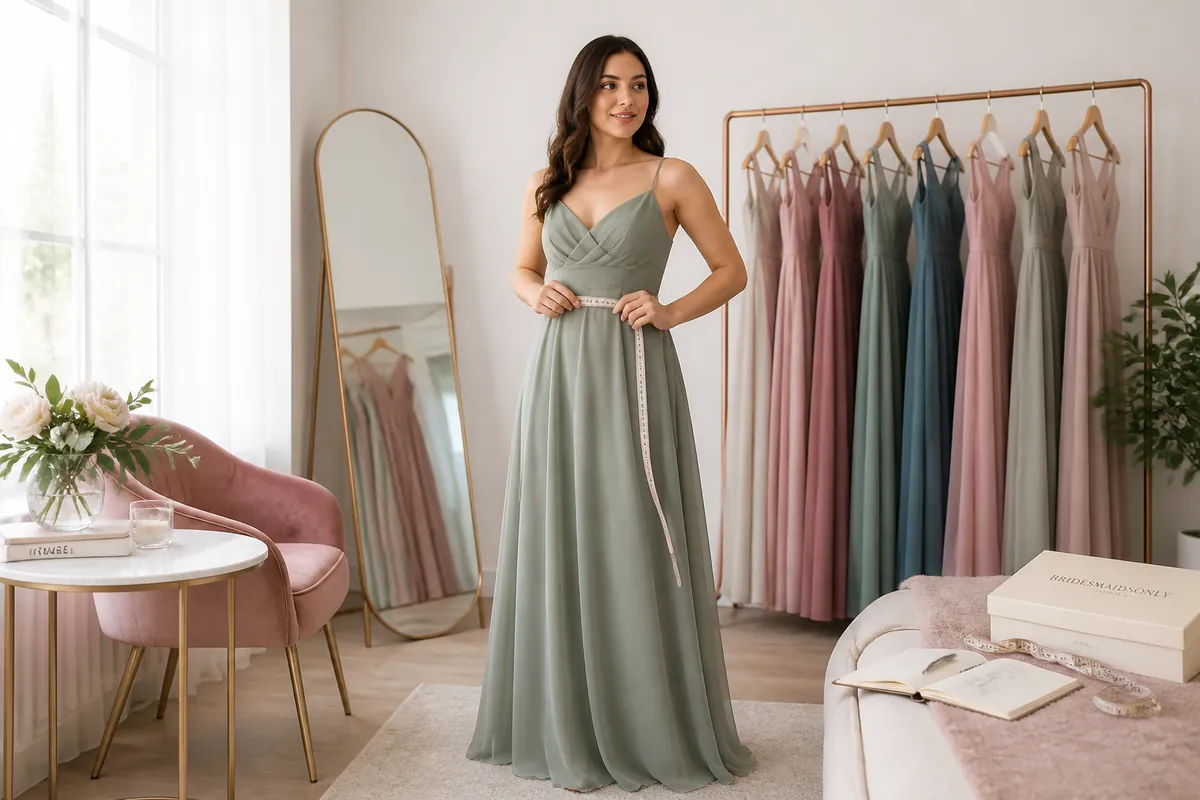
You need three things: a soft fabric tape measure (not the metal kind from the toolbox), a mirror, and ideally a second person to help, because measuring your own back accurately is genuinely awkward. Wear the underwear and shapewear you’d actually wear under the dress, since a different bra can shift your bust measurement by a couple of centimetres either way.
Bust
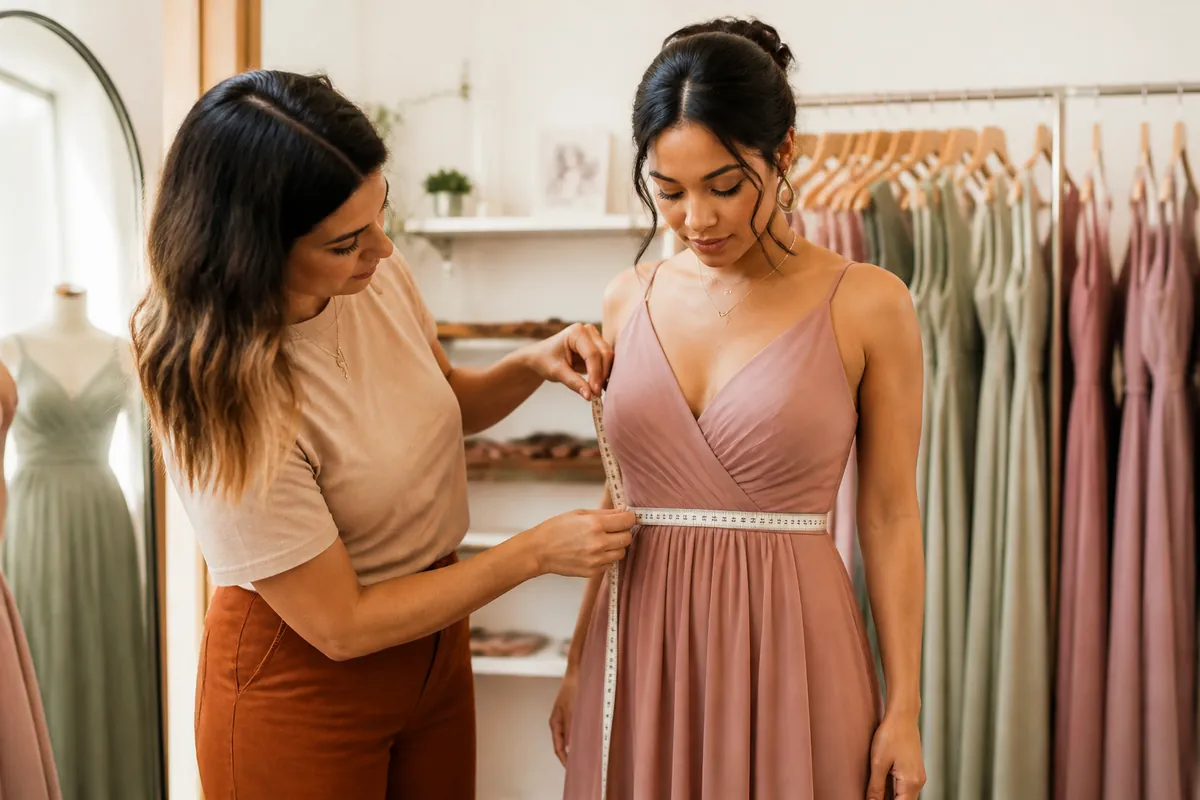
Wrap the tape around the fullest part of your bust, keeping it parallel to the floor. Don’t pull it tight, just snug enough that it sits flat against your skin without compressing anything. Breathe normally and take the reading at the end of a normal exhale.
Waist
Find your natural waist, which is the narrowest point above your belly button, roughly where you’d tie a sash. Most people guess too low here and measure at hip level by mistake, so bend slightly to one side and the crease that forms marks your natural waist.
Hip
Stand with your feet together and measure around the fullest part of your hips and bottom, usually about 20cm below your natural waist. Keep the tape level all the way round, checking in a mirror if you can, because it’s easy to let it ride up at the back.
Hollow to hem
This is the length measurement, taken from the small hollow at the base of your throat, straight down over your bust, to wherever you want the hem to fall, whether that’s floor length or ankle. It’s the one measurement people skip most often, and it’s the one that determines whether alterations are needed at all.
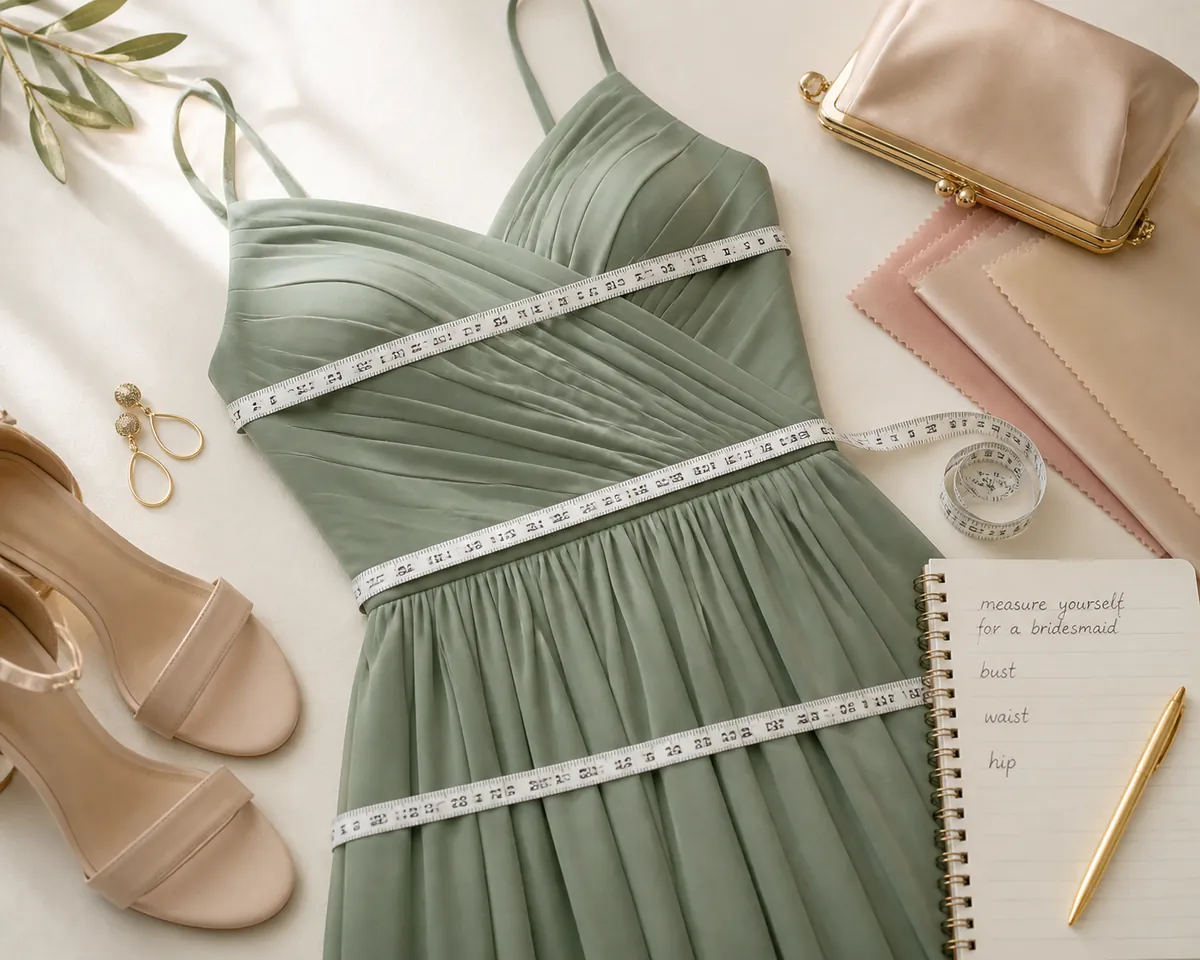
Write every number down in centimetres and round to the nearest half centimetre. Round up rather than down if you’re between two sizes on a bridesmaid dress size chart, since taking a dress in is far easier than letting a dress out.
Top Styles and What They Need
Not every silhouette forgives the same mistakes. A structured mermaid gown will show a measuring error within a week of wear, while a flowy chiffon A-line hides a lot more.
Fitted and bodycon styles sit close to the body from bust to hip, so your waist measurement needs to be spot on, and it’s worth double-checking it against your bust and hip numbers to make sure nothing was pulled too tight or left too loose. Browse the full bridesmaid dress range to see how fitted styles are cut compared with looser ones before you commit to a measurement approach.
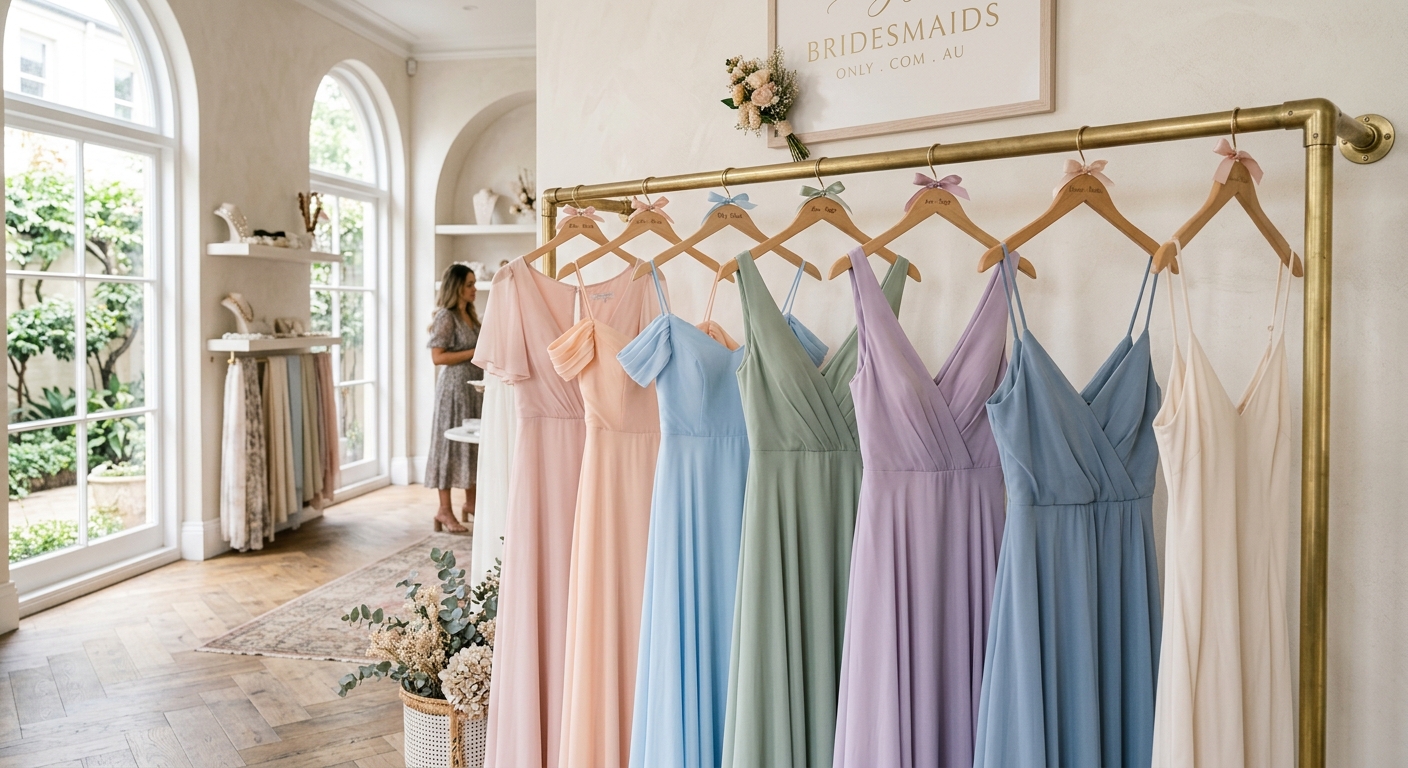
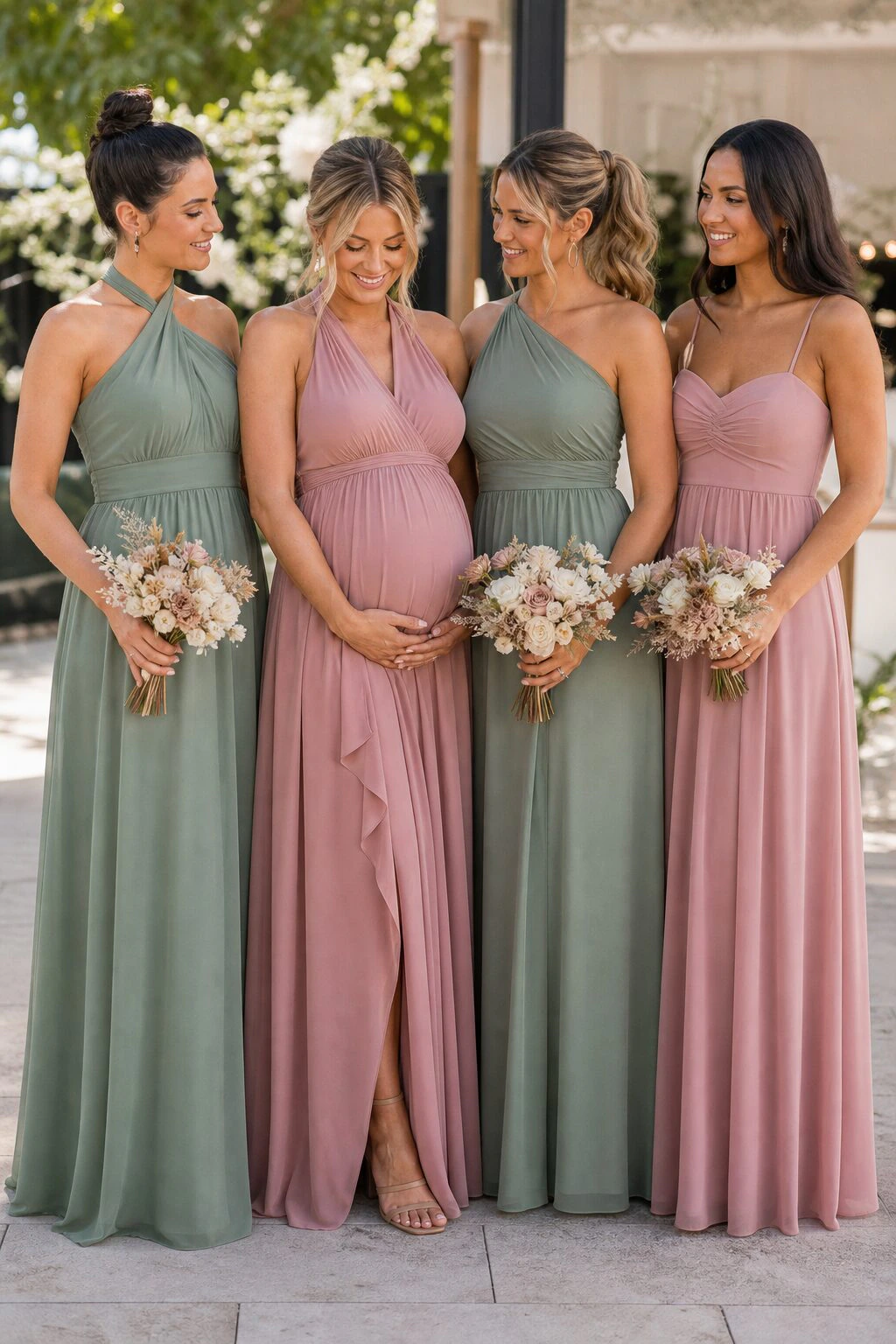
A-line and empire waist dresses are more forgiving through the middle since the fabric skims rather than clings, but the hollow-to-hem measurement becomes critical because there’s more fabric to get wrong. These are a solid pick if your bridal party has a wider range of body shapes, and they’re well represented in the blush bridesmaid dresses and blue bridesmaid dresses collections.
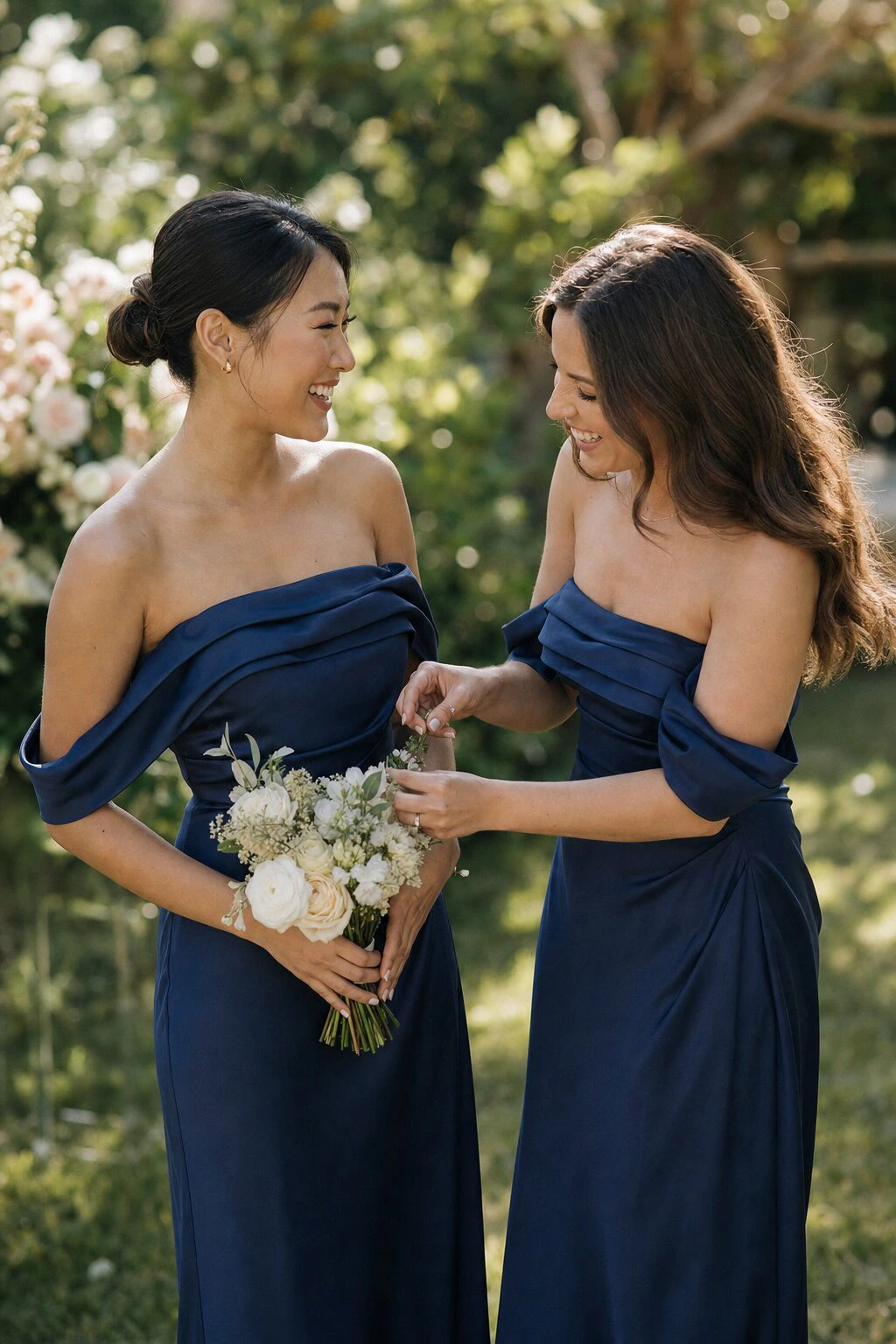
Off-the-shoulder and strapless designs rely on your bust and upper back measurements holding the dress in place without a strap doing the work, so measure with the exact bra or bustier you’ll wear on the day. If you’re going for a darker palette for an evening wedding, the black bridesmaid dresses collection has several structured options where this matters most.
Don’t forget what goes on before and after the dress goes on. A lot of brides now sort out matching bridesmaid robes for getting-ready photos, and comfortable bridesmaid pyjamas for the morning of, both of which use much simpler sizing than the gown itself, so they’re a good starting point if measuring feels daunting.
What to Consider Before You Buy
Every brand runs its own size chart, and there’s no industry standard, so a size 12 on one site can be a size 10 or a size 14 on another. Always measure against the specific chart for the dress you’re ordering rather than assuming your measurements from a previous order still apply. This catches out even bridesmaids who’ve done this before.
Check whether the dress is made to order against your exact measurements or produced in standard sizes that you then choose from. Made-to-measure removes most of the guesswork but takes longer to arrive, while standard sizing ships faster but usually needs a tailor afterwards for a proper fit. Either way, budget for alterations. Even a well-measured dress often needs a hem taken up or straps adjusted, and that’s normal, not a sign you measured wrong.
Think about the whole day, not just the ceremony. If your dress has a fitted bodice, check what you’ll wear underneath it early rather than the night before, and have a look through the accessories range for slips, jewellery, and shapewear that pair with your size. If budget is a factor across a bigger bridal party, the affordable edit is worth checking before you assume the style you want is out of reach.
Order timing matters as much as the measurement itself. Get everyone’s numbers in at once if you’re coordinating a group, because dyelots can vary between production runs, and a bridesmaid who measures three weeks after everyone else might end up in a slightly different shade of the same colour.
Tips from the Experts
Bridal stylists repeat the same handful of pieces of advice, and they’re worth taking seriously because they come from watching thousands of fittings go right and wrong. The Knot’s bridal styling team consistently recommends measuring in the evening rather than first thing in the morning, since most bodies shift slightly through the day and an evening measurement tends to reflect how the dress will sit for most of a wedding day.
Get someone else to hold the tape wherever possible. Even experienced stylists at Brides note that self-measuring the back and shoulder area is the single biggest source of error, simply because you can’t see what you’re doing and tend to twist while reaching around.
Measure twice on different days if you can. Bodies fluctuate with hydration, the time of the month, and even how much you’ve eaten, so a single reading taken on a bad day can throw off a whole order. Fashion sizing guidance from outlets like Vogue generally treats a two centimetre buffer as normal rather than a red flag, so don’t panic if your two measuring sessions aren’t identical to the millimetre.
Finally, don’t round to a size you’re emotionally attached to. Stylists see this constantly: someone measures accurately, gets a number that says “size 14”, and orders a 12 anyway because that’s what they usually wear. The tape doesn’t care what you usually wear, and a dress that’s cut for your actual measurements will always photograph better than one that’s technically the “right” size but pulling at the seams.
Frequently Asked Questions
What’s the best way to measure yourself?
Use a soft fabric tape measure, wear the undergarments you’ll actually wear with the dress, and get a second person to help with the back and shoulder measurements. Record your bust, waist, hip, and hollow-to-hem length in centimetres and check them against the specific brand’s size chart, not your usual clothing size.
How do I pick the right dress size?
Compare your actual measurements against the size chart for that exact dress style, since sizing varies between brands and even between styles from the same brand. If your measurements fall between two sizes, size up, because taking a dress in is a much simpler alteration than letting one out.
What should I check before buying online?
Check the specific size chart, the estimated production and delivery time, and the return or exchange policy before you order. Also check whether the dress is made to your exact measurements or shipped in a standard size, since that changes how much room you should leave for alterations.
Are there budget-friendly bridesmaid dresses?
Yes, there are plenty of well-made options that don’t require a big budget, particularly if you shop a curated affordable range rather than browsing everything at once. Ordering the correct size the first time is itself a budget move, since it avoids paying twice for shipping, returns, and rush alterations.