Mix-and-Match Bridesmaid Dresses on a Budget: Colours That Work at $49
Why Mix and Match Works
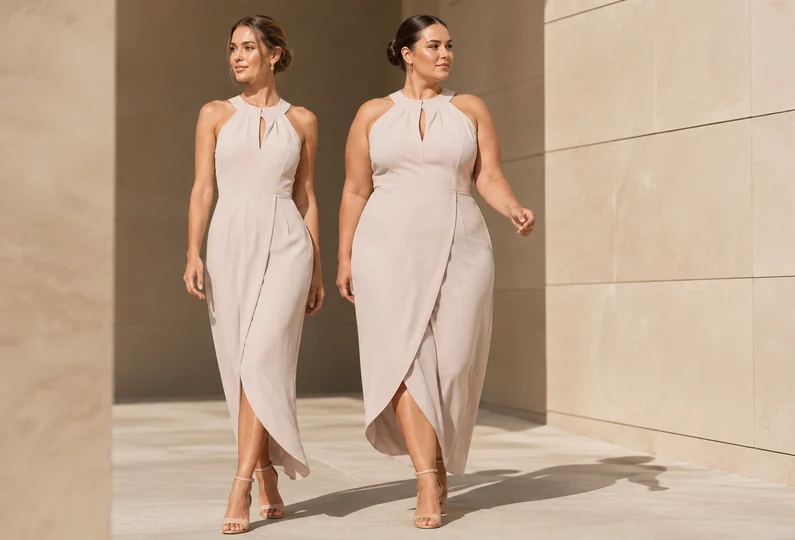
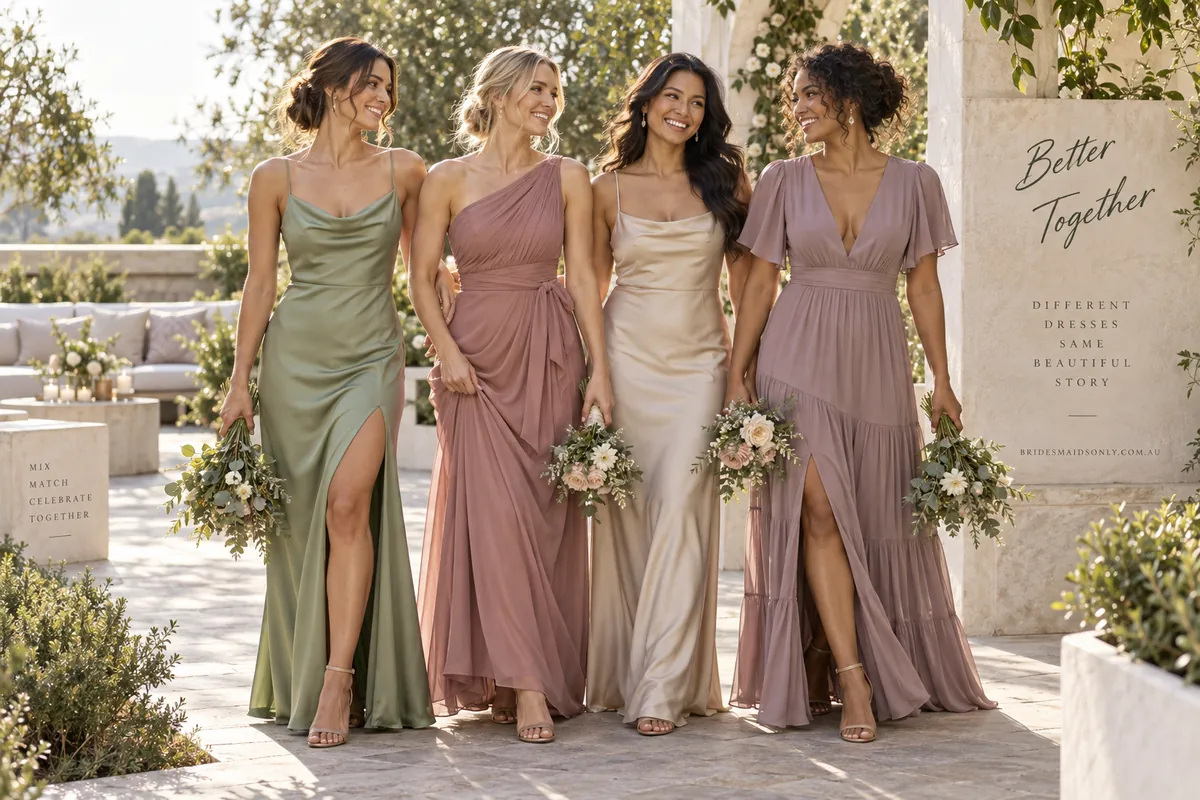
Mix and match bridesmaid dresses are exactly what they sound like: your wedding party wears different dresses that still belong together. That might mean one colour in several necklines, three shades of blue in the same fabric, or a group where every person chooses a silhouette that suits them. Done well, it looks considered. Done without a plan, it can look like everyone got dressed for a different wedding.
The budget version is especially useful because it avoids the expensive habit of making every person fit a single dress. A strapless gown might suit one bridesmaid beautifully and leave another spending extra on alterations, a supportive bra and a layer she does not want. Giving people a few approved options can reduce those add-on costs. The $49 goal is not about making the party look cheap. It is about putting the money into the details guests will actually notice, such as fit, fresh steaming and a colour story that makes sense in the photos.
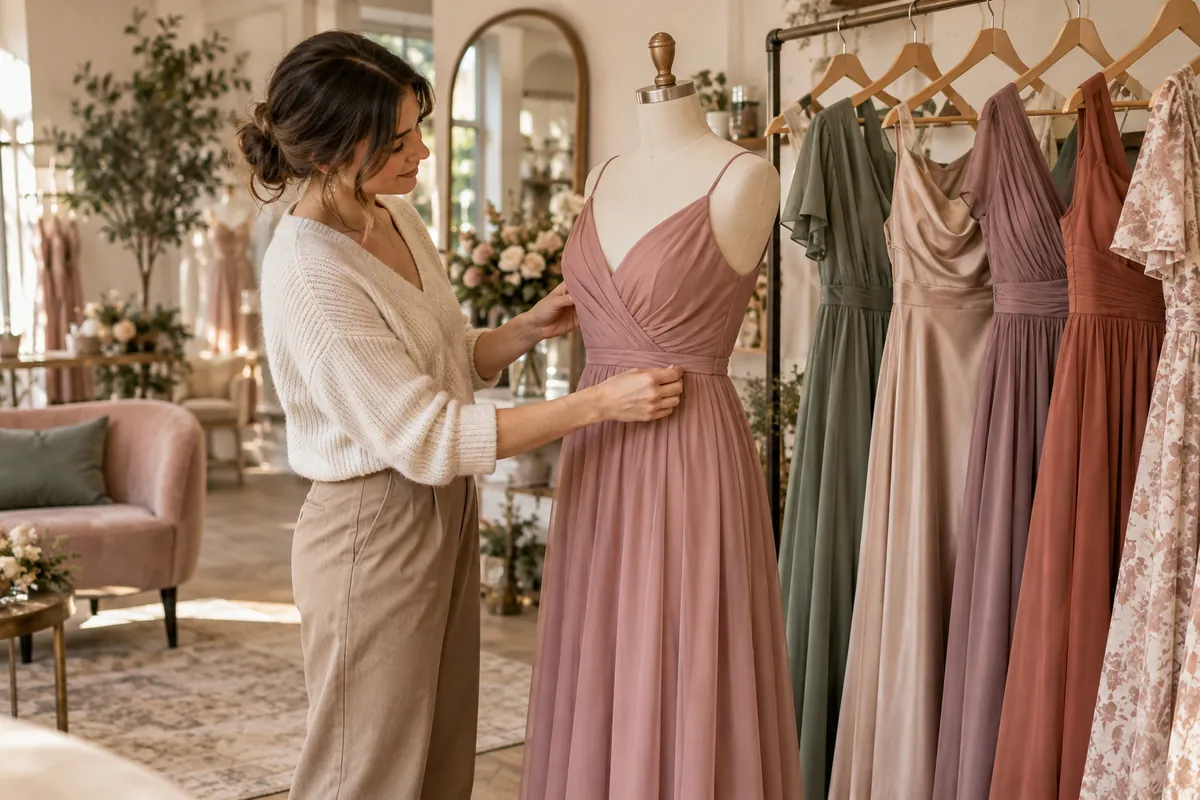
Start by browsing the bridesmaid dress collection with a notebook beside you. Save dresses by colour, length and fabric rather than trying to choose the final line-up in one sitting. You will quickly see which combinations feel calm and which ones compete with each other.
There is also a people benefit here. Your friends are more likely to be comfortable, move freely and rewear a dress if they have some say in it. That matters during an eight-hour wedding day. A coordinated group does not require clones.
Choosing Your Colours
The simplest budget formula is one colour, three silhouettes. It is easy to shop, forgiving in photographs and unlikely to create arguments in the group chat. Navy, dusty blue, black and blush are practical starting points because they work across seasons and suit a broad range of complexions. If your ceremony is outdoors, look at the venue at roughly the same time of day as the wedding before settling on the final shade. A pale colour that looks lovely indoors can disappear against bright sand or a cream stone wall.
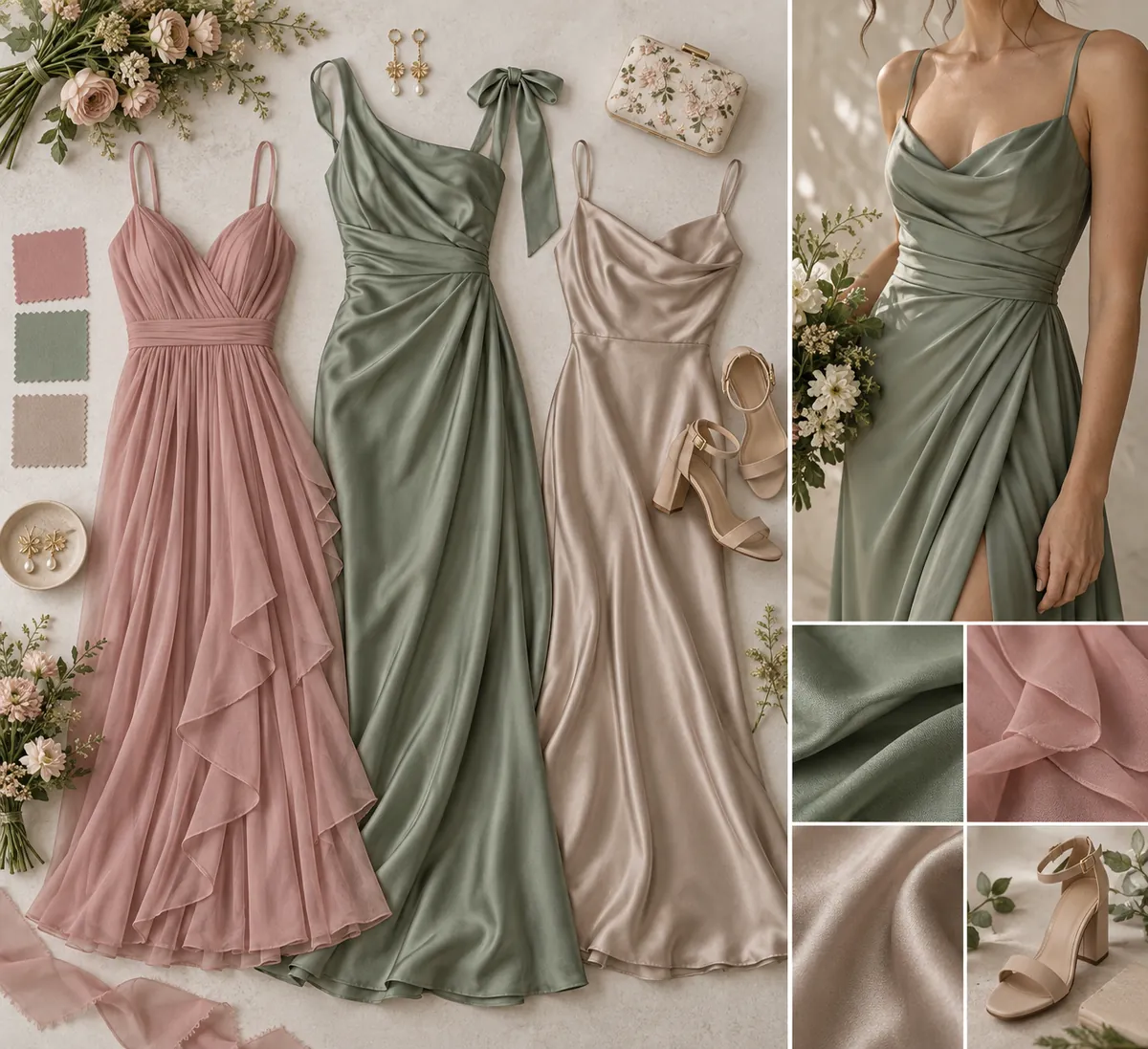
If you want several colours, use tones with the same depth. Think slate, steel blue and navy, rather than pale sky blue, royal blue and teal. They may all be called “blue”, but they do different jobs. The same applies to pink: blush, rose and muted mauve sit together more easily than blush and a bright candy pink.
A good test is to place swatches on a plain white screen or table. Remove the bouquet, jewellery and venue photos for a minute. If the dresses already look balanced on their own, the extras will only help. If one shade shouts over the others, it will do it in every group photograph too. For blue-led palettes, the blue bridesmaid dress range is a useful place to compare the family before narrowing your choices.
Black deserves a mention. It is a strong budget-friendly choice because accessories are easy to source, it tends to be rewearable, and minor differences between styles look intentional. A wedding party in black can still feel soft with seasonal flowers, warm metallic jewellery or textured bouquets. Browse black bridesmaid dresses if you want the cleanest possible mix-and-match base.
Use one anchor colour
Choose one anchor colour that at least two bridesmaids will wear, then add one or two neighbouring shades. For four bridesmaids, try two in navy, one in muted blue and one in slate. For six, repeat the shades rather than introducing six separate colours. Repetition is what makes the arrangement read as a group.
Keep the bouquet honest
Your flowers should support the dresses, not rescue them. White and green bouquets are the easiest partner for a varied palette. If the dresses are warm-toned, use foliage, cream and restrained peach or rust accents. If the dresses are cool-toned, soft white blooms and silver-green foliage are hard to beat. Wedding planning guidance from The Knot’s mismatched bridesmaid dress ideas also favours a defined palette over a free-for-all, and that is sound advice.
Styles That Work Together
Once colour is sorted, decide which variable can change. On a $49 budget, changing everything at once is where the look becomes harder to control. Pick one stable element, then let one other element vary.
Option one is same colour, different necklines. This is the safest choice for a mixed group. A V-neck, cowl neck, flutter sleeve and one-shoulder dress can work side by side if their hems are similar and the fabric has the same finish. It gives each person room to choose a shape they feel good in without breaking the visual line.
Option two is same fabric, different shades. This works particularly well for relaxed garden weddings and coastal venues. Satin should stay with satin, chiffon with chiffon, and matte jersey with matte jersey. Mixing a high-shine satin dress with a flat crepe dress can look accidental even if the colours match perfectly.
Option three is the same length, mixed silhouettes. Midi or full-length dresses are easier to coordinate than a mixture of mini, midi and maxi. If someone needs a longer hem, that is different. The point is to make the exception deliberate, not to force an arbitrary rule.
The affordable edit is a sensible first stop for building a short list. Look for pieces that can work with shoes already owned, modest alterations and one shared accessory choice. A $49 dress stops being a $49 dress if it needs $140 worth of fixes.
Three reliable combinations
Blue tones with varied necklines: Choose navy, slate and dusty blue, keeping the hem length consistent. It works in nearly every season and photographs well against greenery.
Blush tones with one fabric: Pick soft blush, rose and muted mauve in a matte fabric. The blush bridesmaid dress range can help you compare shades before committing.
Black dresses with matching accessories: Let each person choose an approved black shape, then tie the group together with the same metallic jewellery, bouquet ribbon or shoe colour. It is quietly stylish and very forgiving if a late replacement is needed.
Before You Buy
Set the actual spend limit before you send links. Be direct: “The dress target is $49, and please tell me before ordering if your size or required alteration changes that.” It is kinder than pretending the number is flexible and leaving people to quietly absorb extra costs.
Check measurements rather than relying on usual Australian sizing. Ask each bridesmaid to measure bust, waist and hips in light clothing, then use the size chart for the selected style. If someone sits between sizes, buying for the largest measurement is usually the safer call because taking a dress in is generally simpler than trying to create extra room. Leave enough time for try-ons, exchanges and hemming. The ideal schedule is not glamorous, but it works: choose the palette early, confirm styles about four months out, and have dresses in hand at least eight weeks before the wedding.
Watch fabric and undergarments closely. A thin, pale satin dress may need smooth, skin-toned underwear; a backless style may need a specific bra solution; a halter might require a different strap arrangement. These practical details are more important than a clever Pinterest board. Advice from Martha Stewart’s guide to mismatched bridesmaid dresses similarly stresses cohesion through a shared element, not identical styling.
Build a tiny contingency fund if you can. Even $20 to $30 per person covers a replacement earring, a hem tape emergency or a last-minute shade mismatch. For dresses already reduced, look through the sale selection early, not in the final fortnight. Sale stock can be brilliant for a budget, but it is rarely the place to depend on a particular size returning later.
Finally, avoid adding matching getting-ready pieces to the dress budget unless everyone wants them. If you do want that morning photo moment, choose a colour that supports the palette, such as blue and navy robes, rather than treating it as another compulsory cost.
Tips From Wedding Experts
Experienced stylists tend to make one decision early: whether the wedding party should look tonal, tonal-plus-texture, or deliberately contrasted. For a $49 dress target, tonal wins almost every time. It gives you the most flexibility if a style sells out, a bridesmaid needs a different cut, or a replacement arrives close to the date.
Make a one-page visual brief. It does not need professional design. Include the approved colours, length range, fabric rule, shoe direction and two or three dress examples. Add a line saying what is not approved, such as high-shine fabric, prints, mini lengths or bright white accessories. This saves a dozen confusing messages later.
Ask each person for their preferred neckline and any non-negotiable comfort needs before you shortlist. Some people will want sleeves, bra support, coverage at the back or room through the hips. These are not difficult requests; they are useful information. A good wedding party photograph has people standing naturally, not holding their breath for the camera.
Keep accessories restrained. Matching earrings can be enough, and the bridesmaid accessories collection is useful for finding a simple repeated finish. If dresses vary in colour, avoid adding different necklaces, different wraps and different shoes as well. One point of variation looks intentional. Four points look busy.
For extra confidence, photograph the chosen dresses together in daylight before tags come off. Use a phone, stand everyone in a loose line and take one photo in shade and one in direct but soft light. You are checking colour balance, hem rhythm and whether one dress has a noticeably different sheen. This five-minute test can prevent a costly surprise on the wedding morning.
Remember that “matching” is not a measure of friendship. The goal is a group that looks good together and feels like itself. Brides regularly features wedding parties with varied dress shapes for precisely this reason: a shared palette provides enough structure, while individual fit keeps the result modern and comfortable.
FAQ
What is the best mix and match bridesmaid dresses budget?
A practical target is the dress price plus a small allowance for alterations or accessories, rather than treating the ticket price as the whole cost. For a $49 dress plan, keep the styling rules simple: one colour family, a similar hem length and one shared accessory detail.
How do I know which mix and match bridesmaid dresses is right for me?
Choose the approach that best suits your venue, season and wedding party, then set only two or three clear rules. If you are unsure, use one colour with mixed necklines because it is the easiest option to coordinate and replace.
What should I look for when buying mix and match bridesmaid dresses?
Check fabric finish, sizing charts, hem length and the undergarments each style requires before ordering. Also compare the dresses together in daylight, since colours that appear close online can look quite different beside each other.
Are there budget-friendly mix and match bridesmaid dresses options?
Yes. Shop a defined colour family, use sale and affordable ranges early, and allow different necklines within the same overall look. A coordinated palette and good fit will make a modestly priced dress look far more polished than an expensive dress chosen without a plan.