The Best Bridesmaid Dresses for a Winter Wedding in Australia
What works in winter
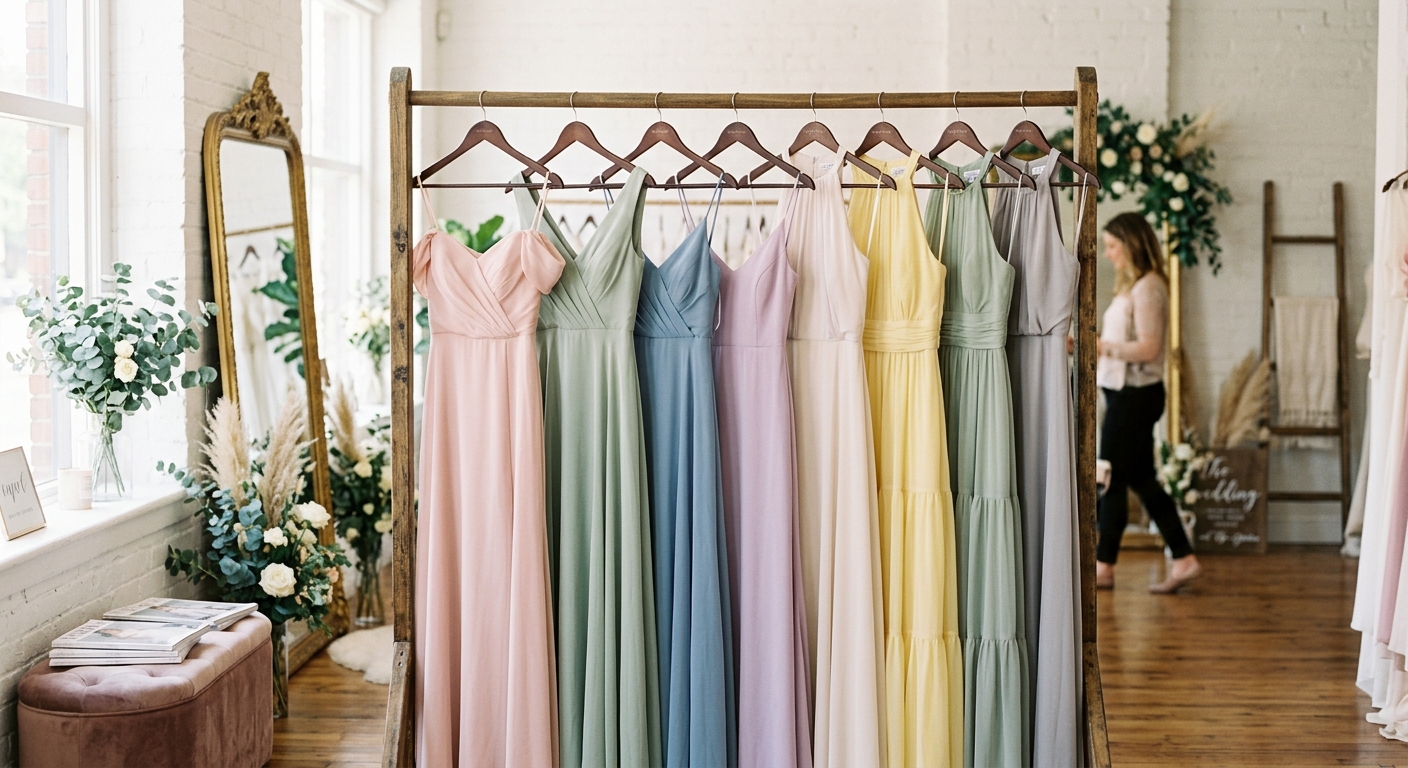
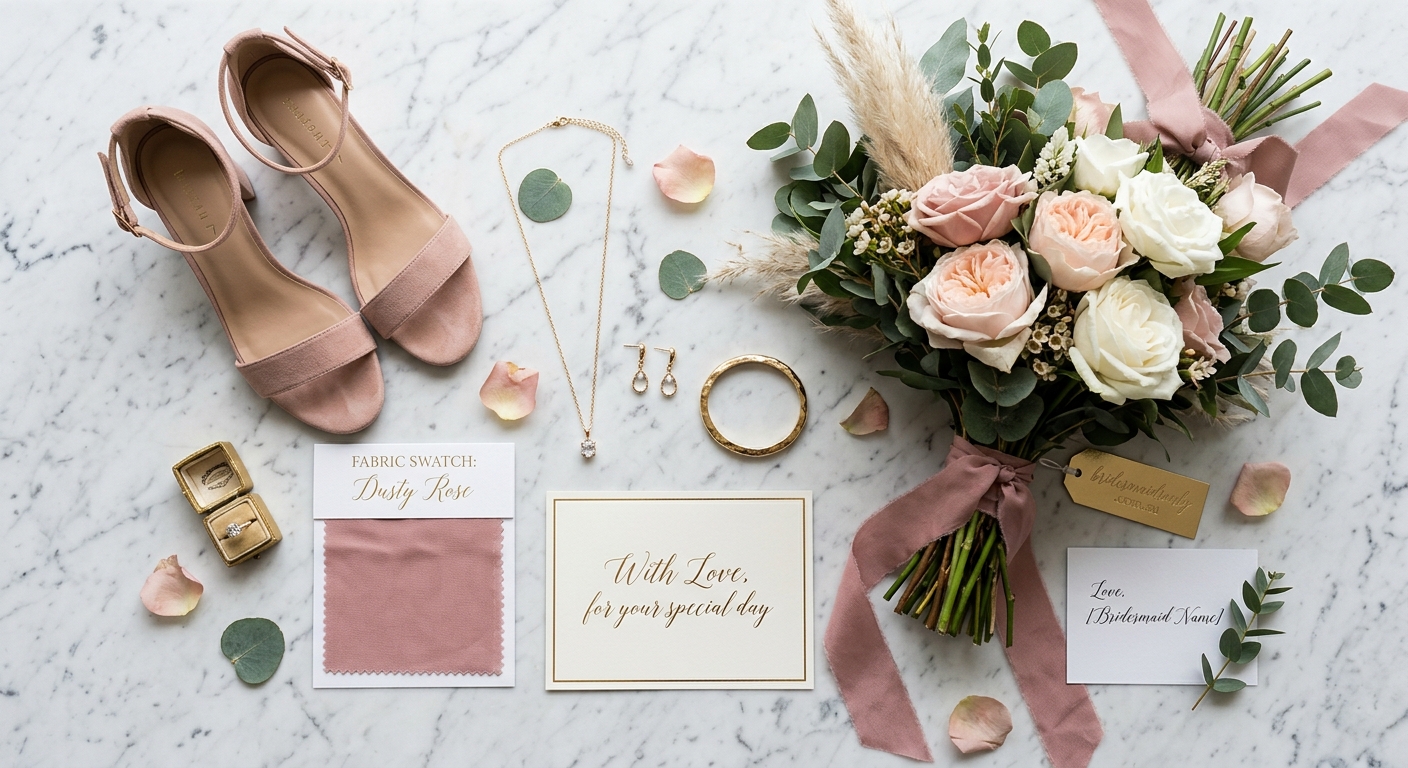
Winter weddings in Australia are a little different from the colder seasons people imagine overseas. In many places the weather is cool rather than freezing, but that still changes what bridesmaid dresses work best. The dress has to look elegant in the ceremony space, feel comfortable outdoors, and handle layering without becoming bulky or awkward.
The most successful winter bridesmaid dresses usually have a bit more weight, a more structured drape, or a richer colour story. They do not need to be heavy or restrictive, but they should feel visually grounded enough to suit the season. A winter dress should feel polished from the first photo to the last dance.
Winter also gives you a chance to lean into moodier tones and more substantial fabrics without the look feeling too formal. That can be a real advantage. When the season itself supports the style, you can create a more luxurious result without needing lots of extra accessories.
If you are starting the search, begin with the bridesmaid dresses collection and the broader shop all pages. Seeing the options side by side helps you choose styles that feel appropriate for winter instead of just “pretty in general.”
Bridal guidance from Brides and The Knot often emphasises the same thing: the best bridesmaid look is the one that suits the setting and feels comfortable enough to wear for the whole event.
If you want to keep the style language consistent, the homepage, blog, and about us pages are useful references before locking in the final direction.
Best fabrics for cold weather
Fabric choice matters more in winter than in almost any other season. A thin or overly floaty fabric can look lovely in photos but feel underdressed when the temperature drops. On the other hand, a fabric with a bit of weight and structure can help the dress feel seasonal without requiring more layers.
Crepe, satin with body, heavier chiffon, and lined fabrics often work well because they hold their shape and drape elegantly. These fabrics look refined, photograph well in softer winter light, and are usually easier to style with coats or wraps if needed.
The key is not to choose something bulky; it is to choose something that feels substantial. You want the dress to look like it belongs in the season. A winter wedding is the wrong time for a fabric that looks like it is trying to escape the weather.
Textures can also add interest without clutter. A smooth dress paired with a textured wrap or a simple velvet accessory can feel richer and more intentional. That is often better than relying on sequins or heavy embellishment, which can be harder to balance visually.
If the wedding is in a cooler part of Australia, the bridal party may spend time outside between ceremony and reception. A slightly more substantial fabric helps the look stay neat even when the temperature drops. It also reduces the chance of the dress creasing badly under outer layers.
For inspiration on how fabric and line can shape the overall feel of a bridal look, Harper’s BAZAAR and Vogue are both good reference points. They consistently show that winter style works best when the fabric does some of the atmosphere-building.
If you are comparing options, use the collection pages to see which fabrics appear most polished without needing extra styling. That is the easiest way to keep the look winter-appropriate and practical at the same time.
Best colours for an Australian winter
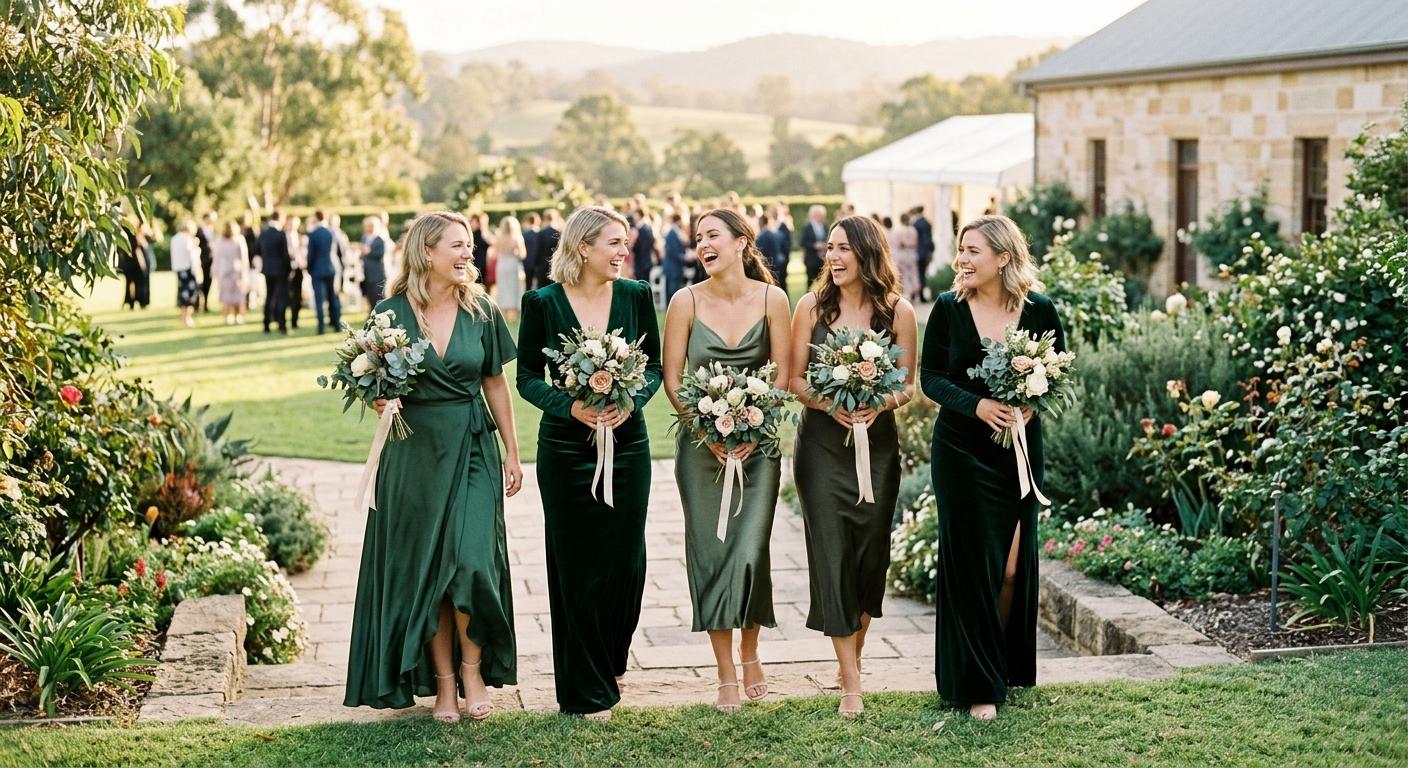
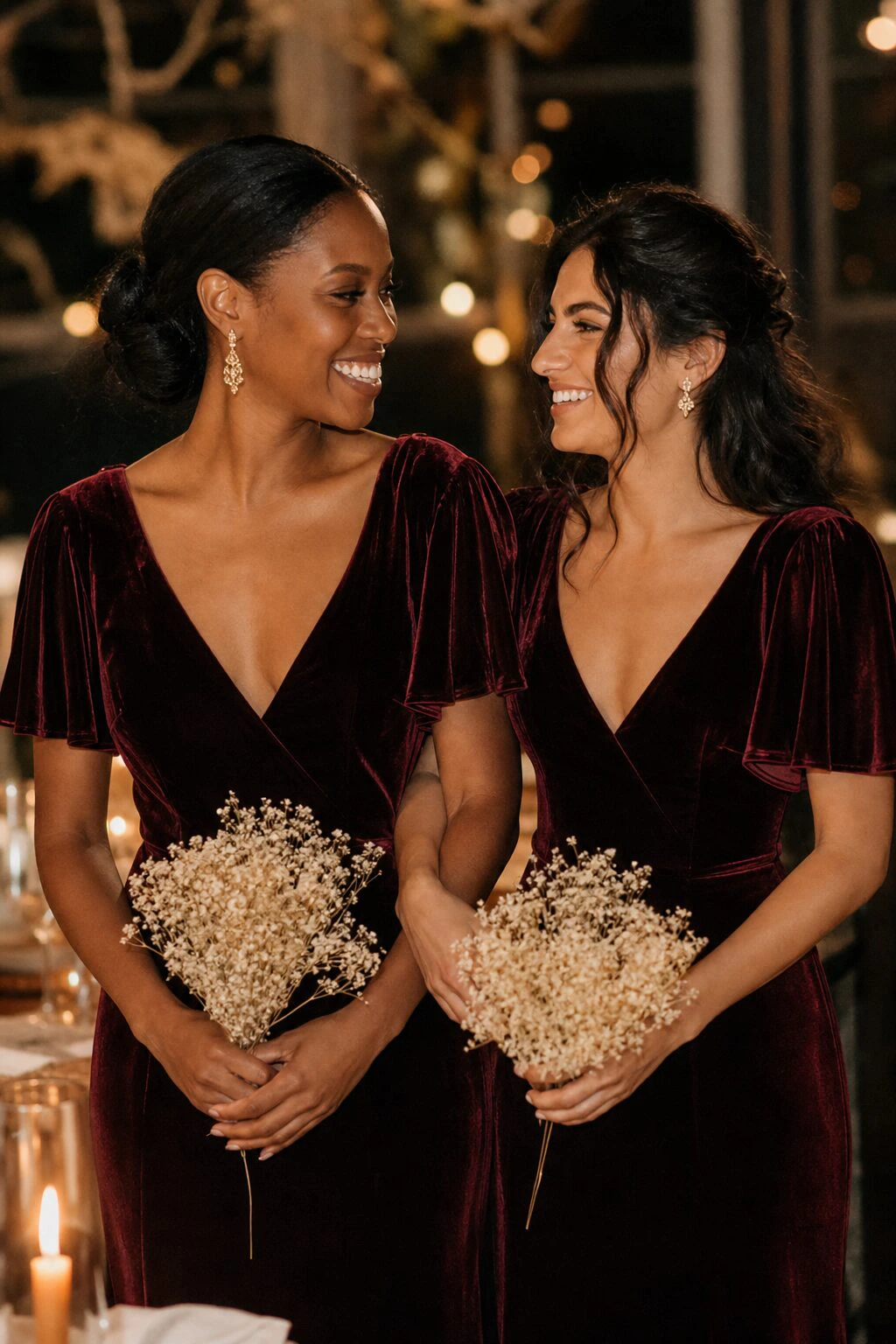
Winter colour palettes tend to feel richer, deeper, and more grounded. That does not mean every dress has to be dark, but it does mean the palette should feel appropriate for the season. Soft winter neutrals, forest green, navy, berry, plum, dusty mauve, and warm champagne all work beautifully depending on the wedding style.
Darker tones often look especially strong in winter because they match the season’s mood. They also photograph well in low light, especially in indoor venues or ceremonies that take place later in the day. But lighter shades can still work if the styling is balanced and the fabric has enough presence.
The best winter colours usually have a little depth to them. Instead of bright, shiny, or overly summer-bright tones, look for shades that feel grounded and elegant. That gives the bridal party a polished look without needing too many extras.
The venue can guide the palette too. A city wedding may suit deep neutrals or jewel tones, while a vineyard or mountain setting may work well with earthy greens, rust, or muted rose. A more formal event might lean toward navy, charcoal, or black-tie-inspired tones.
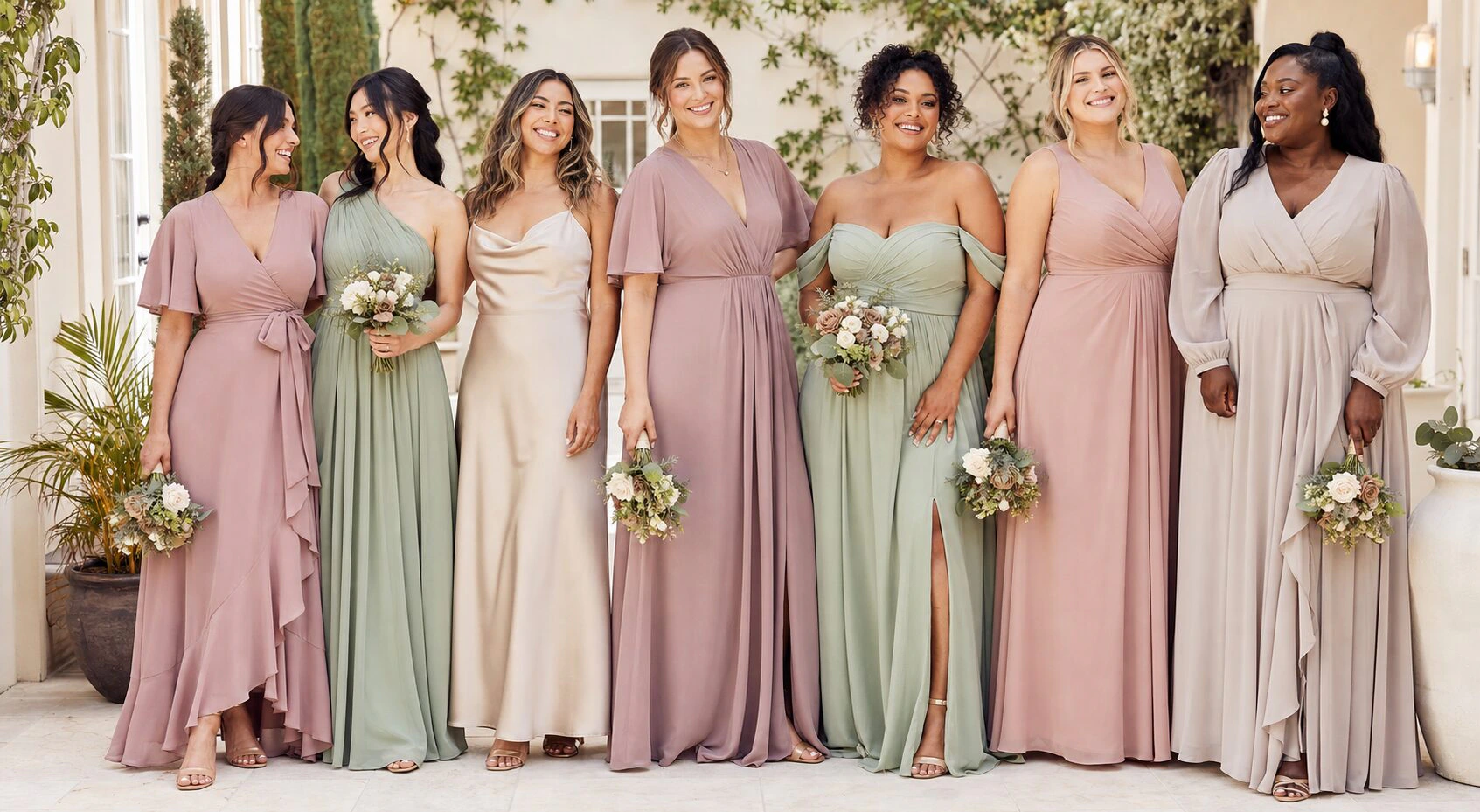
Colour consistency does not require every bridesmaid to wear the exact same dress. It is often enough to keep everyone in the same colour family and allow different necklines or sleeve shapes. That gives the bridal party freedom while keeping the look cohesive.
If you want to refine the palette, the blog and collections pages are useful for comparing how colour, cut, and fabric work together. A colour that looks beautiful in one style may feel flat in another, so it helps to compare carefully.
For a broader sense of how colour direction affects the mood of a wedding party, the style coverage at Martha Stewart Weddings often shows how richer tones can anchor a winter event without feeling heavy.
Best silhouettes and coverage
Winter dresses do not have to be heavily covered, but they should offer enough shape and warmth to feel right for the season. Long sleeves, cap sleeves, higher necklines, and midi-to-floor length styles all make sense in a winter setting depending on the venue and formality level.
Long sleeves are especially good when the bridal party will be outdoors or when the ceremony is in a cooler indoor space. They create a refined look and reduce the need for extra layers. If the dress itself has lovely sleeves, that can save money on accessories because the dress already feels complete.
High necks and modest necklines can also be effective in winter. They help the dress feel more structured and elegant, especially in formal venues. At the same time, a winter dress should still feel wearable for a whole day, so avoid overcomplicating the silhouette if simplicity already looks good.
Wrap shapes, bias cuts, and softly fitted bodices can be especially flattering because they move well and layer nicely. These styles often work across different body types too, which makes them useful for mixed bridal parties. A winter dress should support the people wearing it, not force them into one narrow shape.
If the wedding is less formal, a sleeved midi dress can be a very smart choice. It gives winter-appropriate coverage without feeling too heavy. For a more formal celebration, a floor-length style with graceful drape usually feels more occasion-ready.
It helps to remember that winter styling is about balance. Too little coverage can make the dress feel out of season, but too much can make it feel heavy. The best silhouettes sit somewhere in the middle and allow the rest of the styling to do the finishing work.
For a brand-wide style reference, the about us page can help keep the overall look aligned with the wedding tone, while the homepage keeps the shopping flow simple and focused.
Styling, shoes, and layers
Winter styling is where the look comes together. A beautiful dress can lose impact if the shoes, wrap, or outer layer feel disconnected, so it helps to plan the full look as one system. Think about what the bridesmaids will actually wear between the car, the ceremony, photos, and reception.
Shoes should be practical as well as polished. Closed-toe heels, elegant block heels, or refined flats often make more sense in winter than delicate summer sandals. They look seasonal, support the dress better, and keep the whole outfit feeling grounded.
Layers can be subtle and still effective. A tailored coat, a soft wrap, a faux-fur shrug, or even a simple matching jacket can make a huge difference if the bridal party spends time outdoors. The trick is to choose layers that add to the look instead of hiding it.
Accessories should usually stay restrained. In winter, the dress often carries more of the visual weight on its own, so there is no need to overdo earrings, clutches, or sparkly extras. A clean finish will usually look more expensive than a crowded one.
Hair and makeup can also support the season. A slightly more polished hairstyle, warmer makeup tones, or richer lip colour can help the whole group feel in tune with the weather and the venue. It is a small detail, but it changes the final impression a lot.
If you are unsure how much to layer, check the dress from a distance. Winter styling should make the dress feel intentional and comfortable without distracting from the bridal party as a whole. Good winter styling often disappears into the overall look, which is exactly what it should do.
If you need more direction while pulling the outfits together, the blog and bridesmaid dresses collection are the easiest places to keep the look consistent while making sure the layers and accessories still feel right for the season.
Planning the full look
The best winter bridesmaid look is planned from the start, not patched together at the end. Once you know the fabric, colour, silhouette, and layering strategy, the rest becomes much easier. Planning early also gives the bridal party time to find the right shoes and outerwear without panic buying.
It is often smart to set a mood rather than a rigid dress code. For example, “formal winter, deep green and navy, long length, minimal shine” gives the bridal party enough structure without locking them into one exact cut. That flexibility can save both time and money.
Try to keep the whole outfit aligned with the venue. A vineyard wedding may want earthier colours and softer textures, while a city ballroom may call for richer jewel tones and more polished structure. When the venue and dress work together, the result feels naturally elevated.
Timing matters too. Winter weddings can tempt people to leave shopping later because the season feels long and cool, but that usually leads to rush shipping or fewer choices. Early ordering gives more room to find the right look and make minor changes if needed.
Budget is still important, even in winter. A dress that looks luxurious but requires lots of extra layers or tailoring may not be the best value. The smartest choice is the one that already feels complete with minimal additions.
For wider wedding-planning context, publications like Brides and The Knot consistently show that the strongest bridal party looks come from clear direction, practical fit, and a cohesive palette.
When you keep all of that in mind, winter dresses become easier to choose and easier to wear. The bridal party looks polished, the season feels intentional, and the whole look holds together from the first photo to the last dance.
Frequently asked questions
What are the best fabrics for winter bridesmaid dresses?
Fabrics with a bit more body, such as crepe, satin with structure, or lined chiffon, usually work well. They feel more season-appropriate and help the dress look polished in cooler weather.
Which colours are best for an Australian winter wedding?
Deeper tones like forest green, navy, berry, plum, charcoal, and warm neutrals usually work beautifully. They suit the season and tend to photograph well in softer winter light.
Do winter bridesmaid dresses need sleeves?
Not always, but sleeves can be a smart choice if the ceremony is outdoors or the weather is cool. If the dress has no sleeves, a wrap or coat can provide warmth without changing the whole look.
How do I keep winter bridesmaid dresses from feeling too heavy?
Choose a dress with some structure but not too much bulk, then keep accessories and layers simple. A good silhouette and a rich colour usually do more for winter style than extra decoration.