How to Choose Bridesmaid Dresses for a Mixed Body-Type Party
Why Body-Type Dressing Matters
Every bridal party photo I’ve seen fall flat has the same problem: one dress style forced onto six different bodies. The tall bridesmaid looks swamped, the curvier one looks squeezed in at the hip, and the shortest one is drowning in fabric she has to hem twice. It’s not that the dress was ugly. It’s that nobody thought about who was actually wearing it.
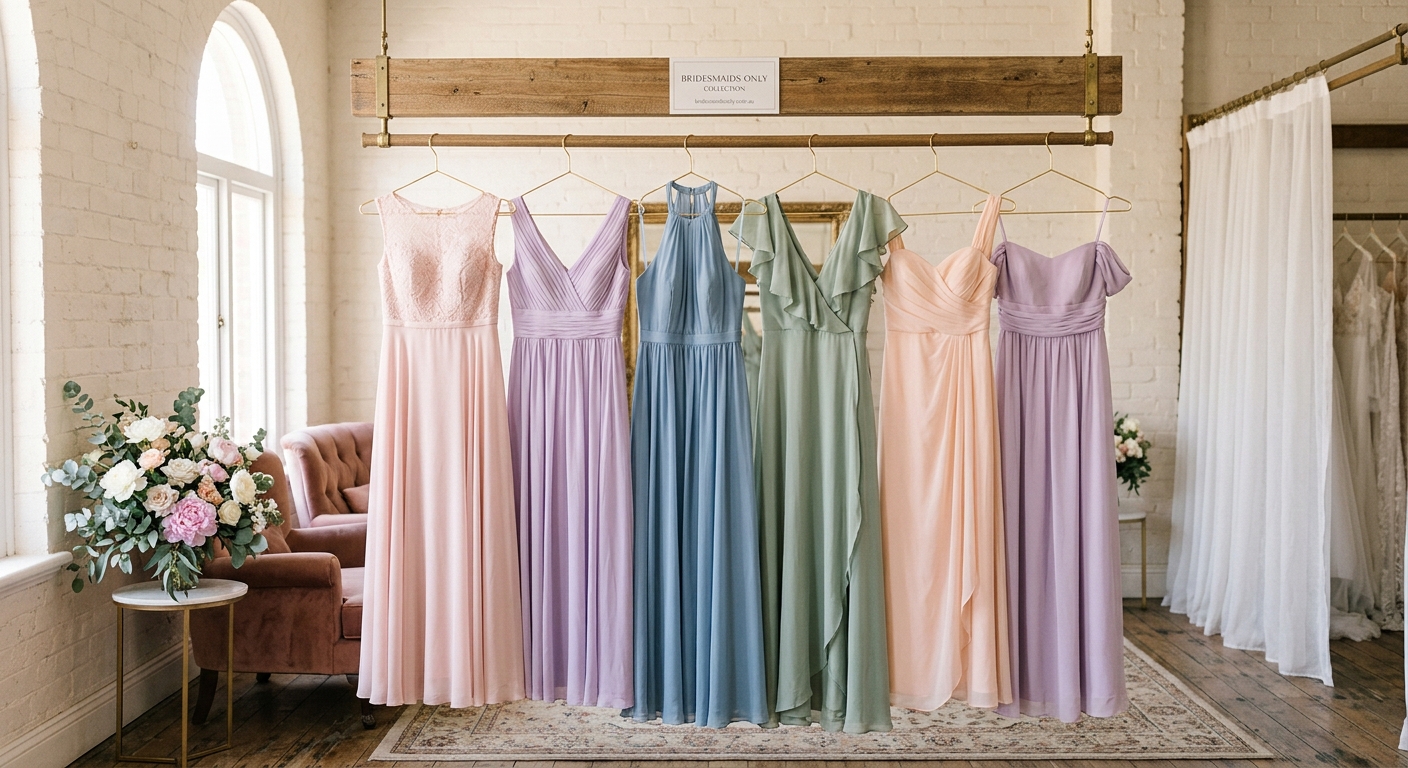
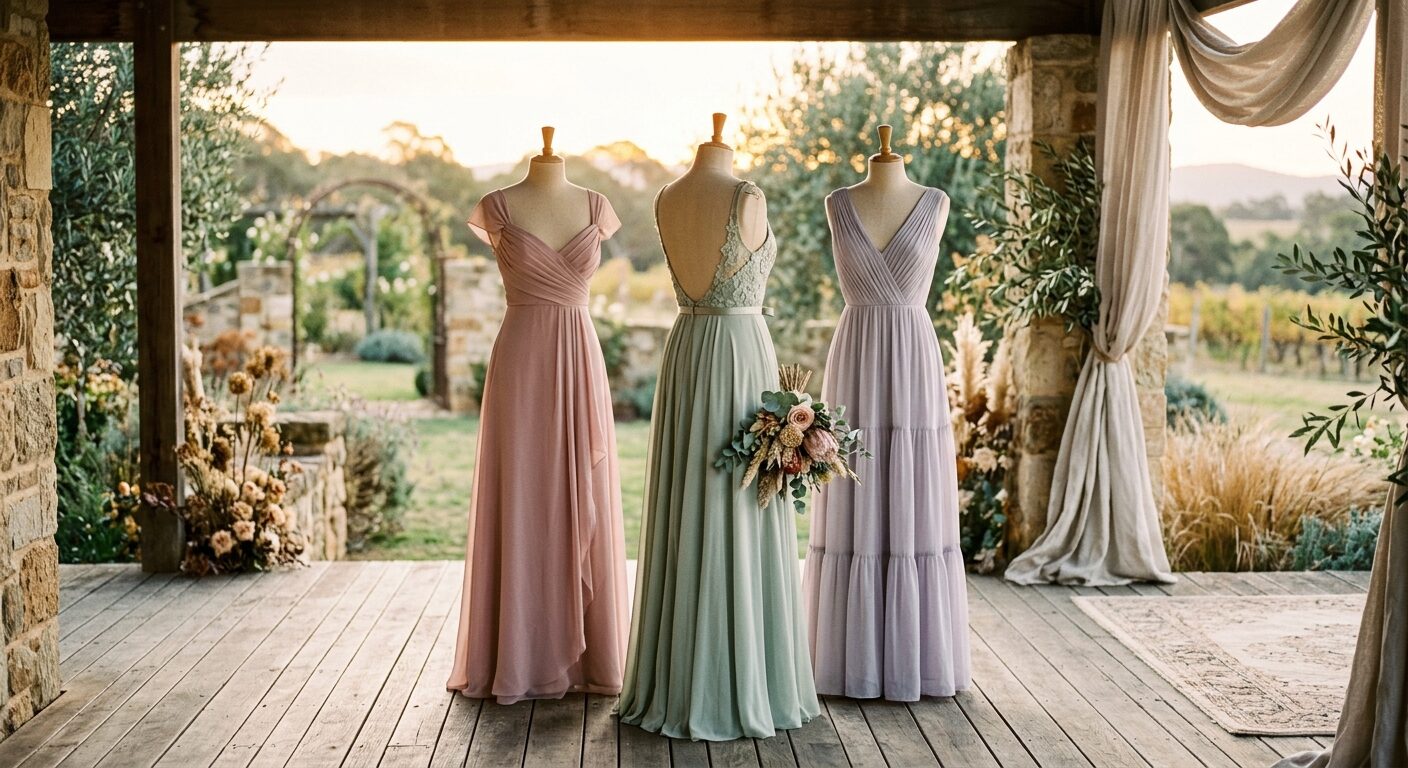
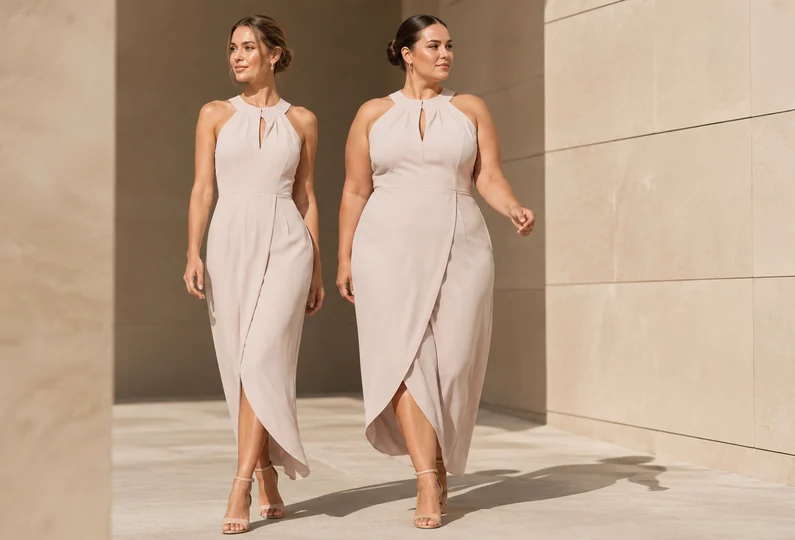
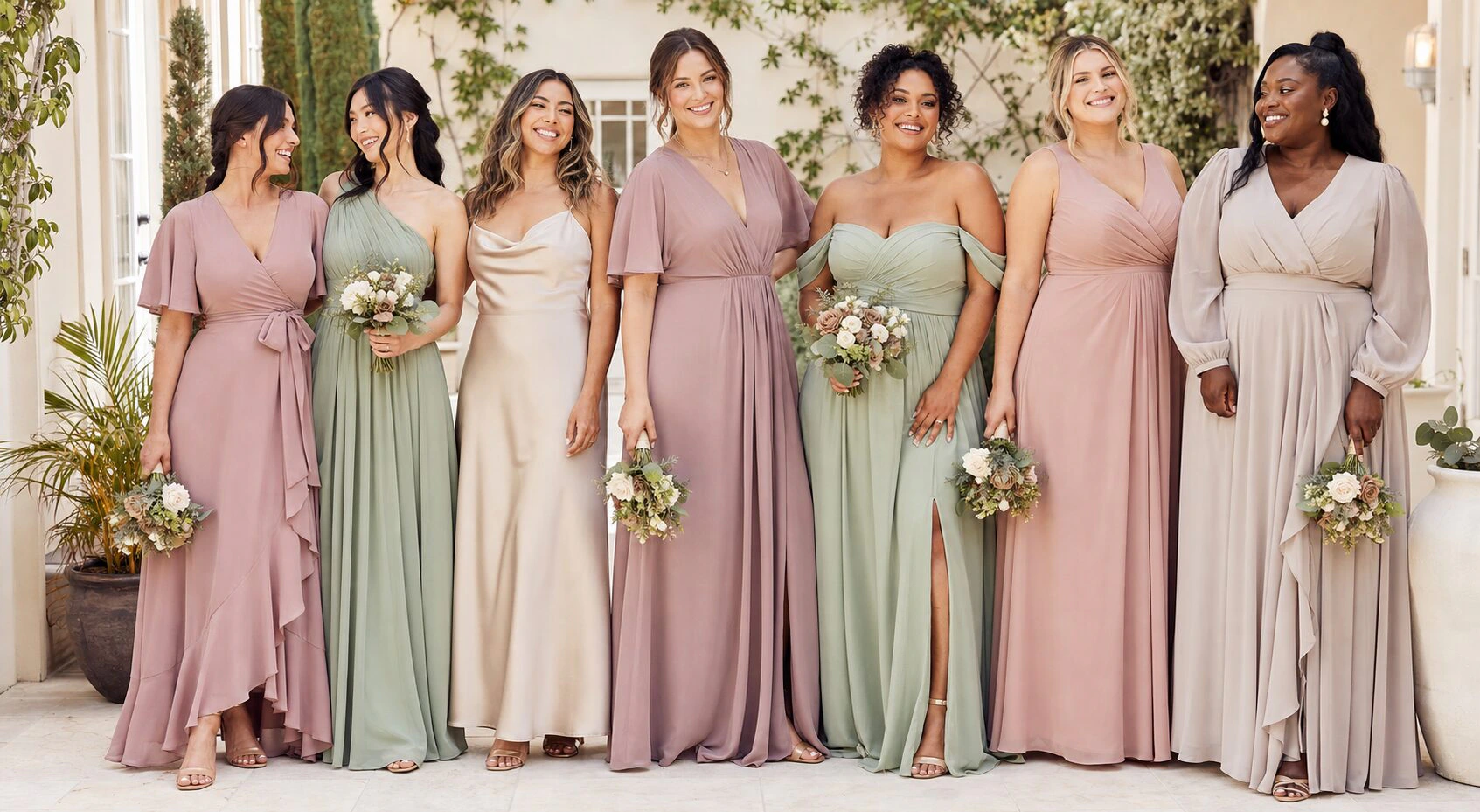
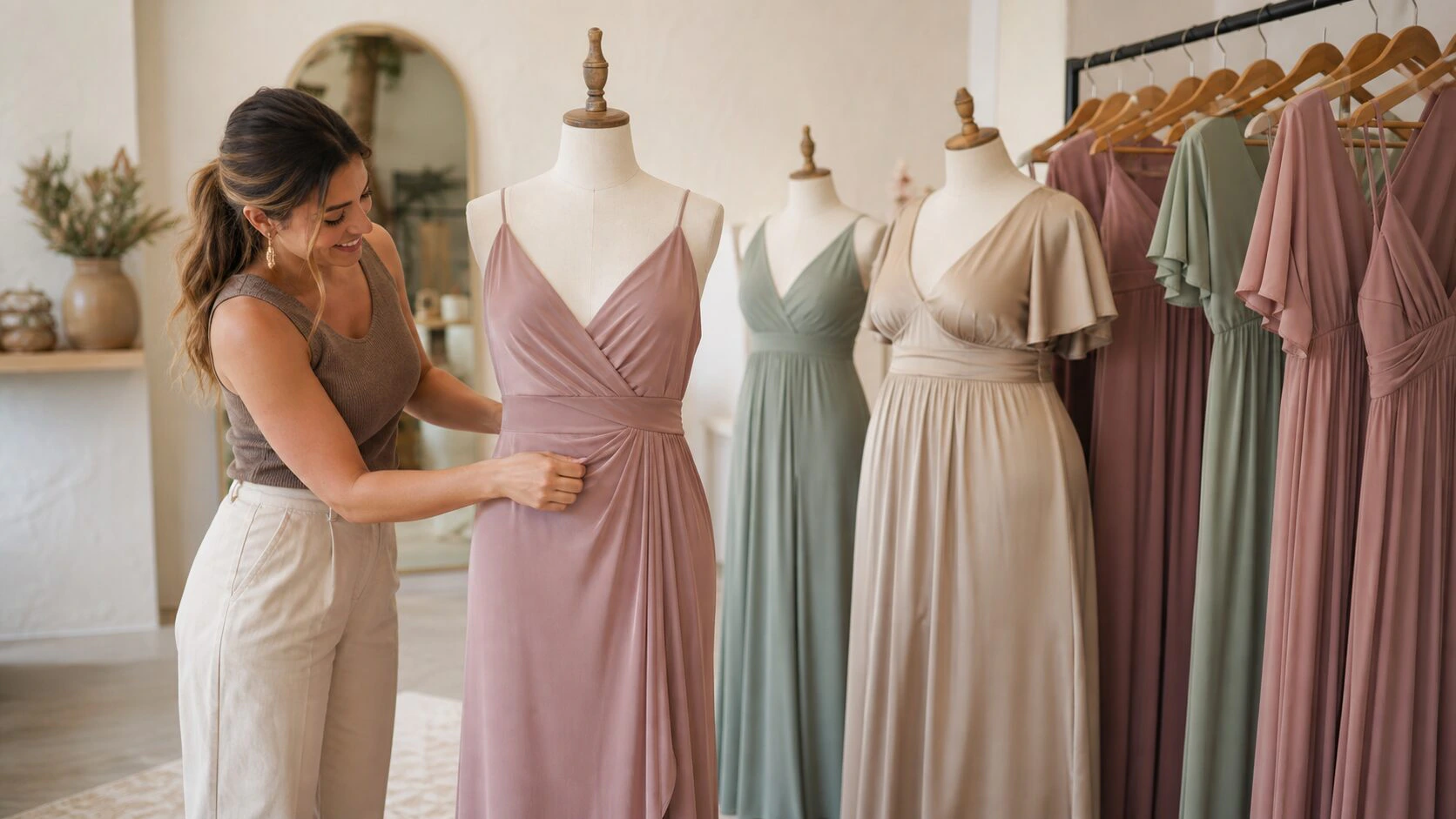
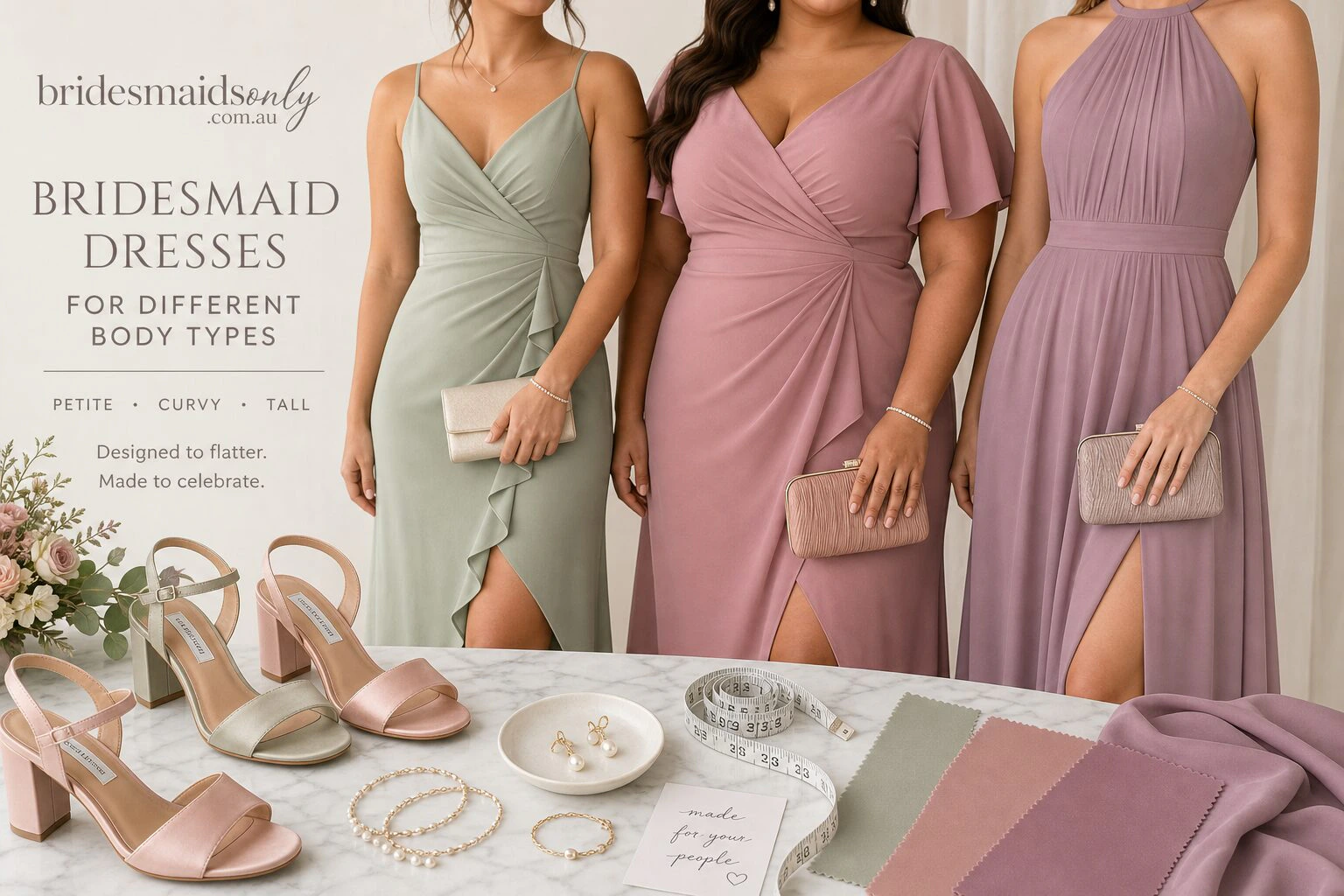
Bridesmaid dresses for different body types isn’t a trend, it’s just better planning. When you let each woman in the party choose a cut that flatters her own shape, in the same colour and fabric family, the photos read as cohesive rather than uniform. Guests remember “the bridal party looked amazing,” not “why does the third one from the left look uncomfortable.” Wedding planners have been pushing “mix and match” styling for years for exactly this reason, and it’s now the default approach rather than the exception.
The other reason it matters: comfort changes how people move, stand and smile in photos. A bridesmaid stuck in a strapless bodice that doesn’t fit her chest will spend the entire ceremony adjusting it instead of enjoying the day. Get the fit right up front and you avoid that entirely.
How to Choose the Right Dress
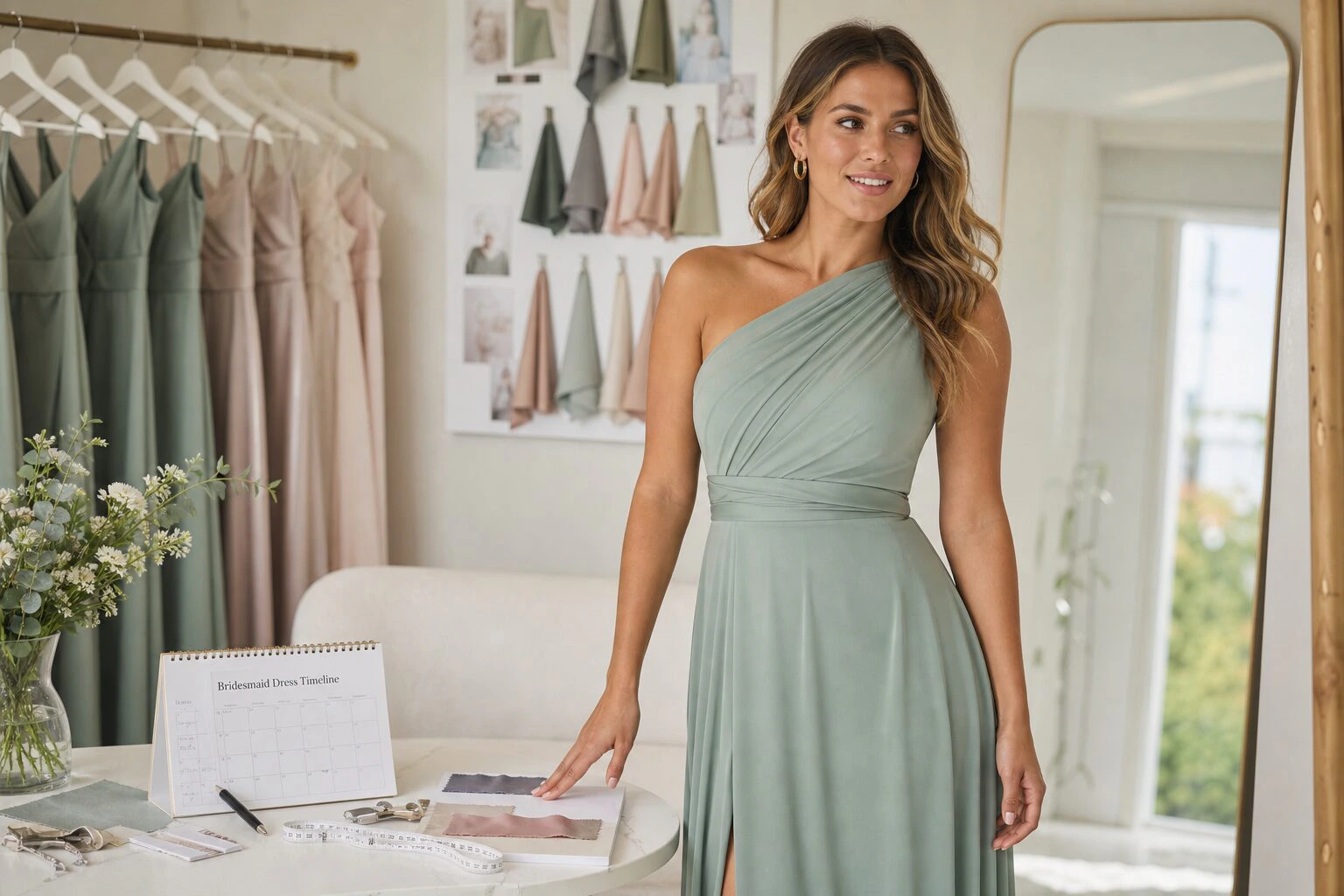
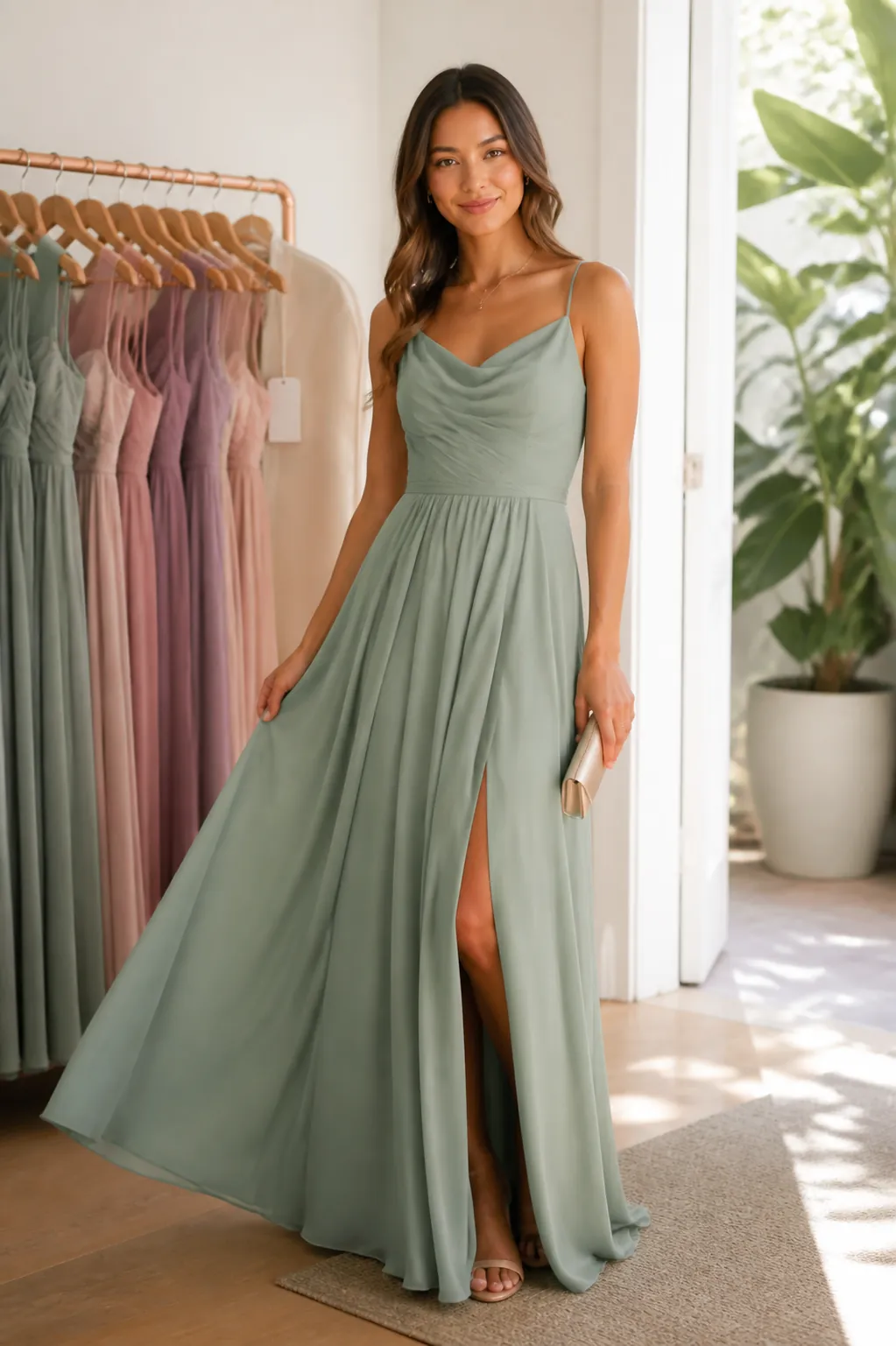
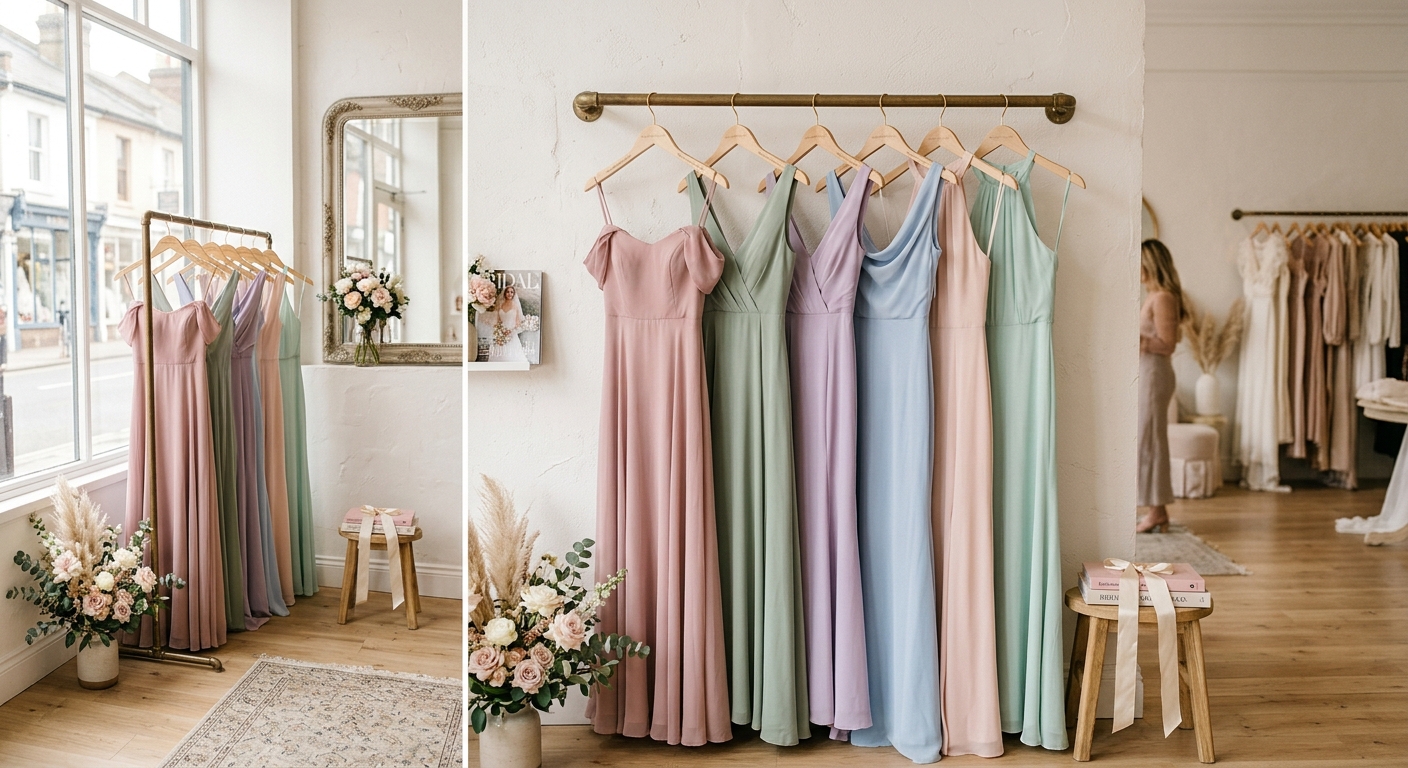
Start with the colour and fabric, not the silhouette. Pick one, maybe two adjacent shades in the same fabric weight (chiffon with chiffon, satin with satin) so the party still reads as a set even though every dress is a different cut. Browse the full bridesmaid dresses range as a group before anyone picks their individual style, so you’re all choosing from the same palette.
From there, match silhouette to body shape:
Pear and hourglass shapes
A-line and wrap styles cinch at the natural waist and skim over the hip without clinging. Wrap necklines also do a nice job of balancing a fuller bust if that’s part of the picture.
Apple and fuller midsection shapes
Empire waistlines that sit just under the bust, paired with a flowing skirt, avoid pulling at the stomach. Look for a slight ruching detail at the waist, it hides more than a plain seam does.
Straight or athletic builds
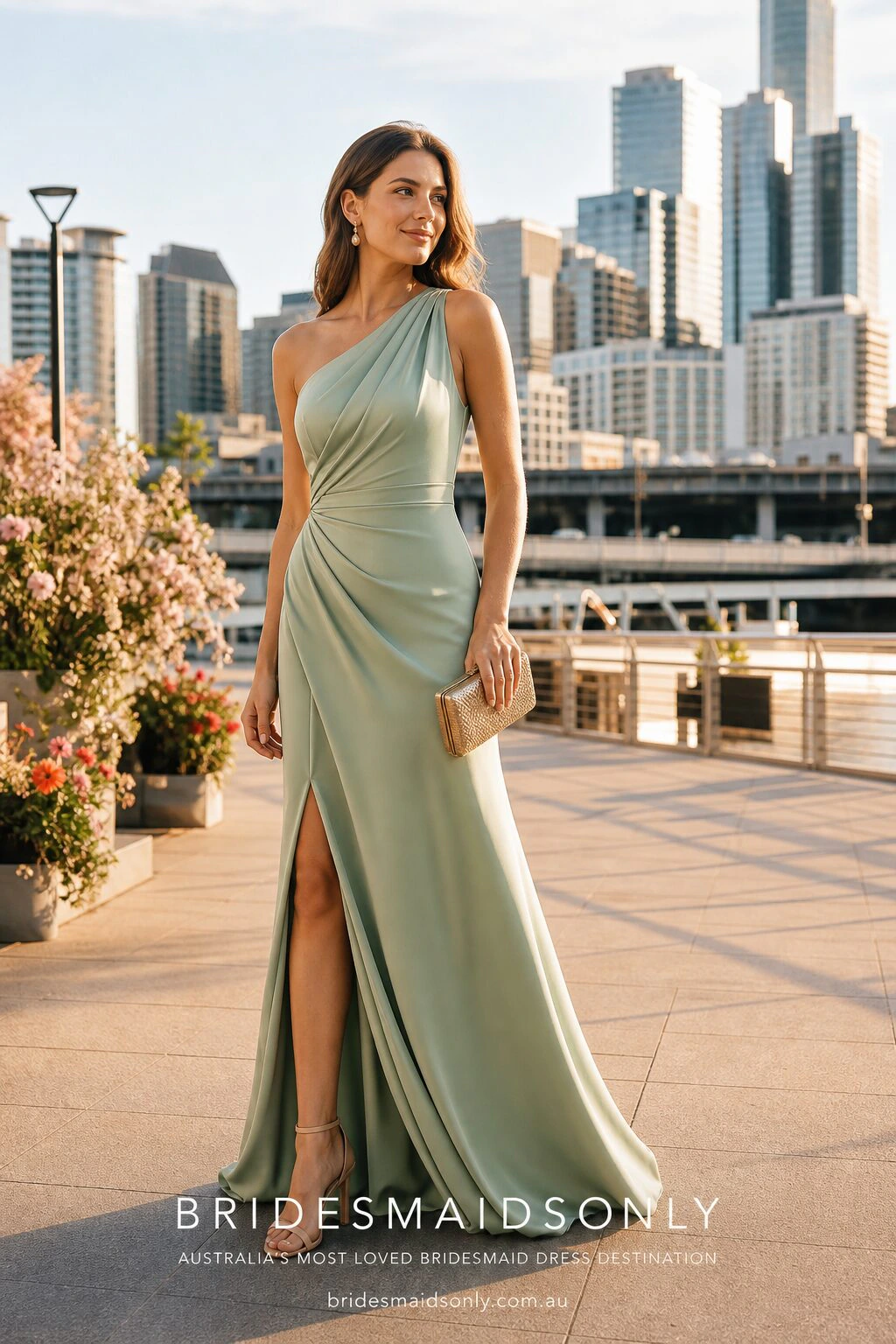
This is where you can have fun with a fitted mermaid or a bodice with structure, like corset boning, to create curve where there naturally isn’t much. A high slit also adds movement to an otherwise straight line.
Petite frames
Knee-length or tea-length cuts avoid overwhelming a shorter frame the way full-length chiffon can. A defined waist seam also helps create the illusion of extra height.
Taller or fuller-figured frames
Full-length gowns with a fitted bodice and a flowing skirt tend to sit best, giving structure up top and movement below without adding bulk anywhere it isn’t wanted.
If you’re not sure where someone’s shape sits, get her measured properly rather than guessing off a dress size from another brand. Every label runs slightly differently and a five-minute tape measure session saves a return down the line.
Top Styles and Silhouettes
A handful of styles do most of the heavy lifting across a mixed-body-type party:
- A-line — close to universally flattering, works for pear, hourglass and apple shapes alike.
- Empire waist — the go-to for anyone who wants the tummy skimmed rather than fitted.
- Wrap dress — adjustable at the waist, so it’s forgiving if someone’s measurements shift between fitting and wedding day (and yes, that happens more than people admit).
- Fitted mermaid — best kept for the more confident, structured frames in the party.
- Column or sheath — a clean, minimal option for taller bridesmaids who don’t want extra volume.
Colour-wise, blush and navy remain the two most requested shades because they photograph well across every skin tone. If the wedding palette runs cooler, the blue bridesmaid dresses collection has plenty of range from dusty slate through to deep navy. For warmer, romantic palettes, the blush bridesmaid dresses collection covers everything from pale pink to dusty rose. If the couple has gone with a moodier evening theme, don’t overlook black bridesmaid dresses, which tend to be the easiest shade to match across five or six different skin tones and body shapes at once.
Don’t forget the getting-ready photos either. A lot of brides now put the whole party in matching robes or pyjamas for the morning-of shots, then let everyone change into their individual dress styles for the ceremony. It’s an easy way to get a “matching” photo early in the day even though the dresses themselves will differ. The bridesmaid robes collection and the bridesmaid pyjamas range both come in sets sized for a full party, so nobody’s stuck in an oversized robe because it was the only size left.
What to Consider Before You Buy
A few things trip people up every wedding season:
Order early and order together
Dye lots vary batch to batch. If half the party orders in March and the other half orders in June, you risk two visibly different shades of the “same” colour turning up. Order as a group where possible.
Budget across the whole party, not just per dress
Six bridesmaids at six different price points can blow out fast once you add shoes, robes and alterations. The affordable edit is worth checking first, it’s curated specifically to keep quality up while keeping the per-dress cost down for larger parties.
Factor in alterations from day one
Almost no dress fits perfectly off the rack, and that’s fine, it’s expected. Budget $50–150 per dress for a local alterations tailor and build that into the total cost conversation early so nobody’s blindsided later.
Think about the accessories as a unifying thread
When the dresses themselves are all different cuts, matching jewellery, shoes or a hair accessory pulls the look back together visually. The accessories collection is a quick way to give five different dress styles one consistent finishing touch.
Know the returns position before six dresses are locked in
Weddings get postponed, bridesmaids drop weight during a stressful lead-up, plans change. Know where you stand before the order goes in. At Bridesmaids Only every dress is final sale, so the work happens before you order, not after: fabric swatches to settle colour, and Try Before You Buy to settle fit.
Tips from the Experts
Stylists who work weddings for a living tend to repeat the same handful of rules, and they are worth listening to. Choose fabric and colour first, then let silhouette follow the individual body, rather than the other way around. That single sequencing decision, fabric and colour before cut, is the difference between a party that looks curated and one that looks like nobody could agree.
One thing a lot of brides miss: photograph the whole party together in natural daylight before the big day, ideally at the final fitting. Photos catch tonal mismatches that the eye glosses over in a shop’s fitting-room lighting.
My own rule after years of watching this play out: never let a bridesmaid choose a dress purely because it’s what she’s seen on Pinterest for her body type. Body-type advice is a starting point, not a rulebook, and the only real test is trying it on and moving around in it, sitting down, raising an arm for the group photo, walking down the aisle steps. A dress that looks perfect standing still can pull strangely the second someone sits at the reception table.
If you are managing a party of bridesmaids spread across different cities, lean on detailed size charts and encourage everyone to measure themselves with a soft tape rather than guessing from memory. Sizing disputes are one of the most common causes of last-minute wedding stress, and they are almost always traceable back to someone estimating a measurement instead of taking it properly.
Last tip, and it’s a small one: order a size up if someone’s between sizes on a fitted style like a mermaid cut. It’s always easier for a tailor to take fabric in than to try and add it back.
FAQ
What is the best bridesmaid dress for a mixed body-type party?
There’s no single “best” style because the whole point is matching the cut to the individual. A-line and wrap dresses tend to flatter the widest range of shapes, which is why they’re the most popular starting point for mixed-body-type bridal parties. From there, empire waists suit fuller midsections and fitted mermaid cuts suit straighter frames.
How do I know which bridesmaid dress suits my body type?
Start with your measurements rather than your usual dress size, since sizing varies between brands. Then try a few silhouettes in the agreed colour and fabric, moving around in each one, sitting, walking, raising your arms, before deciding. The right dress should feel secure without pulling anywhere.
What should I look for when buying bridesmaid dresses for different body types?
Check the fabric weight matches across the party, settle sizing before you order because every dress is final sale, and order as a group to avoid dye-lot mismatches. It is also worth checking the collection’s size range covers everyone in the party comfortably before anyone commits.
Are there budget-friendly bridesmaid dresses for different body types?
Yes, plenty. Curated affordable ranges keep the fabric quality consistent across a full party while keeping the per-dress cost down, which matters more the bigger the bridal party gets. Buying robes or pyjamas as a matching set for the morning-of photos is also a cheaper way to get a “matching” look without needing every dress to be identical.