Satin vs Chiffon vs Velvet: Which Bridesmaid Dress Fabric Is Right for Your Wedding?
Choose satin for a smooth, reflective finish, chiffon for a light, floating outer layer, or velvet for a soft pile and rich texture. The best choice depends on the dress’s weight, lining, cut and fibre content as well as your venue. A fabric name alone cannot tell you how warm, stretchy or easy to care for a finished dress will be.
Start with our Satin Bridesmaid Dresses and Chiffon Bridesmaid Dresses collections to compare actual styles. Keep the wider Bridesmaid Dresses range open if colour, neckline or size availability is the deciding factor.
What is the practical difference between satin, chiffon and velvet?
| Fabric | Look and movement | Useful for | Check before choosing |
|---|---|---|---|
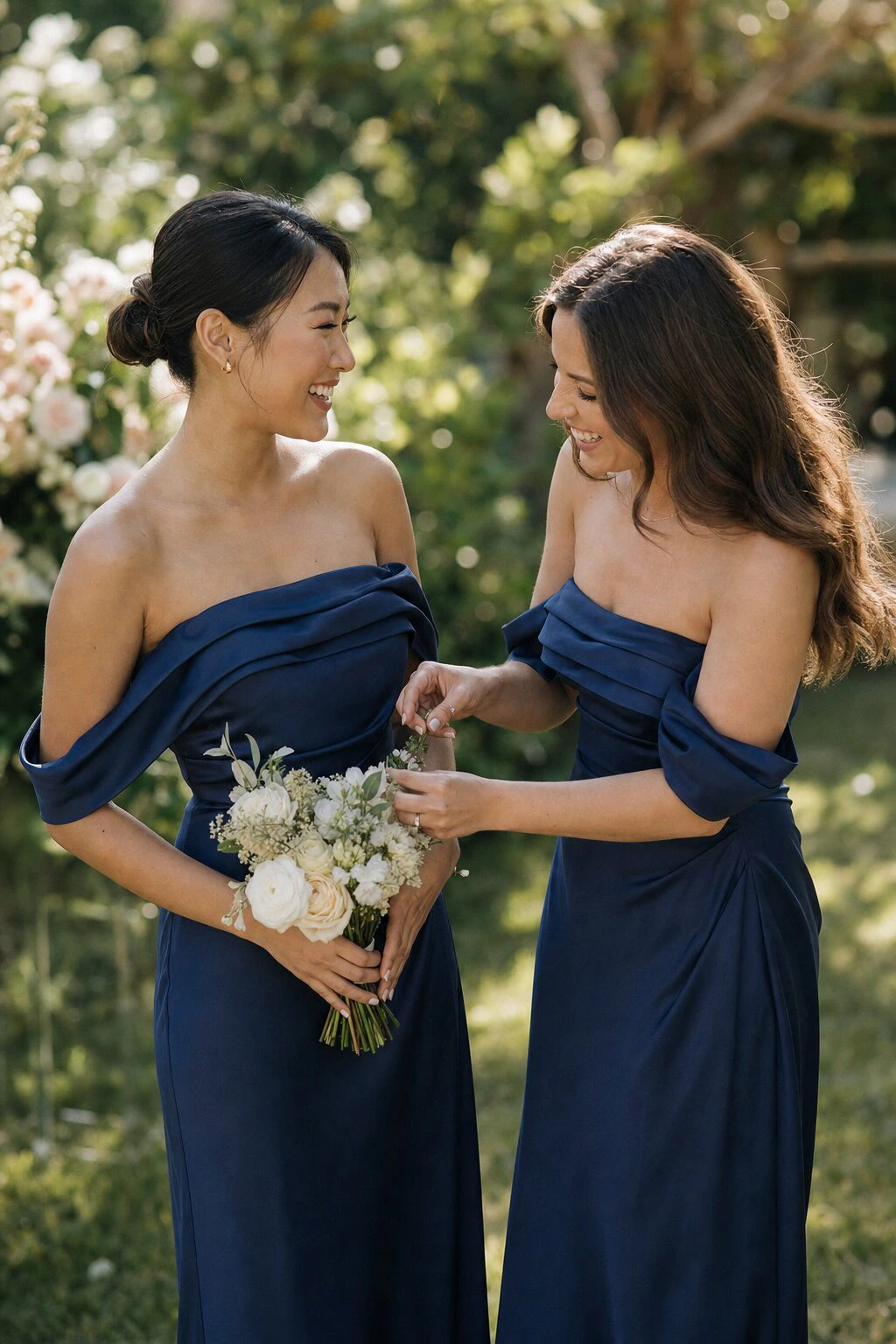
| Satin | Smooth surface with reflected highlights; can drape fluidly or hold more shape depending on its weight. | A polished look, defined draping and evening styling. | How it sits when seated, its lining, and whether the actual dress has stretch. |
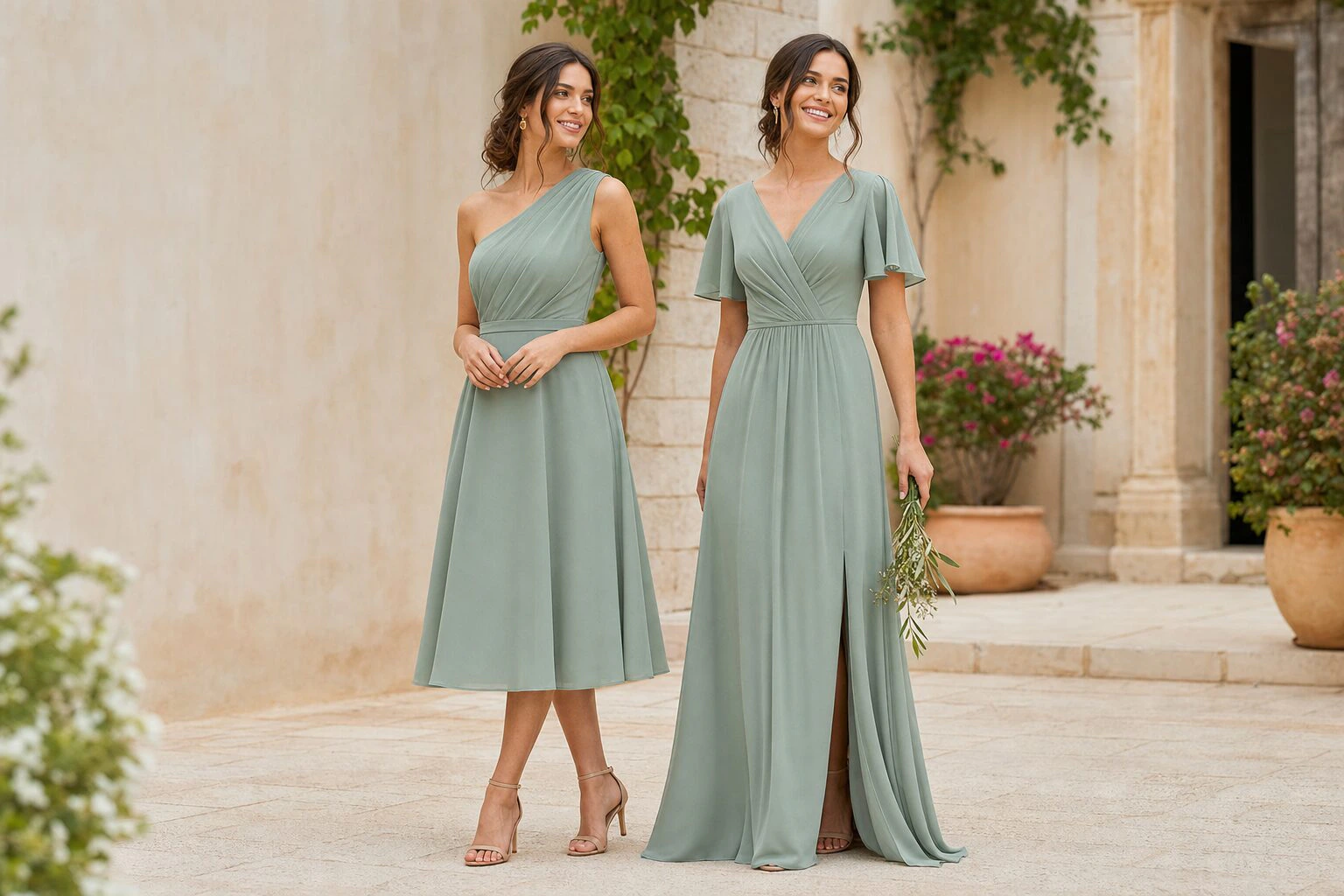
| Chiffon | Fine, sheer fabric that moves easily; dresses usually pair it with a lining or additional layers. | Floaty skirts, softer layering and an airy visual effect. | Coverage, lining weight and how a loose skirt behaves in wind. |
| Velvet | A raised pile gives a soft surface and changes appearance as it catches the light. | A textured look, rich colours and cooler-weather styling. | Actual fabric weight, stretch, pile direction and the designer’s care instructions. |
Does satin mean silk, and is it always stretchy?
Satin describes a weave, not a guarantee of silk fibre. The floats in the weave help create its shiny face. CottonWorks explains the satin structure. A satin dress may use different fibres or blends, and “satin” alone does not promise stretch.
Check the specific product description and size guide. A bias-cut skirt can fall differently from a structured satin bodice, even when both have a glossy surface. Try sitting and walking in the dress, and check the neckline with the underwear you intend to wear. Avoid choosing a size on the assumption that the fabric will stretch.
Is chiffon the best choice for an outdoor summer wedding?
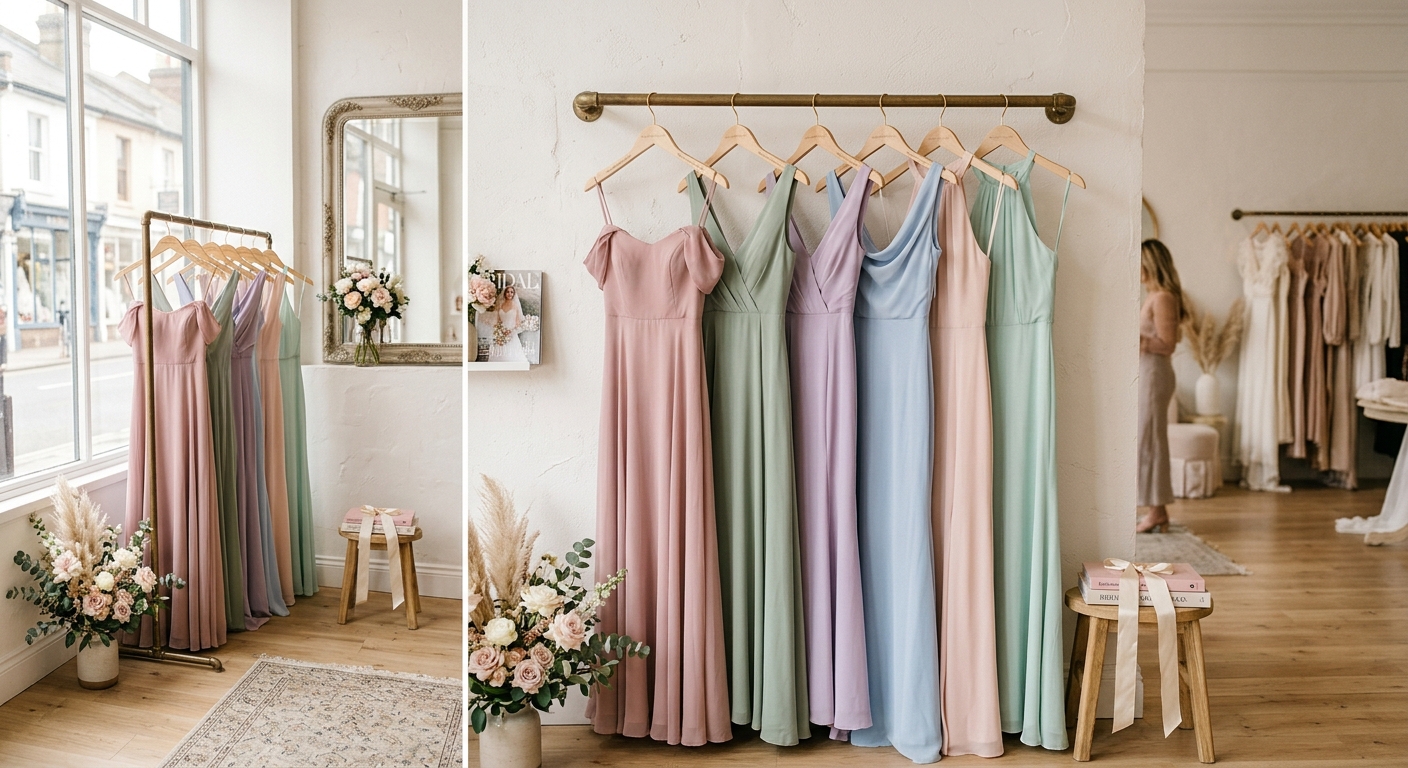
Chiffon’s light outer layer can create the movement you want for a garden or beach ceremony. That makes it a useful option to compare, but the completed dress may still have a substantial lining or several layers. Fibre content, sleeves and bodice construction also affect comfort.
For a warm venue, ask about the entire dress rather than just the outer fabric. For an exposed venue, check how the skirt behaves in a breeze and whether the length is practical on grass or sand. A chiffon dress and a lightweight satin dress are both worth trying if you are deciding between movement and a sleeker finish.
When does velvet work well?
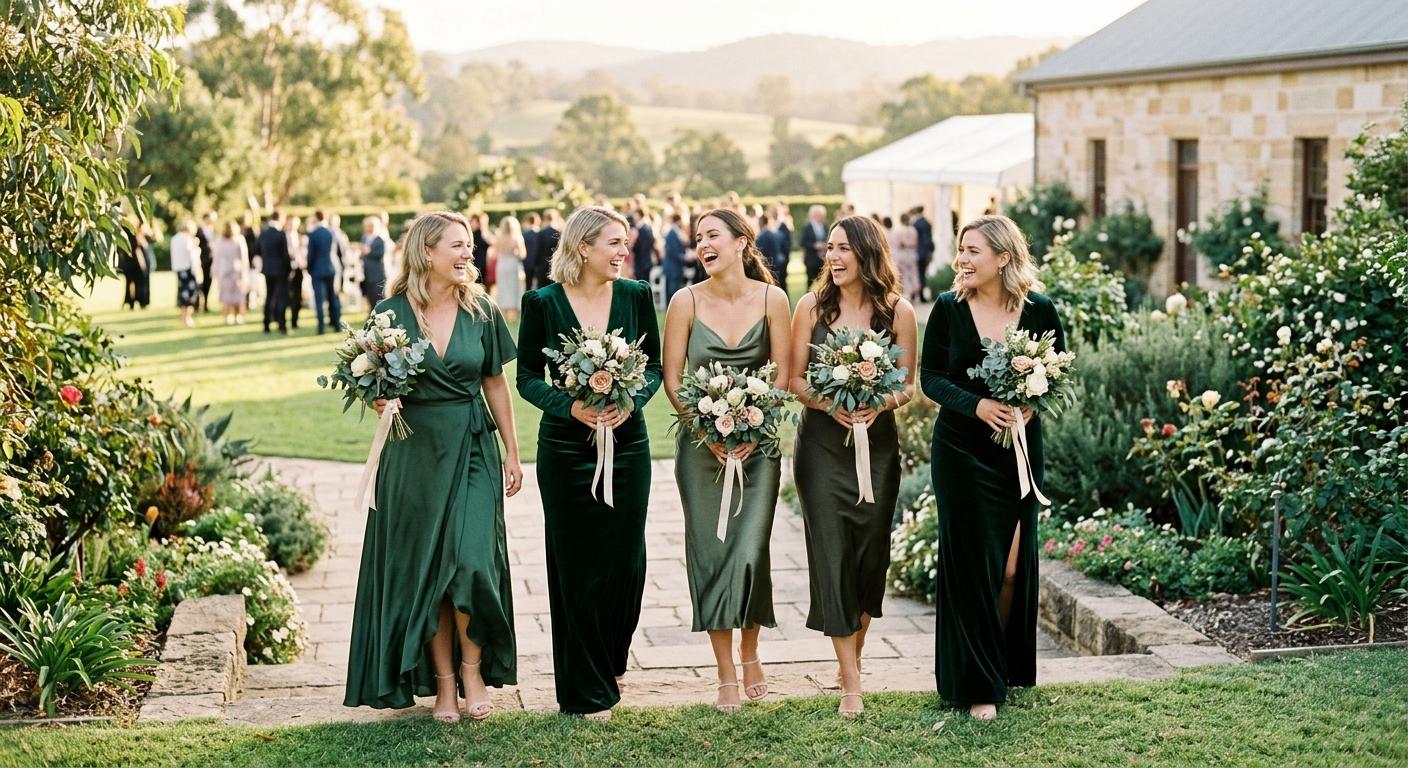
Velvet brings texture and depth to a colour palette, which can suit an evening reception or a cooler-season wedding. Its pile catches the light differently as the fabric moves, so photographs can show lighter and darker areas within the same dress.
Do not assume all velvet is heavy or all stretch velvet fits alike. Compare the specific dress’s weight and construction, and check current style availability with the team if velvet is central to your plan. This guide compares the fabric; it does not mean every fabric is available in every colour or designer range.
Can bridesmaids mix satin and chiffon?
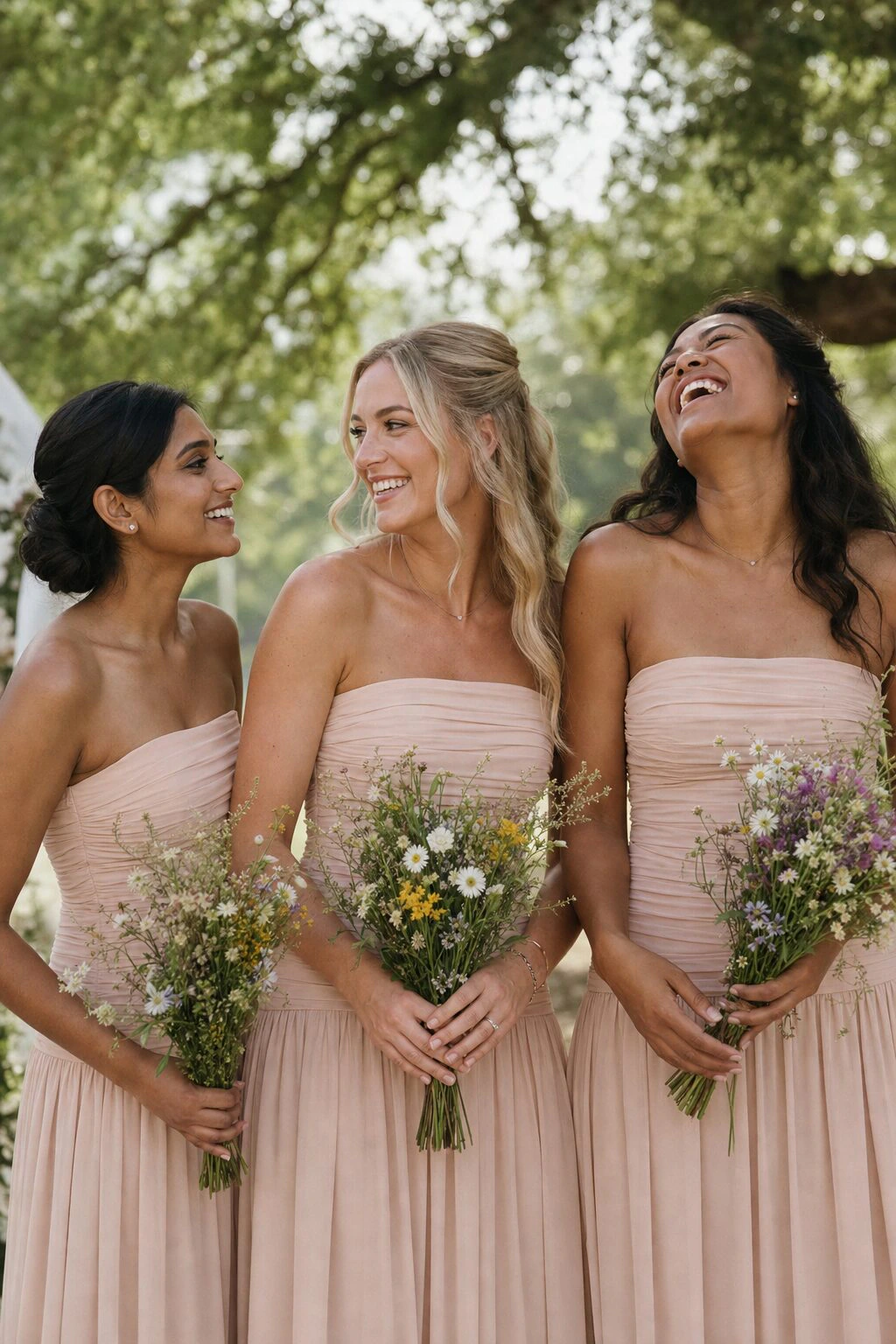
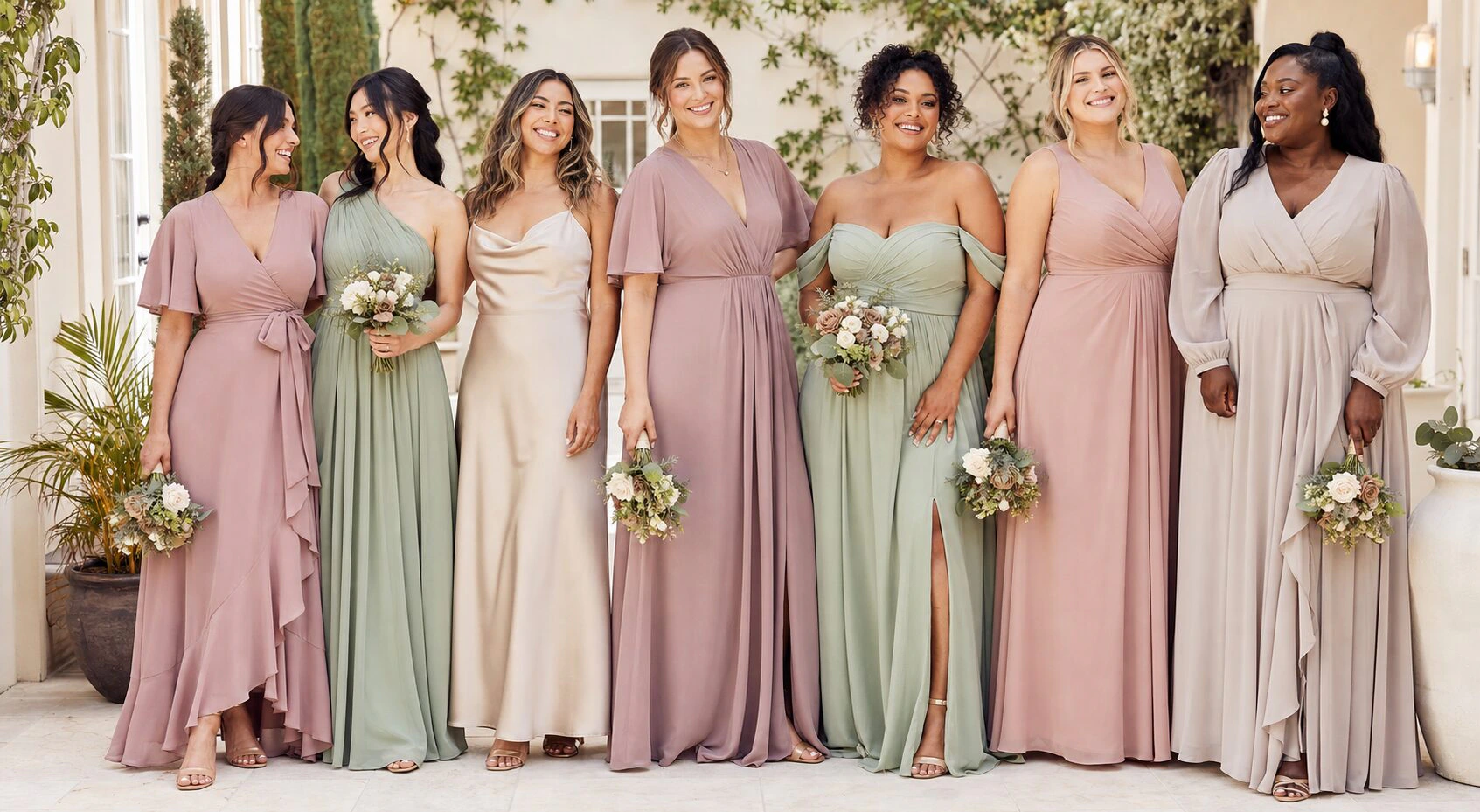
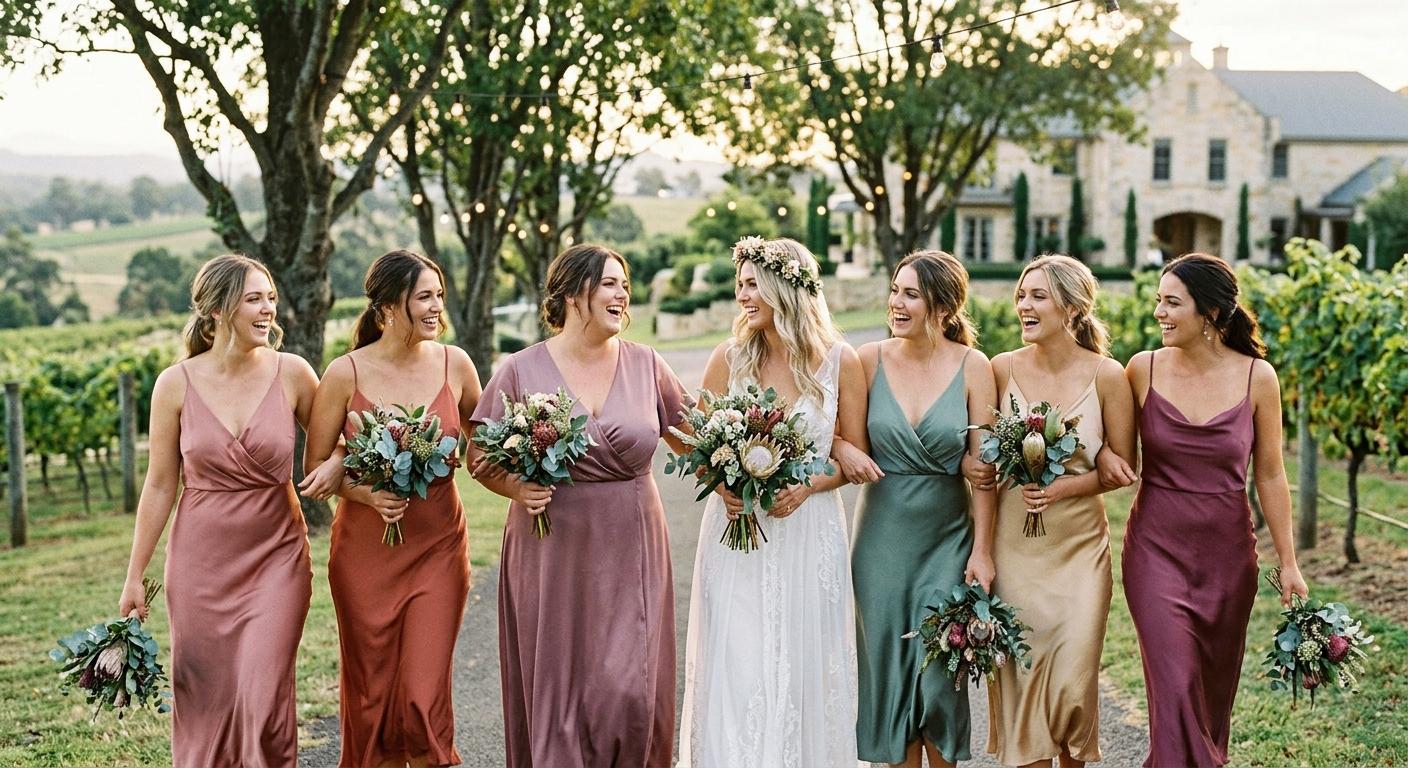
Yes, if you want a coordinated rather than identical finish. Keep a clear connection, such as the same colour family and a similar level of formality. Satin’s highlights and chiffon’s softer surface may make similarly named colours look different, so compare actual swatches side by side before ordering.
If a close match matters most, staying with one designer, fabric and colour is a more straightforward starting point. Discuss matching requirements with the styling team before separate orders are placed. For palette ideas, compare Sage Green Bridesmaid Dresses and Dusty Blue Bridesmaid Dresses and check the fabric on each shortlisted dress.
Which fabric is easiest to care for or alter?
Follow the care label for the exact dress. Fibre content, lining, trims and construction can change the advice, so there is no reliable “all satin is washable” or “all velvet can be ironed” rule. Ask the designer or a garment-care professional before using heat or a cleaning method you have not confirmed is suitable.
Likewise, show an alterations specialist the actual dress. A layered chiffon hem, a satin seam and velvet pile need different handling; the fabric name alone does not establish the cost or whether a particular change is possible.
How do we make the final choice?
- Decide whether you want reflective drape, floating movement or visible texture.
- Shortlist dresses in the required colours and sizes, then check fibre content, lining and stretch for each style.
- Compare fabric swatches in daylight and reception-style lighting.
- Use Try Before You Buy Bridesmaid Dresses where a suitable sample is available to assess movement, fit and comfort.
- Read the product’s lead time and the returns policy before placing the final order.
Frequently asked questions
What is the main difference between satin and chiffon?
Satin has a smooth, reflective surface. Chiffon is fine and sheer, usually used with lining or layers in a dress. Compare the finished garments as their weight and construction can vary.
Is satin always silk?
No. Satin describes a weave and can be made with different fibres. Check the product description for the actual fibre content.
Does chiffon guarantee a cool dress for summer?
No. Chiffon can form a light outer layer, but the lining, number of layers, fibre content and dress construction also affect comfort.
Can satin and chiffon bridesmaid dresses be worn together?
Yes. A shared colour family and similar formality can connect the look. Compare real fabric samples because sheen and texture can make the colours appear different.
Can I use the same care routine for satin, chiffon and velvet?
Do not assume so. Follow each dress label and ask the designer or a garment-care professional when uncertain; fibre content, trims, lining and construction all matter.