Pregnant Bridesmaid? How to Choose a Dress That Adapts
What Is a Maternity Bridesmaid Dress?
A maternity bridesmaid dress isn’t really a separate category so much as a smarter cut of the same dress everyone else is wearing. It’s built around a bump instead of fighting against it: soft stretch fabric, a waistline that sits above the widest part of your belly, and enough ease through the hips and bust that you’re not tugging at seams by the second course of the reception. Some brides do go looking for dedicated maternity ranges, but honestly, a lot of the bridal party dresses on the market already flex well because empire and A-line cuts have been standard for years.
Why it matters comes down to comfort and confidence on the day. Nobody wants to spend a friend’s wedding hiking up a dress that’s cutting into their ribs, or worrying that a fitted bodice is going to look wrong in photos taken six weeks apart from the fitting. Get the cut right and a pregnant bridesmaid photographs beautifully standing right alongside everyone else, no visual asterisk, no “the pregnant one” comment at the reception.
There is also a practical timing issue that trips a lot of brides up. Bridesmaid dresses often get ordered four to six months out, and a pregnancy can shift a lot in that window. The safest move is ordering slightly later, or choosing a style with built-in adjustability, rather than locking in measurements taken at week 12 and hoping for the best.
Choosing the Right Dress for You
Start with the due date, not the dress. If the wedding lands in your first trimester, you’ve got far more flexibility and can often wear the same dress as the rest of the bridal party with only minor tweaks. Third trimester weddings need a different approach entirely, and that’s where empire waists and wrap styles earn their keep.
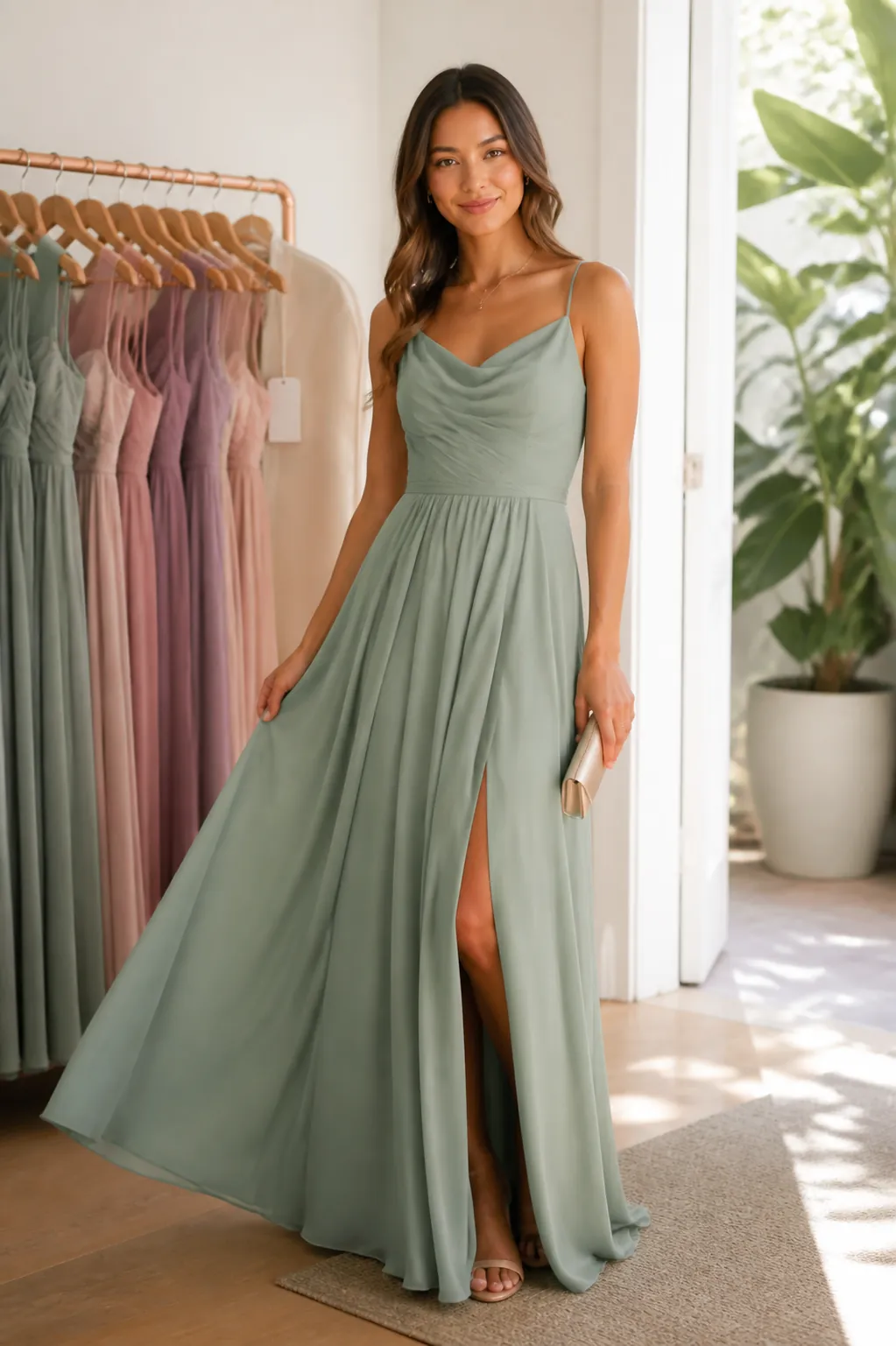
Fabric does more work than most people expect. A jersey or matte crepe with a bit of stretch will move with you all day, while stiffer satins and structured taffetas tend to hold their shape at the waist and either gape or strain depending on the week. If you’re browsing the full bridesmaid dress range, filter by fabric description before colour, because a soft-stretch crepe in the wrong shade is still a better bet than a rigid satin in the “correct” one.
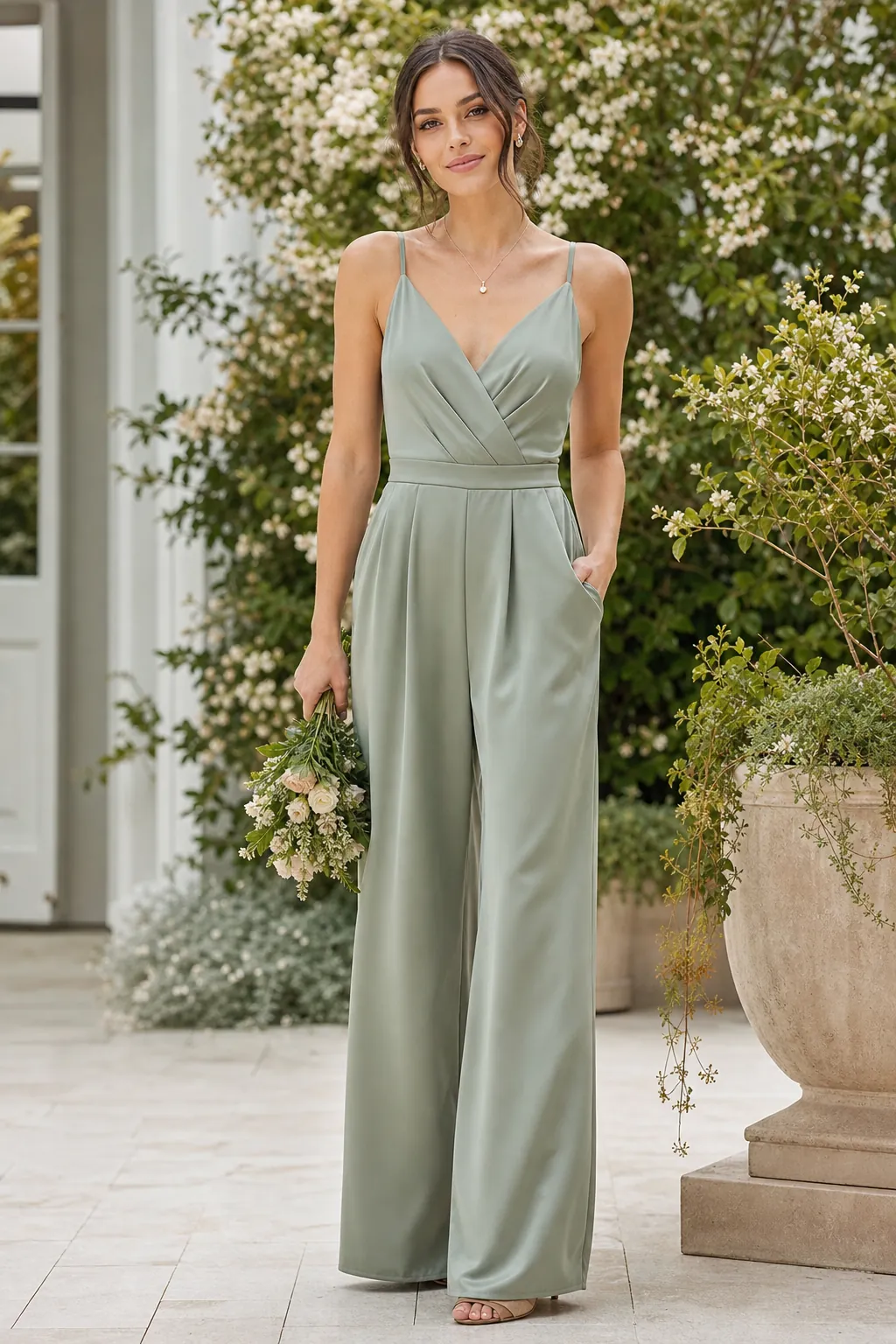
Waist placement is the other big lever. An empire waist sits just under the bust and skims over the belly, so it doesn’t need adjusting much as you grow. A wrap dress ties at the side and can be loosened week by week. A fitted, drop-waist style is the one to avoid unless you’re certain you’ll only be a few weeks pregnant on the day.
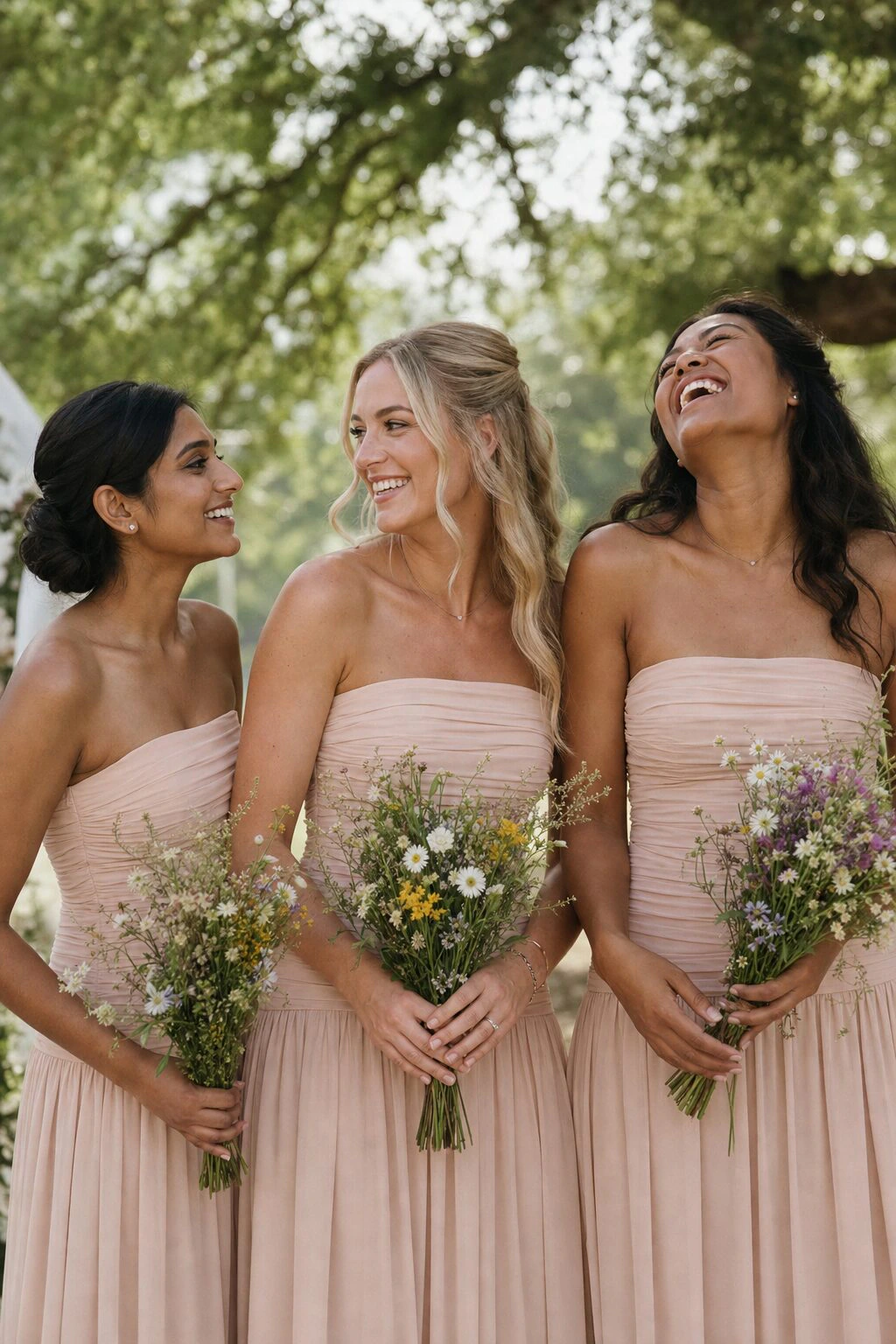
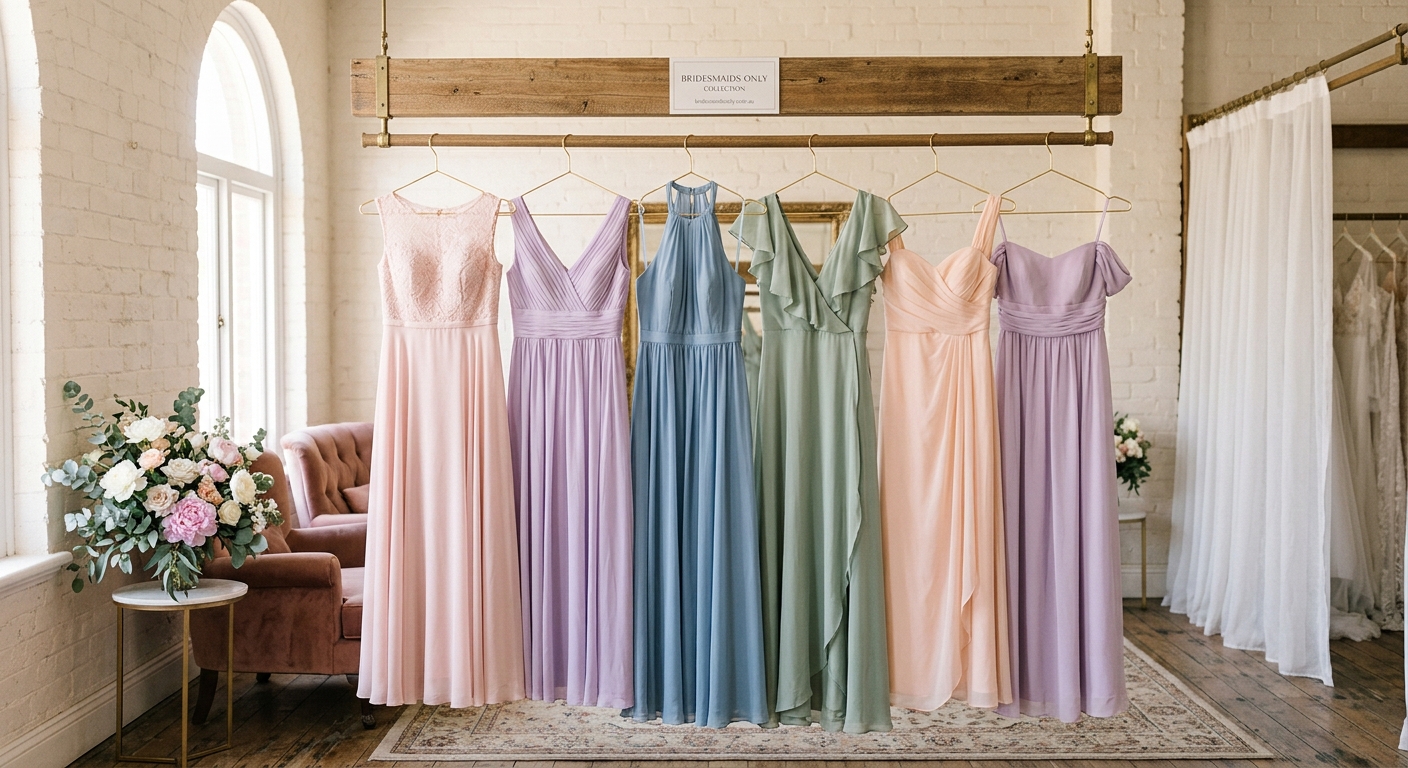
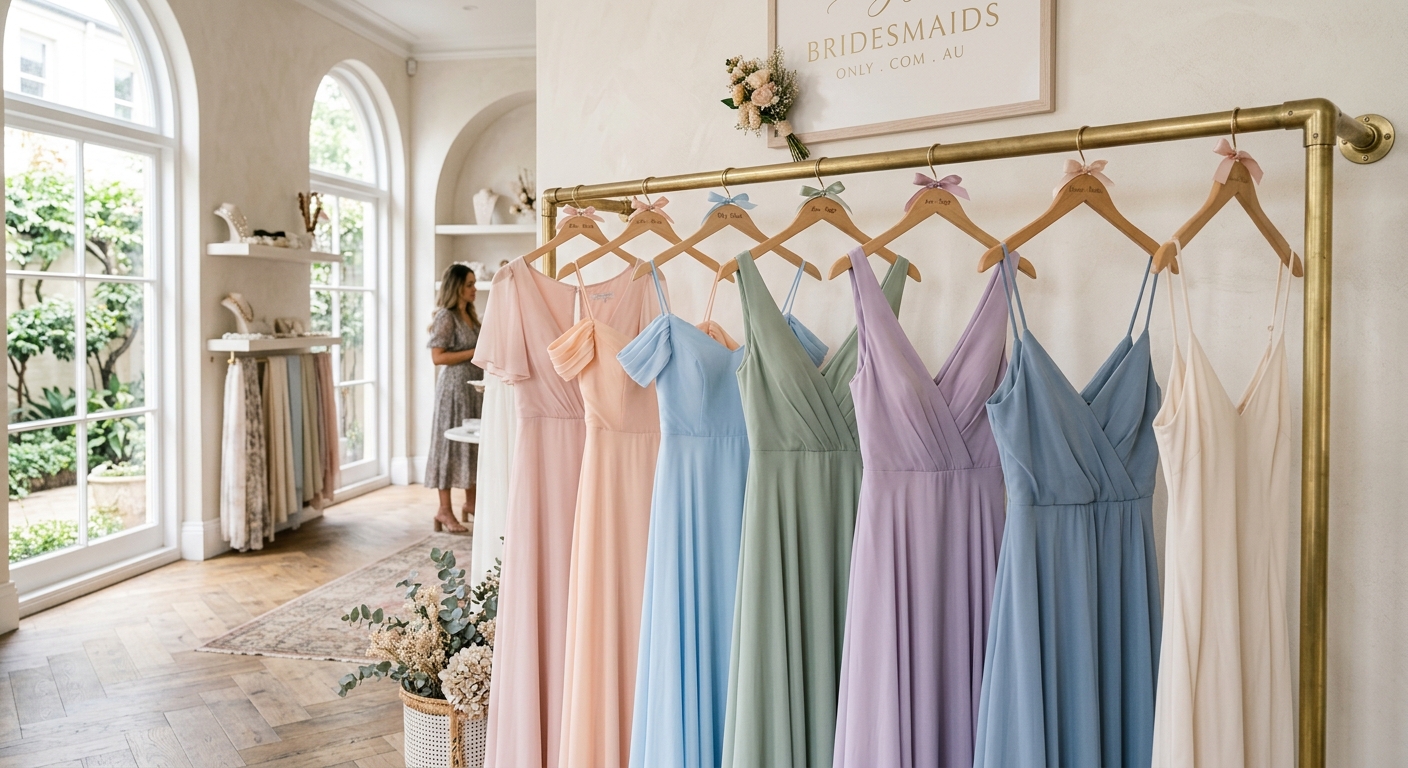
Colour and formality should match the rest of the bridal party wherever you can manage it, since consistency across the group photos matters more to most brides than exact fabric matching. If the group is wearing blush tones, have a look through the blush bridesmaid dresses for softer, flowing options that also happen to suit a bump nicely. Deeper palettes work just as well: the blue bridesmaid dresses collection has several wrap and empire cuts, and the black bridesmaid dresses range is worth a look too, since darker shades are genuinely forgiving through the midsection without anyone needing to know why.
Top Styles and Options
A few silhouettes come up again and again once you start comparing notes with other pregnant bridesmaids, and each one solves a slightly different problem.
Empire Waist
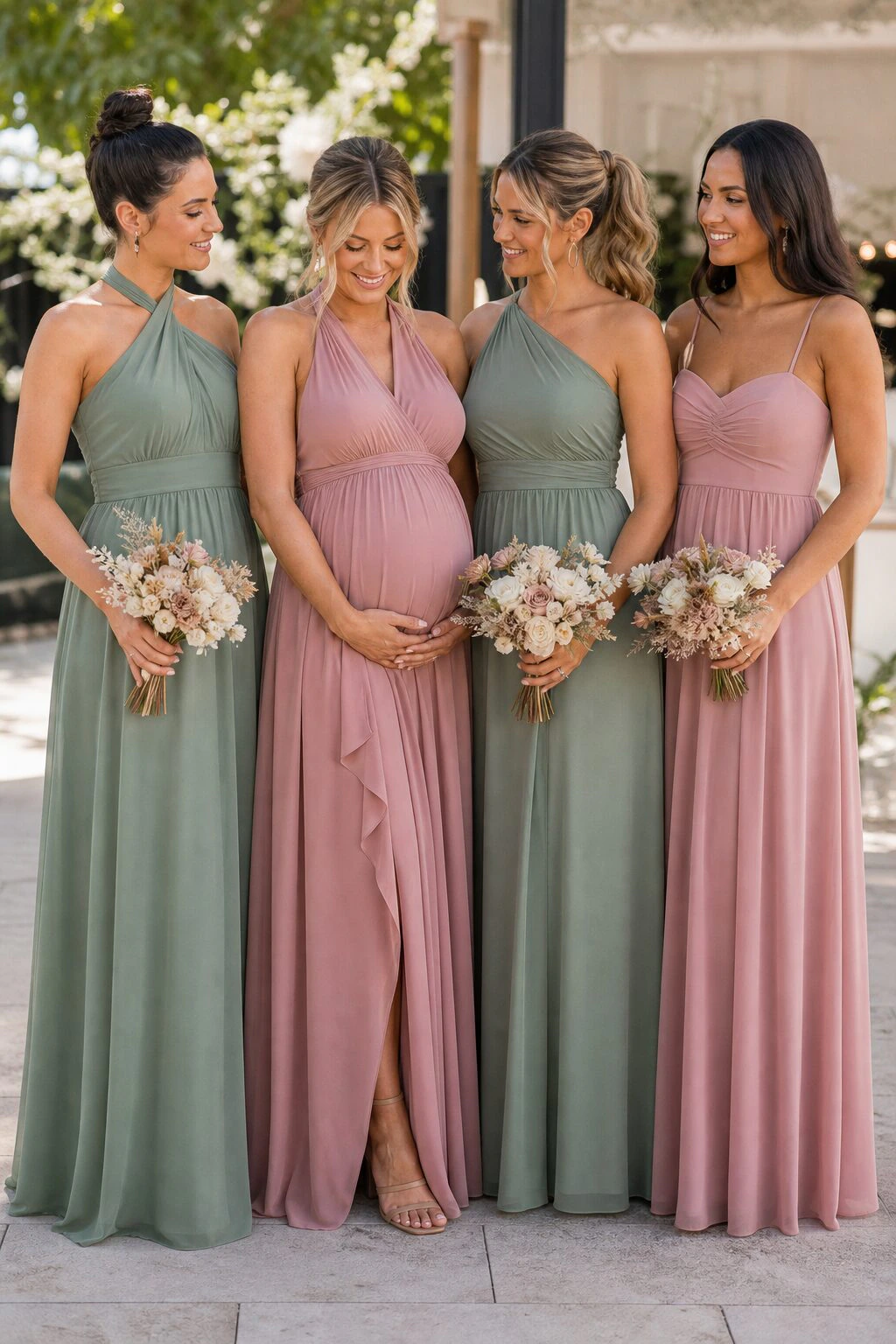
This is the default recommendation for good reason. The seam sits high, right under the bust, and the fabric falls loosely from there. It works from the first trimester right through to full term with almost no adjustment needed, and it flatters a wide range of body shapes even when there’s no bump involved, which matters if the dress needs a second life afterwards.
Wrap Dress
Wrap styles tie at the side or front and genuinely adjust as you grow, which makes them the safest pick if the wedding is months away and you have no idea what size you’ll be on the day. The trade-off is that a wrap dress needs a bit more attention when you’re moving around (dancing, sitting, getting in and out of cars), since the tie can loosen.
A-Line with Stretch Fabric
A structured-looking A-line in a fabric with 4-way stretch gives you the polished look of a fitted gown without the actual fitting. These sit nicely in the affordable edit if budget is a factor, since stretch jersey tends to cost less to produce than structured satin anyway.
Two-Piece Sets
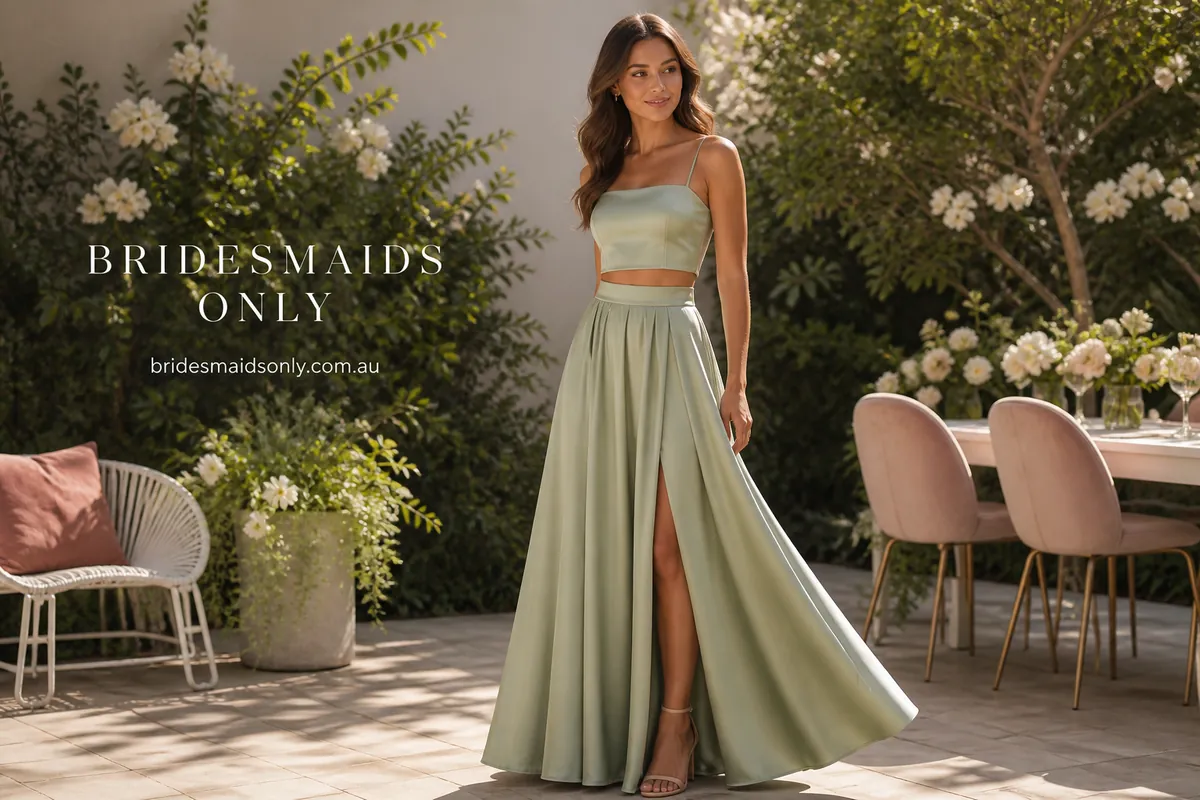
Separates are underrated for this exact situation. A flowing skirt paired with a soft top means you can size the two pieces independently, and if your bump grows faster than expected in the weeks before the wedding, you’re only adjusting one half of the outfit instead of returning the whole dress.
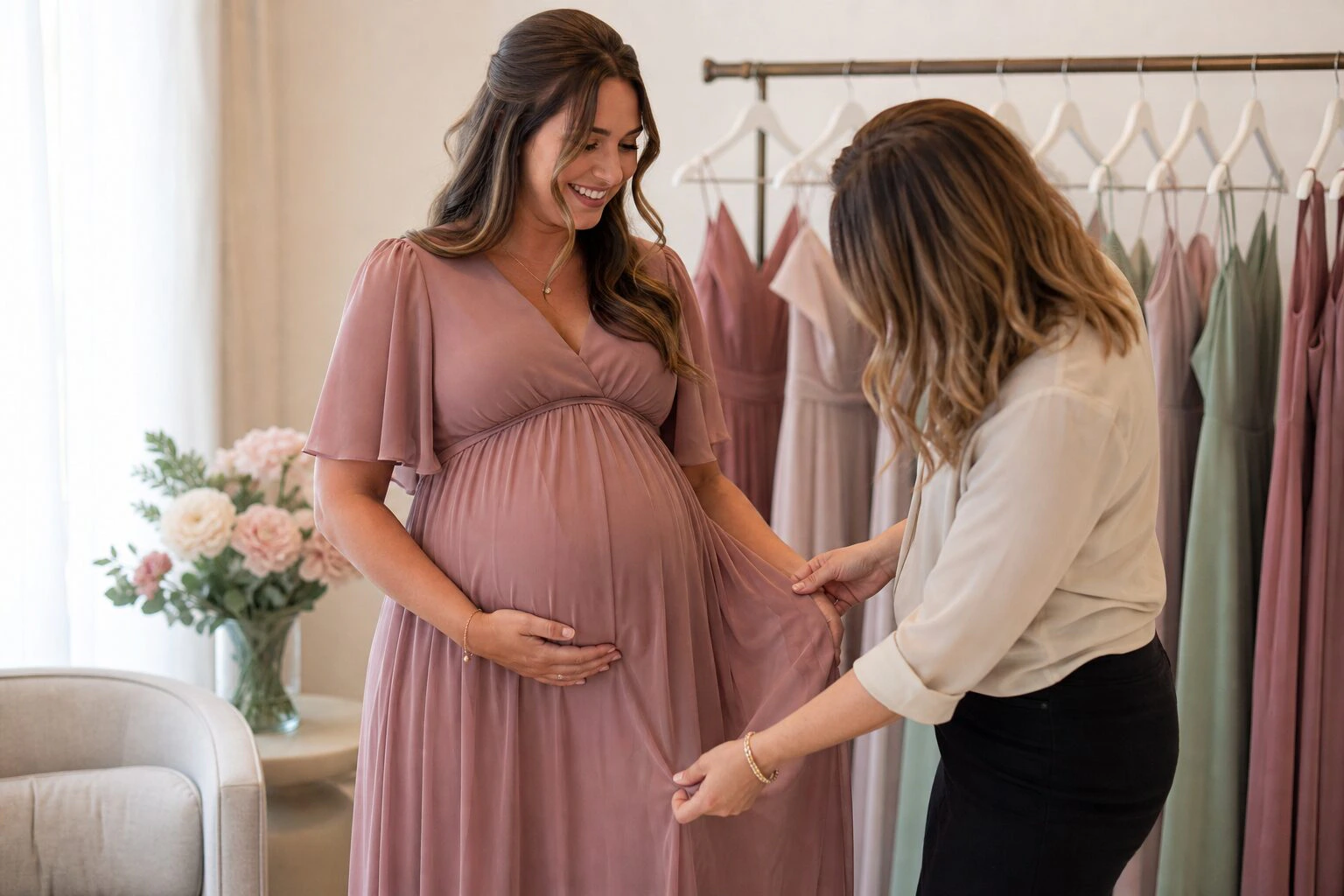
Whatever style you land on, don’t forget the layer underneath. A supportive slip or cami set changes how any of these dresses sit, and the bridesmaid cami sets are worth pairing with a wrap or empire dress for extra support through the bust without adding another fitted layer to worry about.
What to Consider Before Buying
Timing is the first thing to nail down. Order too early and you are guessing at a size months out from the wedding. Order too late and you risk missing alteration windows. The general rule most bridal stylists give is to order around 8 to 10 weeks before the wedding if you are past your first trimester, which gives enough runway for a tailor to make final adjustments closer to the date. Ordering one size up with room for a tailor to take it in is safer than ordering true-to-bump and hoping nothing changes.
Return and exchange policies matter more here than for any other bridesmaid. Pregnancy sizing isn’t linear, and a policy that only allows exchanges within 14 days isn’t much use if your body changes shape in week 30 rather than week 20. Check this before you buy, not after.
Comfort features are easy to overlook when you’re focused on how a dress looks in photos. Look for wider straps if you’re anywhere in your third trimester (thin straps and a heavier bust are not a fun combination for a full day of standing), and check whether the fabric breathes, since pregnancy runs warmer than usual and a heavy synthetic in a hot reception room is genuinely miserable.
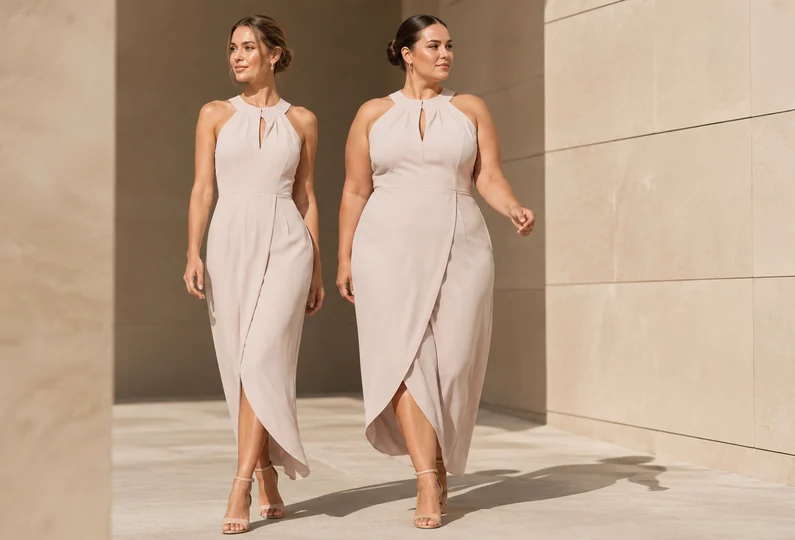
Length is worth a second thought too. Full-length gowns look elegant but can be a tripping hazard when your centre of balance has shifted, particularly on stairs or uneven venue floors. A midi length, or a floor-length dress with a slightly shorter hem at the front, solves this without anyone noticing the compromise.
Budget doesn’t need to blow out just because you’re pregnant. Comfortable, adaptable dresses aren’t automatically pricier, and the affordable edit has several empire and wrap styles that tick every box above without the maternity mark-up some specialty retailers charge.
Finally, think about what happens to the dress after the wedding. If you’re not planning on staying pregnant-shaped forever (fair assumption), a wrap or A-line in a fabric with stretch will still fit reasonably well post-baby, whereas a dress built entirely around accommodating a bump might not have much of a second life. It’s a small thing, but worth factoring in if you’re paying full price.
Tips from the Experts
Bridal stylists tend to repeat the same handful of pieces of advice, and they’re worth listening to because they’ve seen what goes wrong.
Buy the dress later than you think you need to. Most stylists suggest waiting until you are past the 20-week mark if the wedding allows for it, since bump size and shape can shift noticeably between the first and second trimester. Measure close to the event, not months in advance, and if the bride needs a colour or fabric decision earlier for ordering purposes, separate that decision from the actual sizing.
Get a proper fitting rather than relying on a size chart. Bump shape varies enormously between people at the same number of weeks, and a size chart built around a flat stomach measurement won’t tell you much. If the retailer offers virtual sizing help or a fit guide, use it, and don’t be afraid to ask directly whether a particular style has been fitted on a pregnant customer before.
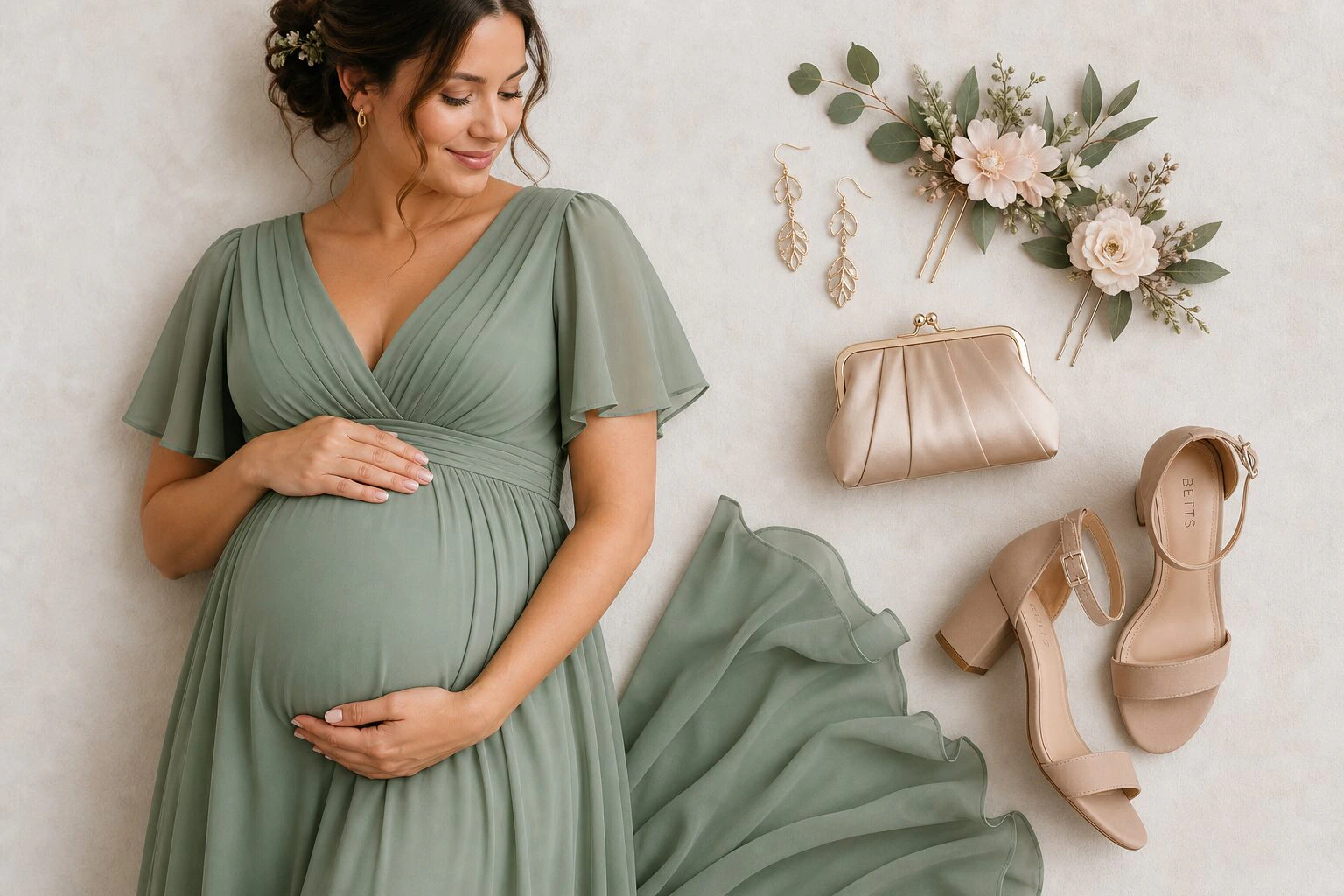
Plan the whole outfit, not just the dress. A supportive undergarment, comfortable shoes with a bit of grip, and a light robe for the morning-of photos all matter more when you’re pregnant. The bridesmaid robes range is worth grabbing a set from for the getting-ready photos, since a loose robe is a lot more comfortable than squeezing into the dress hours before you need to.
Don’t skip the accessories conversation either. A statement necklace or earrings can shift attention away from the midsection if that’s something you’re self-conscious about, and it’s an easy way to still feel co-ordinated with the rest of the group. Have a browse through the bridesmaid accessories collection before the big day so you’re not scrambling for jewellery the week before.
Lastly, talk to the bride early. Most brides would rather adjust a dress choice than have a bridesmaid suffer through an uncomfortable day, and raising it as a “here’s what I’m thinking” conversation rather than a last-minute problem tends to go down a lot better. Bridesmaids who’ve been through it themselves often say the earlier they mentioned it, the more relaxed the whole process felt.
Frequently Asked Questions
What is the best maternity bridesmaid dress?
There’s no single “best” style, but empire waist and wrap dresses in a stretch fabric consistently work best across all trimesters. They skim rather than cling, and they don’t need much adjustment as your body changes in the weeks before the wedding.
How do I know which maternity bridesmaid dress is right for me?
Match the dress to your due date rather than the calendar date of the wedding. If you’ll be early in your pregnancy, most standard bridesmaid dresses will work fine. If you’ll be in your third trimester, prioritise empire or wrap styles with wide straps and breathable fabric.
What should I look for when buying a maternity bridesmaid dress?
Check the fabric has genuine stretch, confirm the waist sits above the widest part of your belly, and know the returns position before you pay. Ours is final sale on every dress, which is why a pregnant bridesmaid in particular should order a fabric swatch and use Try Before You Buy to settle sizing rather than relying on a return window.
Are there budget-friendly maternity bridesmaid dresses?
Yes, comfortable and adaptable styles don’t have to cost more than a standard bridesmaid dress. Stretch-fabric empire and A-line dresses in an affordable range often fit just as well as pricier maternity-labelled alternatives.