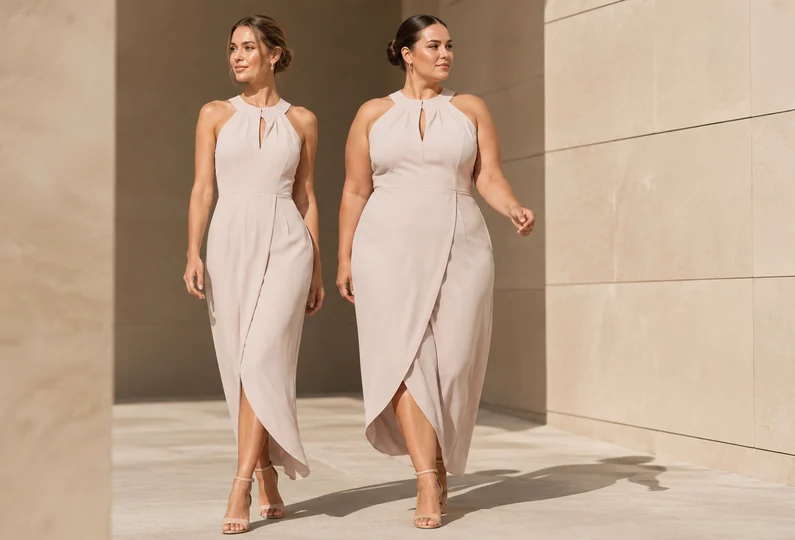
How to Mix and Match Bridesmaid Dresses (and Actually Pull It Off)
If there’s one bridal party trend that’s absolutely taken over Australian weddings heading into 2026, it’s mix and match bridesmaid dresses. And honestly? It makes so much sense. When your bridesmaids are different sizes, different heights, and have wildly different personal styles, forcing them all into the same silhouette rarely does anyone any favours.
Done right, the mix and match look is cohesive, intentional, and genuinely beautiful. Done wrong, it can look like everyone grabbed something random from their wardrobe on the way out the door. This guide will help you nail the former — with practical advice on what actually works, what to avoid, and how to brief your girls so everyone feels confident and gorgeous on the day.
Why Mix and Match Bridesmaid Dresses Work So Well
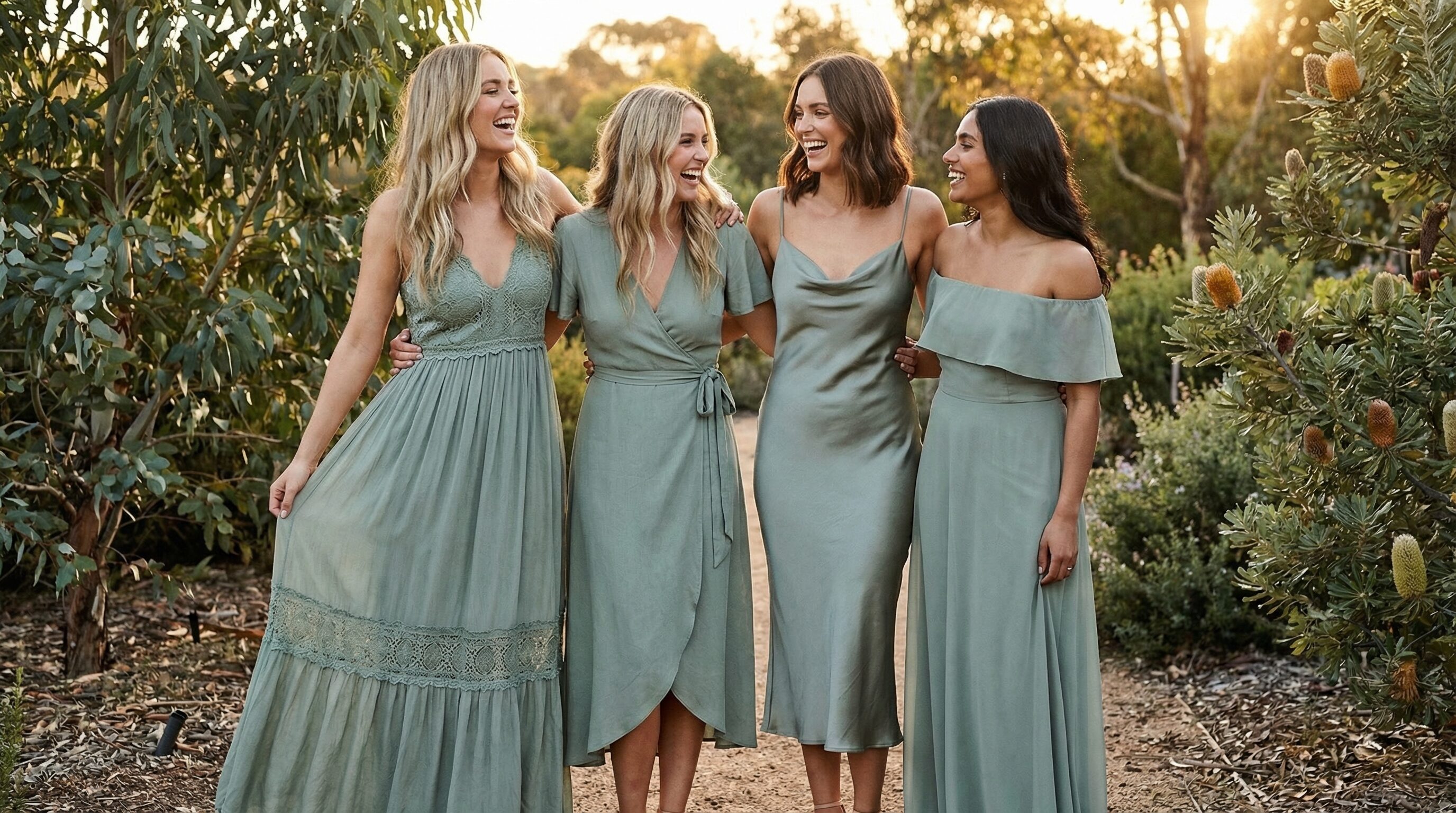
The beauty of mix and match is that it starts with a shared foundation — usually a colour, or a colour family — and then gives each bridesmaid freedom within that palette to choose a silhouette that flatters her body and suits her style.
It’s a kinder approach to dressing a group of real women with real bodies. A floor-length cowl neck that looks incredible on one person might not work at all for someone else. The mix and match approach lets each bridesmaid shine in something she actually feels great in — which shows on camera.
From a styling perspective, it also adds dimension. A bridal party with a flowing maxi, a sleek midi, and a fitted full-length gown all in the same dusty sage green is visually dynamic in a way that a row of identical dresses rarely is.
The Non-Negotiables: What to Agree On First
Before your bridesmaids head off to browse, you need to lock in a few things together. These are your guardrails — the shared elements that make a mix and match group look deliberate rather than disjointed.
1. Choose One Colour (or a Tight Colour Family)
This is the single most important decision. Pick one hero colour, or two very closely related shades (like blush and soft rose, or sage and olive). Anything more than that risks looking like a colour chart explosion.
Popular choices for Australian brides right now include dusty sage, warm terracotta, champagne, and soft slate blue. Browse our full bridesmaid dress collection by colour to find what resonates with your wedding palette — we have dedicated ranges in green, champagne, blush, navy, and many more.
2. Agree on a Fabric (or at Least a Fabric Feel)
A chiffon dress standing next to a satin dress standing next to a sequin dress in the same colour can still look off. Try to keep your fabrics in the same family — all flowy and light, or all structured and polished. If you’re allowing different fabrics, at least stick to a similar finish (matte vs. shine, for example).
3. Decide on Length — or Allow a Defined Range
You can allow a mix of lengths, but be deliberate about it. Floor-length and midi-length often work beautifully together. Floor-length and mini-length in the same group is a harder look to pull off.
4. Set a Budget Before Anyone Starts Shopping
Different silhouettes come at different price points. Set a maximum spend per person upfront — it keeps things fair and stops anyone feeling pressured to stretch beyond their comfort zone.
What Doesn’t Work (Be Honest With Yourself)
Let’s save you some stress with a few honest cautions:
- Too many variables at once. Mixing colour AND fabric AND length AND neckline all at the same time is usually too much. Nail one shared anchor (colour is the strongest) and build from there.
- Choosing wildly different shades and calling it a palette. Dusty rose and hot pink are not the same family. Be disciplined with your colour selection — request fabric swatches if you’re unsure.
- Letting everyone shop solo without clear direction. A brief is not a suggestion. Give your bridesmaids specific parameters (colour code, fabric, length range) or they’ll come back with six completely different interpretations.
- Ignoring the photos. What looks fine in person can read as chaos in photography. Look up inspiration images of mix and match bridal parties and check that yours tells a clear visual story.
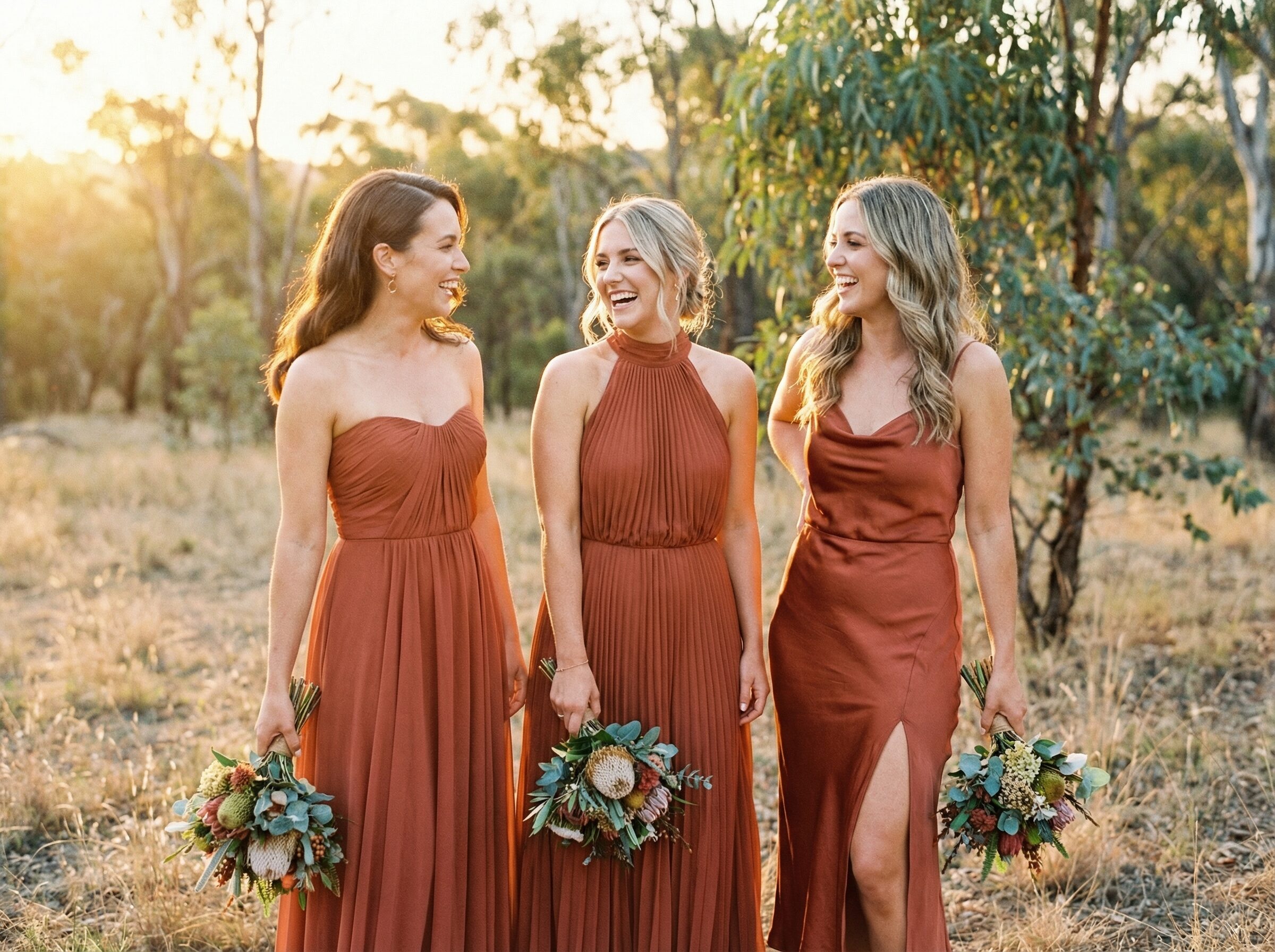
How to Brief Your Bridesmaids (Without the Group Chat Drama)
This is where a lot of brides lose the plot — not because the idea is bad, but because the communication is vague. Here’s a simple briefing framework that actually works:
Send a Visual Reference First
Pull 3–5 inspiration images of mix and match bridal parties you love (Pinterest is great for this) and send them to your group before any conversation about specifics. Visuals do more work than words.
Write a One-Page Brief
Keep it simple. Your brief should include:
- Colour: Exact shade or a colour family with examples (e.g. “sage green — think muted, not bright”)
- Fabric: Preferred fabric or feel (e.g. “chiffon, satin, or crepe — nothing shiny or sequined”)
- Length: Floor-length or midi only, or floor-length preferred
- Neckline/style: Any exclusions (e.g. “no strapless” if you have a bridesmaid who doesn’t suit it)
- Budget: Maximum per dress
- Deadline: When they need to have confirmed their choice by
Give Them a Shortlist, Not an Open Catalogue
Rather than sending your bridesmaids to browse the entire internet, narrow it down. Send them a link to a curated colour category — for example, our green bridesmaid dresses or champagne styles — and ask them to pick from within that edit. Decision fatigue is real, and so is the risk of someone going rogue.
Have a Final Sign-Off
Before anyone orders, ask each bridesmaid to send you a photo of their chosen dress. You need to see the full group together on screen before anything is purchased. It takes five minutes and can save enormous amounts of stress later.
Styling the Group on the Day
Once the dresses are sorted, a few finishing touches will pull the group together visually:
- Keep accessories cohesive. Matching or complementary jewellery, earrings, or a hair style brings unity without requiring identical dresses.
- Coordinate bouquets. If the dresses are all different styles, matching or tonal bouquets are a strong unifying element in photos.
- Consider shoes. You don’t need to match shoes exactly, but staying within a similar colour family (nude, champagne, gold, white) keeps the look clean.
- Photograph together early. Get your full bridal party photos done before the reception. Lighting is usually better, and everyone still looks fresh.
Mix and Match Doesn’t Mean Maternity or Plus Size Gets Left Behind
One of the great strengths of the mix and match approach is that it naturally accommodates different body types — including your pregnant bridesmaids. A silhouette that works for a bump or a curvier frame might not be the same as what suits your petite maid of honour, and that’s exactly the point.
We have dedicated ranges for maternity bridesmaid dresses and plus size bridesmaid dresses — all in the same colour families as our main range, so the group stays cohesive no matter who’s wearing what.
Ready to Start Shopping?
The mix and match bridesmaid dress trend is here to stay — and for good reason. It’s more flattering, more personal, and more visually interesting than a matching set, when it’s done with intention.
Start by browsing our full bridesmaid dress collection by colour, or explore our in-stock dresses if you’re working to a tight timeline. If you need a fabric swatch before committing, we offer those too — just head to our swatch page and order before you shop.
Your bridesmaids are going to look incredible. We’re here to help make it happen.