What Length Bridesmaid Dress Suits Which Wedding Style?
Why Dress Length Matters
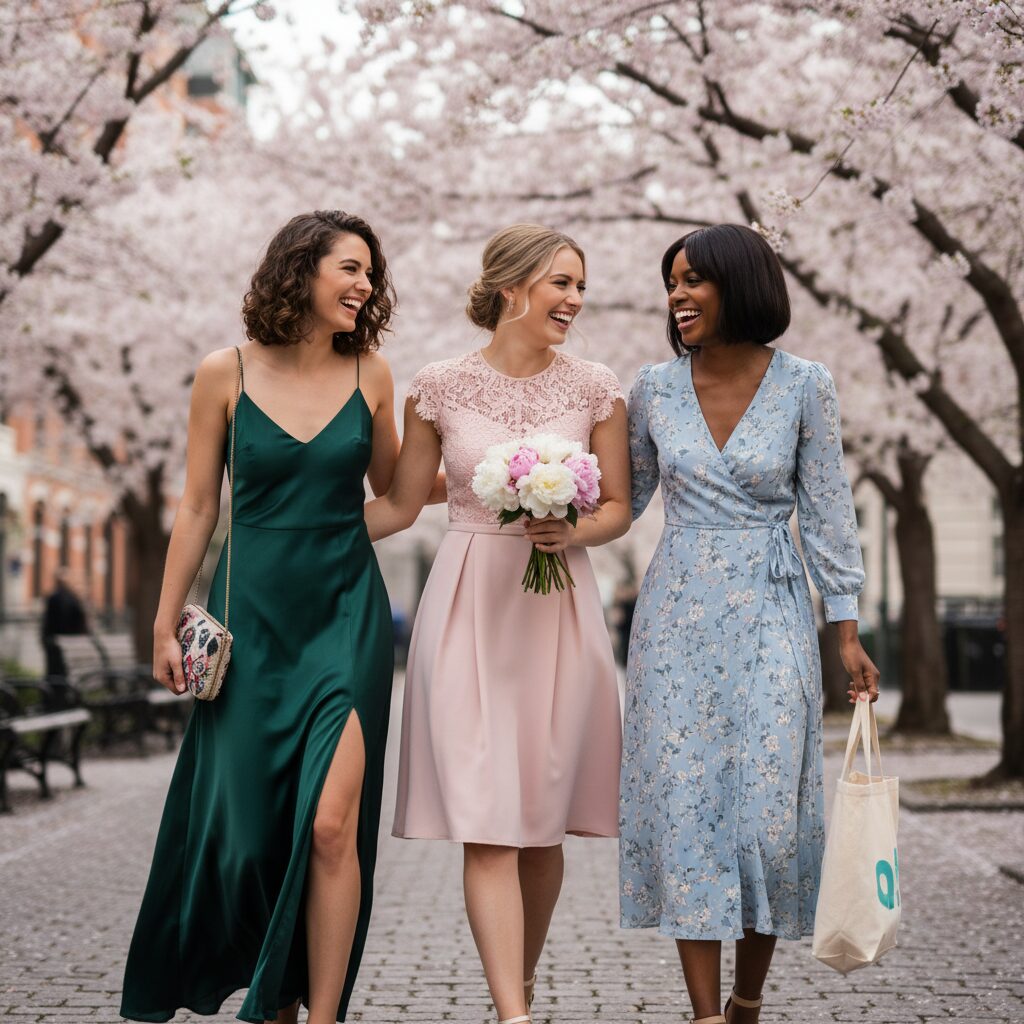
Bridesmaid dress length isn’t just a styling detail, it’s the thing that sets the whole tone of the wedding party photos. A floor-length gown on a formal ballroom aisle looks intentional and considered. Drop that same gown into a barefoot beach ceremony and it starts fighting the setting, sand hems, tripping on driftwood, the works. Length is doing more work than colour or fabric in most cases, because it’s the first thing your eye reads from across the room.
We hear this from brides constantly: they picked a stunning dress style, then realised halfway through fittings that the length doesn’t suit the venue, the season, or half the bridal party’s comfort level. Sorting length early saves you from reordering three months out, which is a headache nobody needs. Have a browse through the full bridesmaid dresses range and you’ll notice most silhouettes come in two or three lengths precisely because one wedding’s “perfect” is another wedding’s “too much.”
Formality is the biggest driver. Black tie and evening weddings almost always call for floor-length. Daytime, garden, or rustic weddings give you room to go shorter without looking underdressed. Season matters too, a heavy floor-length gown in January (Aussie summer) is a recipe for sweaty photos, while a mini in a Melbourne winter wedding will have your bridesmaids freezing by the reception.
Choosing the Right Length
Start with the venue, not the catalogue. A dress that photographs beautifully on a marble staircase can look completely wrong on grass or sand. Here’s the quick logic we walk brides through:
Ballroom or hotel reception: floor-length, full stop. The formality of chandeliers and white tablecloths asks for a gown that skims the floor. Anything shorter reads as “didn’t get the memo.”
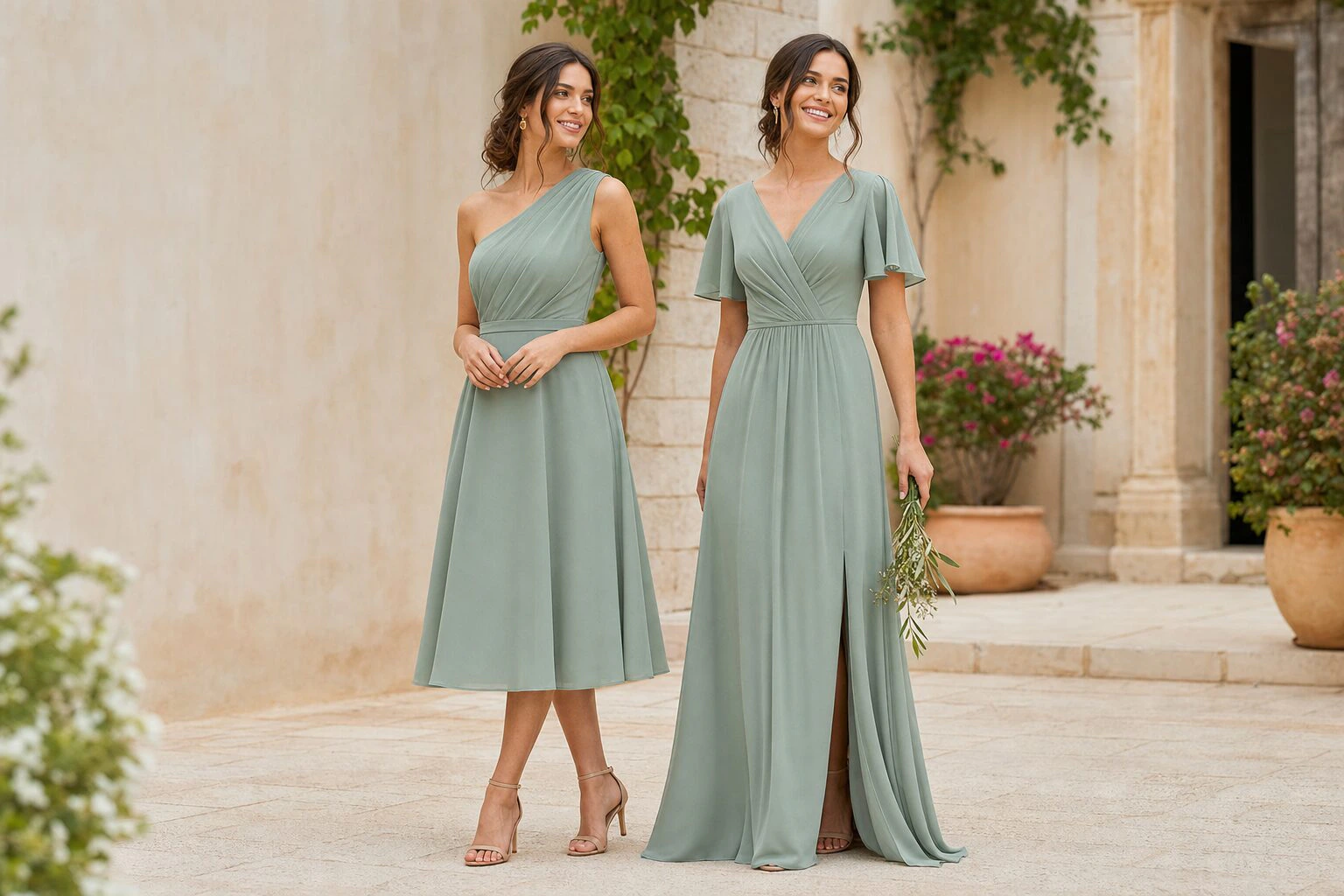
Beach or coastal ceremony: midi or tea-length. Floor-length hems drag through sand and get damp fast, and nobody wants that in the group shots. A midi in a breathable fabric moves nicely in the sea breeze and still looks considered.
Garden or vineyard wedding: midi to floor, depending on how dressed-up the rest of the day is. If there’s a marquee and a string quartet, lean floor-length. If it’s more relaxed with fairy lights and long tables, midi works just as well.
Backyard or casual daytime wedding: mini or midi. These weddings are usually about comfort and warmth over formality, and a shorter hem lets bridesmaids actually move, dance, and help with setup without hoiking up fabric all day.
City rooftop or industrial venue: midi works surprisingly well here, it has enough polish for a stylish backdrop without competing with concrete and skyline views the way a full gown can.
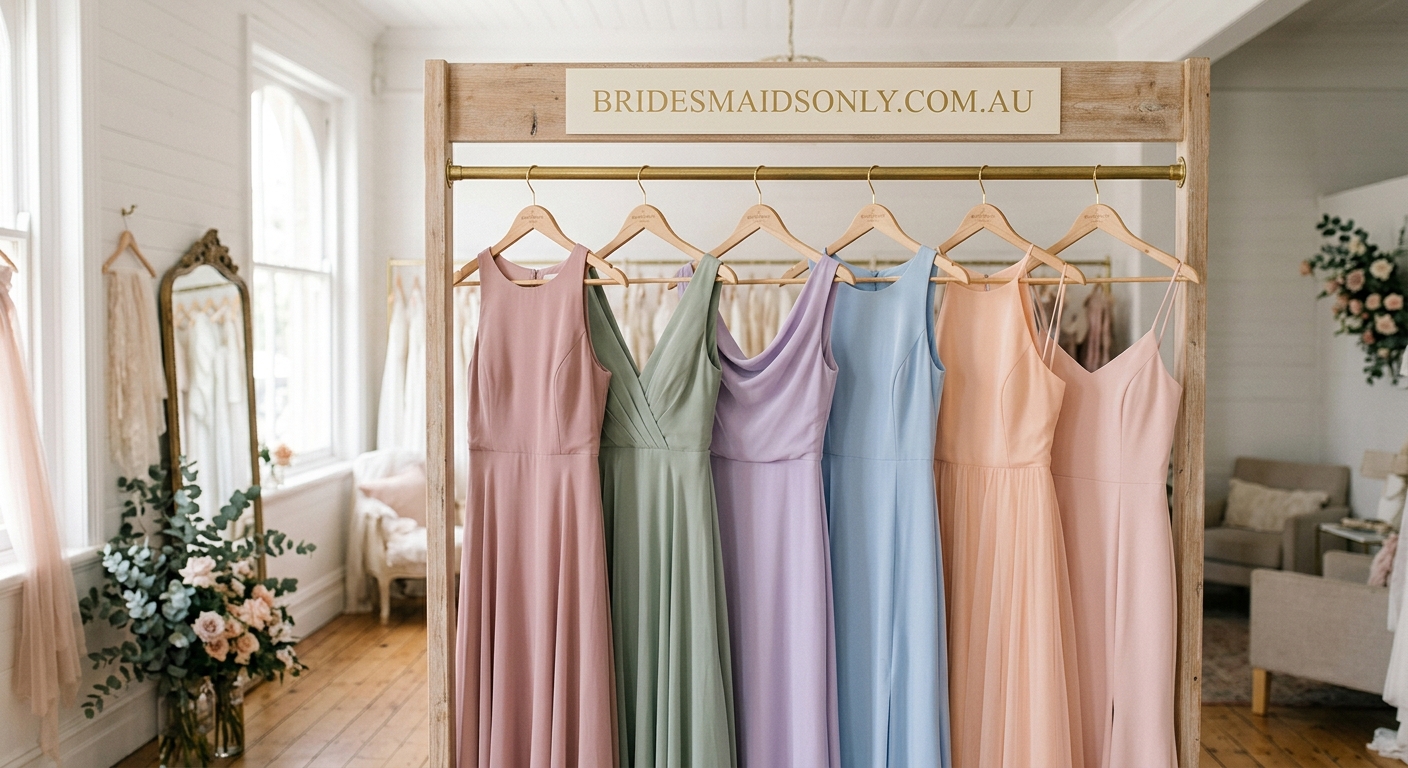
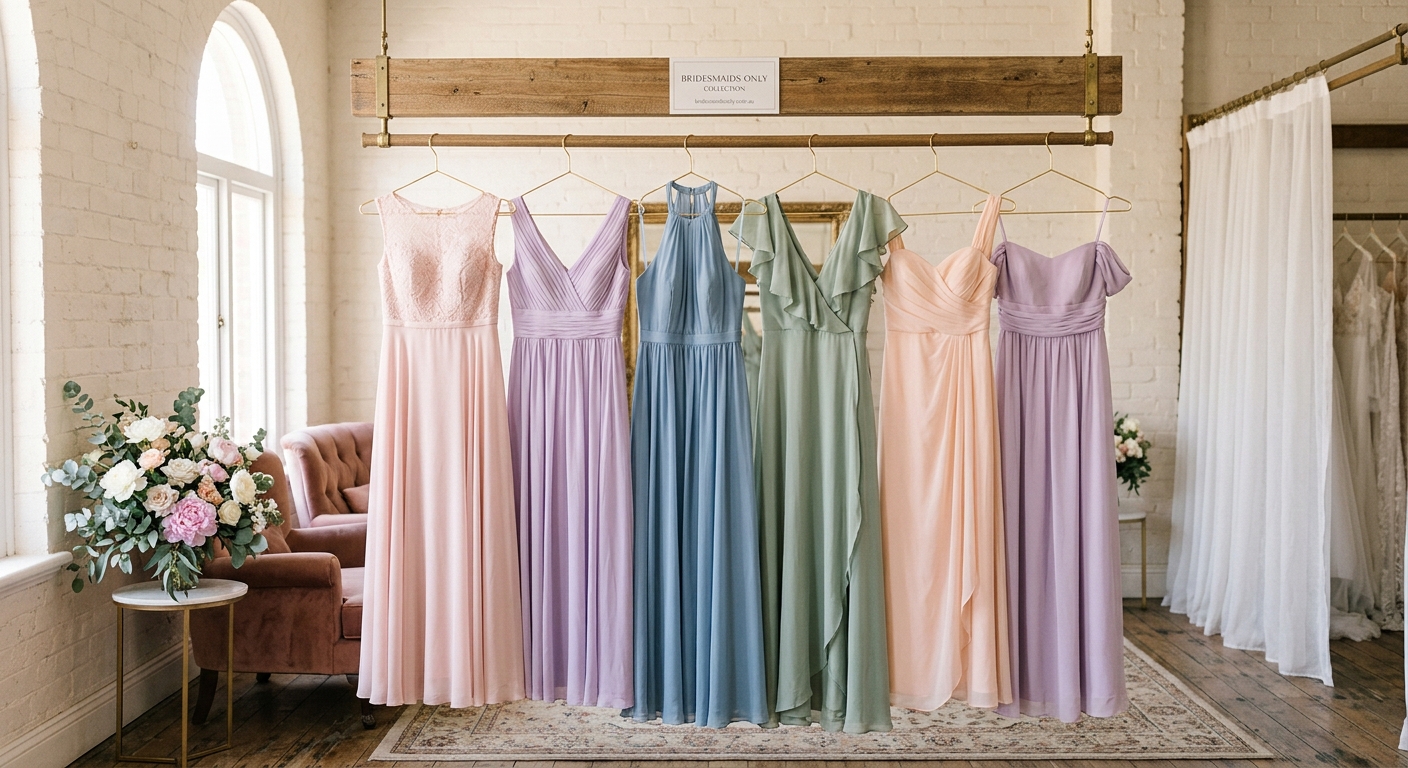
Colour and length decisions tend to happen together, so it’s worth looking at the blush bridesmaid dresses and blue bridesmaid dresses collections side by side in the same length to see how the two choices play off each other before committing.
Top Length Styles and Options
There are really four lengths that cover almost every Australian wedding style, and each one has a distinct personality.
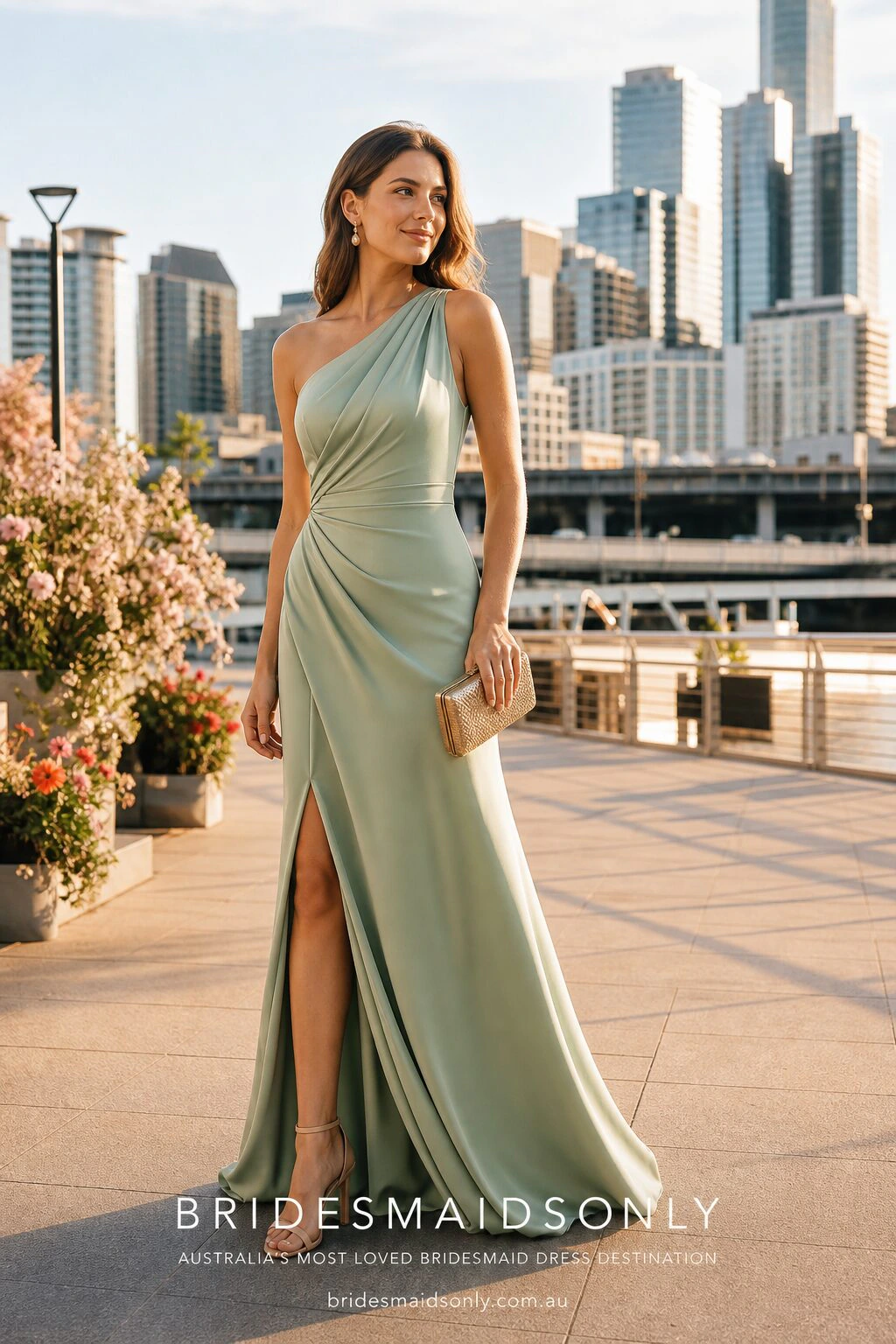
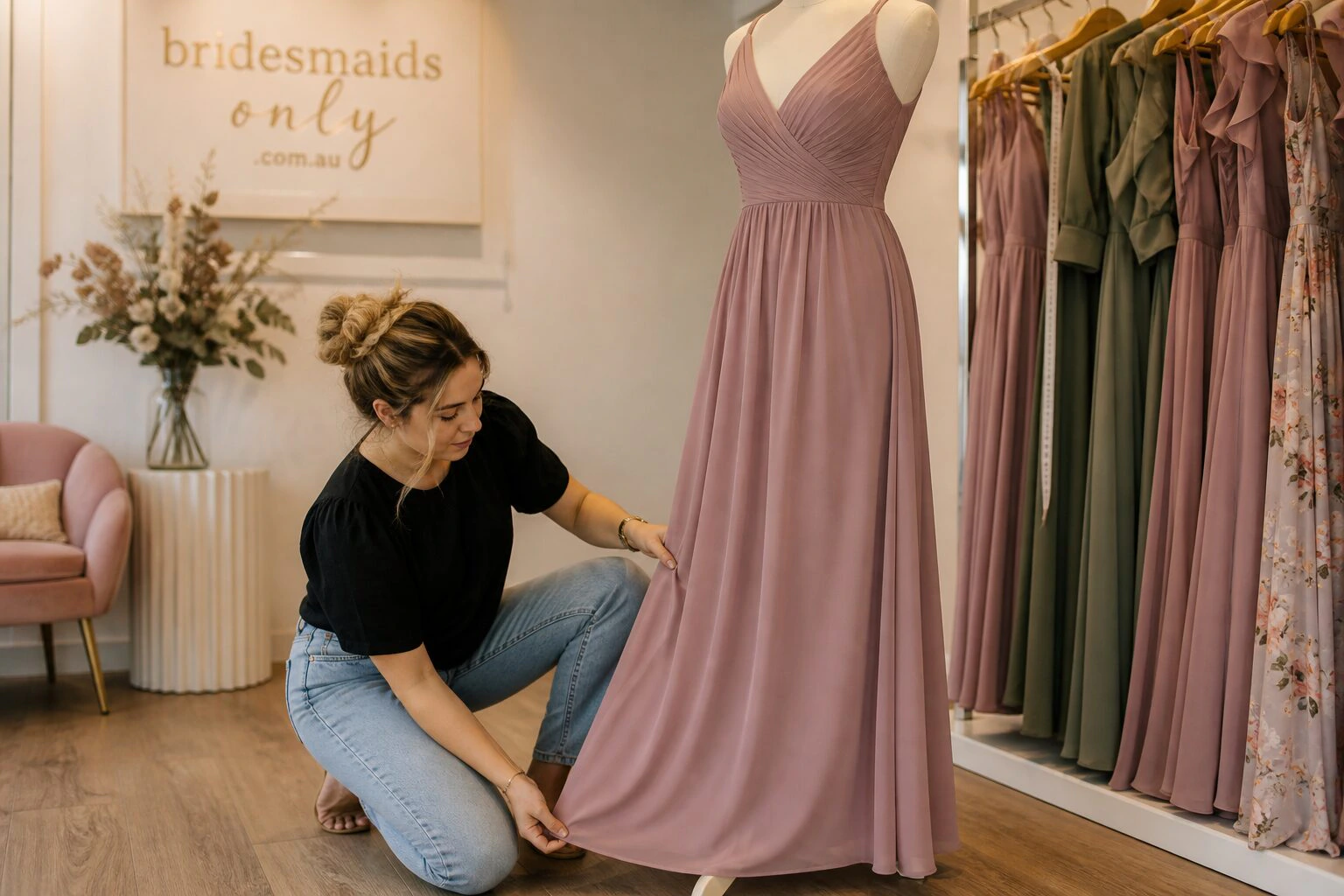
Floor-length: the classic. Elegant, forgiving on most body types, and the safest choice for formal or evening weddings. It elongates the silhouette and photographs beautifully in both natural light and reception lighting.
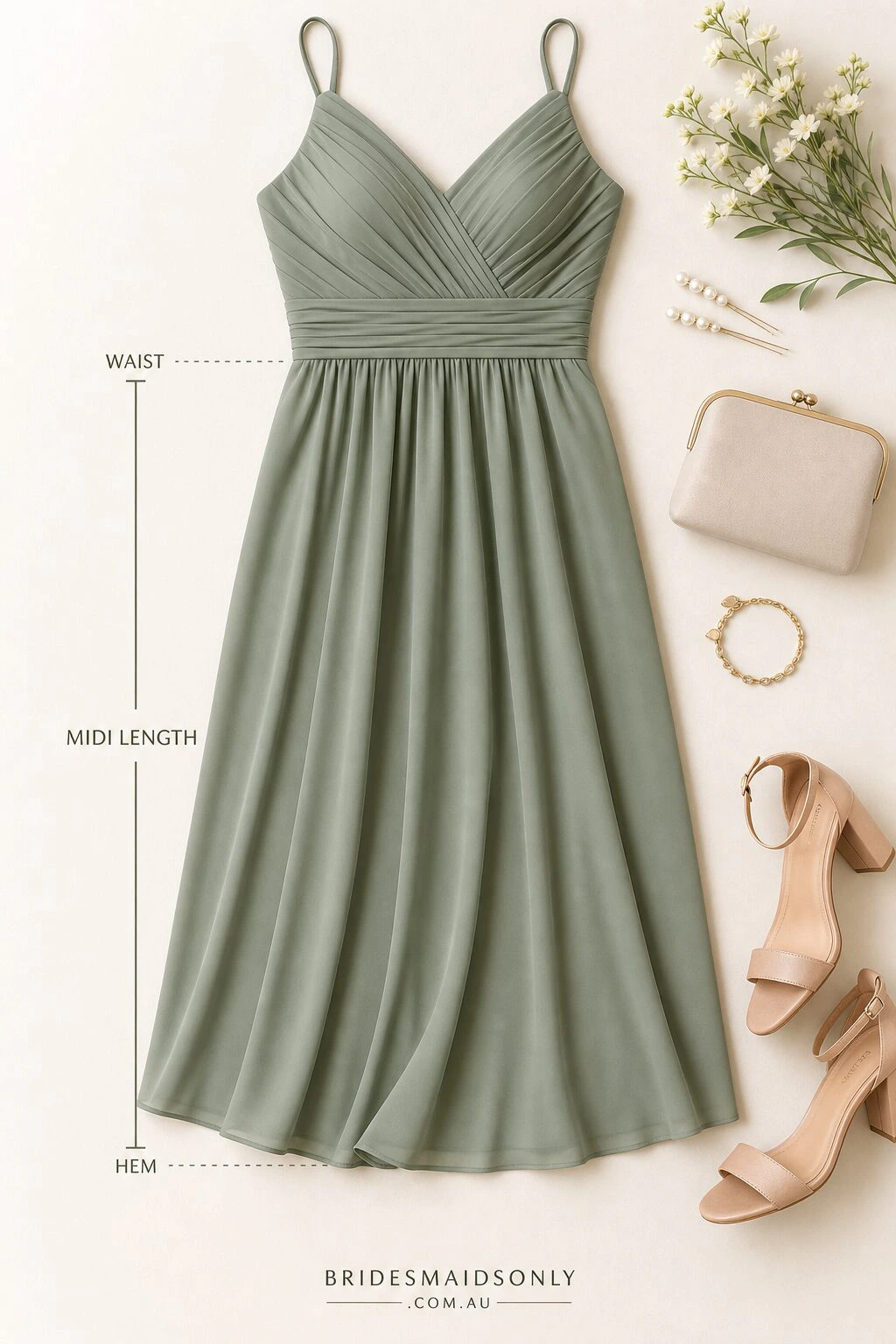
Midi (mid-calf to just below the knee): the most requested length for 2026 weddings, based on what we’re seeing move through our own store. It’s relaxed enough for daytime and outdoor settings but still looks deliberate rather than casual. Midi is also the most practical length for bridesmaids who’ll be dancing all night.
Tea-length (mid-calf, slightly fuller skirt): a vintage-leaning option that suits garden and heritage-venue weddings especially well. It has a softer, more romantic feel than a straight midi.
Mini: best for casual, second-day, or engagement-style celebrations. Not every wedding suits mini bridesmaid dresses, but for a relaxed backyard bash or a rehearsal dinner it’s a genuinely good call.
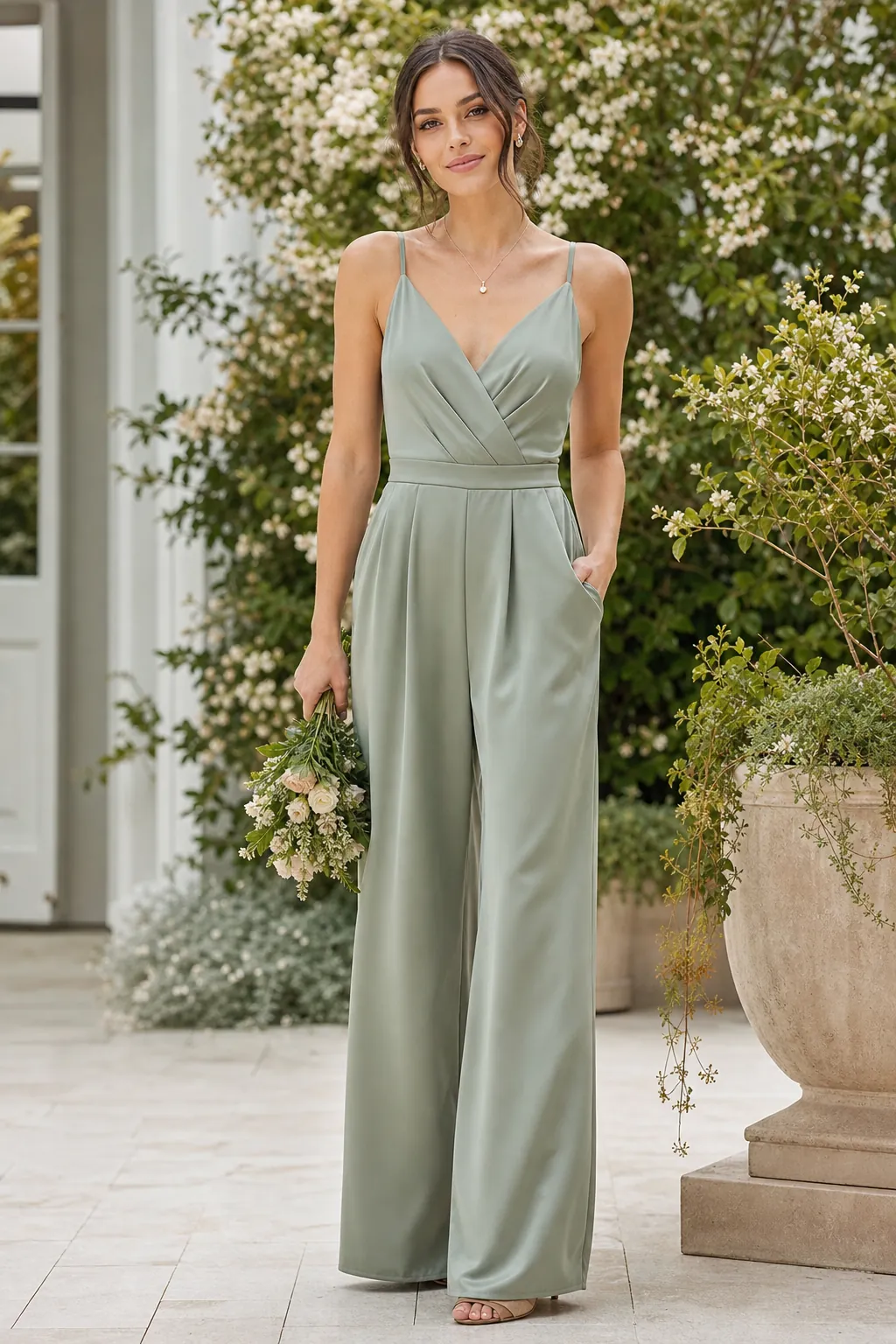
Style and length also shift depending on whether you’re dressing the whole party in one colour or mixing tones. If budget’s a factor across a bigger bridal party, the affordable edit has floor and midi options at a price point that doesn’t punish a party of six or eight. And for weddings leaning moody or modern, the black bridesmaid dresses collection covers floor-length and midi in the same silhouettes, so nobody’s stuck choosing between the look they want and the length the venue needs.
What to Consider Before You Buy
Before you lock in a length, run through these five checks with your bridal party, they’ll save you money and stress later.
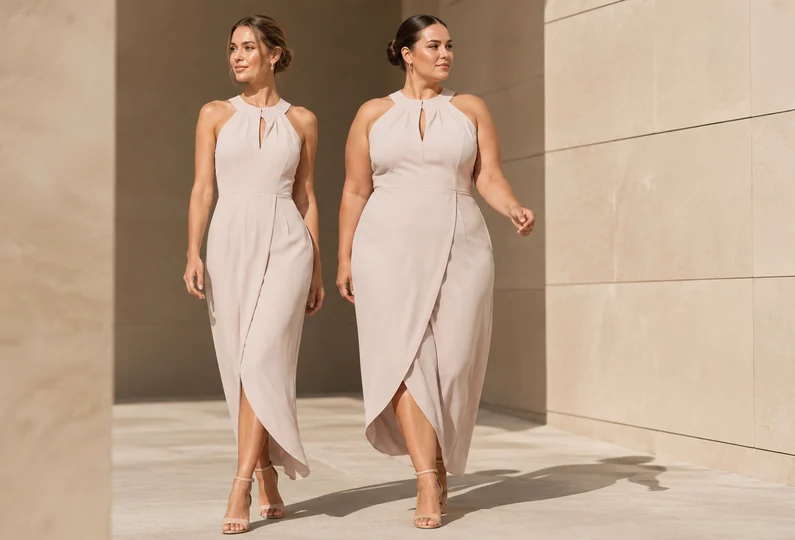
Body confidence: not everyone in the party will feel the same about the same length. Midi and floor-length are generally the most universally flattering because they don’t put leg length under the microscope the way mini does. If you’ve got a mixed group of heights and shapes, midi is the safest middle ground.
Weather on the day: check the average temperature for your date and region. A floor-length gown in a fabric like satin or crepe can get uncomfortably warm outdoors in summer, while a mini in a light chiffon offers zero coverage on a cool evening. This is where a robe or wrap for the getting-ready photos earns its keep too, have a look at the bridesmaid robes range if you’re planning a getting-ready shoot.
Movement requirements: will your bridesmaids be standing still for a formal ceremony, or dancing and helping carry things for twelve hours straight? Longer hems need to be hemmed correctly and hemlines checked in heels, not flats, before the big day.
Shoes: length and footwear are a package deal. Floor-length dresses are usually cut to a specific heel height, so if someone in the party wants to wear flats, the hem needs adjusting or it’ll drag and get dirty. Sort this out at the fitting stage, not the morning of.
Budget across the whole party: floor-length gowns generally use more fabric and cost slightly more to alter, so if you’re outfitting six or more bridesmaids, midi or mini can meaningfully cut the total spend without looking cheaper. Accessories add up too, browse accessories early so you’re not scrambling for jewellery or hair pieces the week before.
One thing we always tell brides: order swatches or, where possible, a sample dress before buying for the whole party. Screen colours lie, and length that looks right in a product photo can sit differently on a real body in a real room.
Tips from the Experts
Stylists and wedding planners tend to agree on a handful of rules that hold up no matter the trend cycle. First, match the formality of the dress length to your invitation wording, if the invite says “cocktail attire,” your bridesmaids should be in midi, not floor-length gowns that outdress the guests. Second, photograph a sample length in the actual ceremony location if you can, light and background change how a hemline reads far more than people expect.
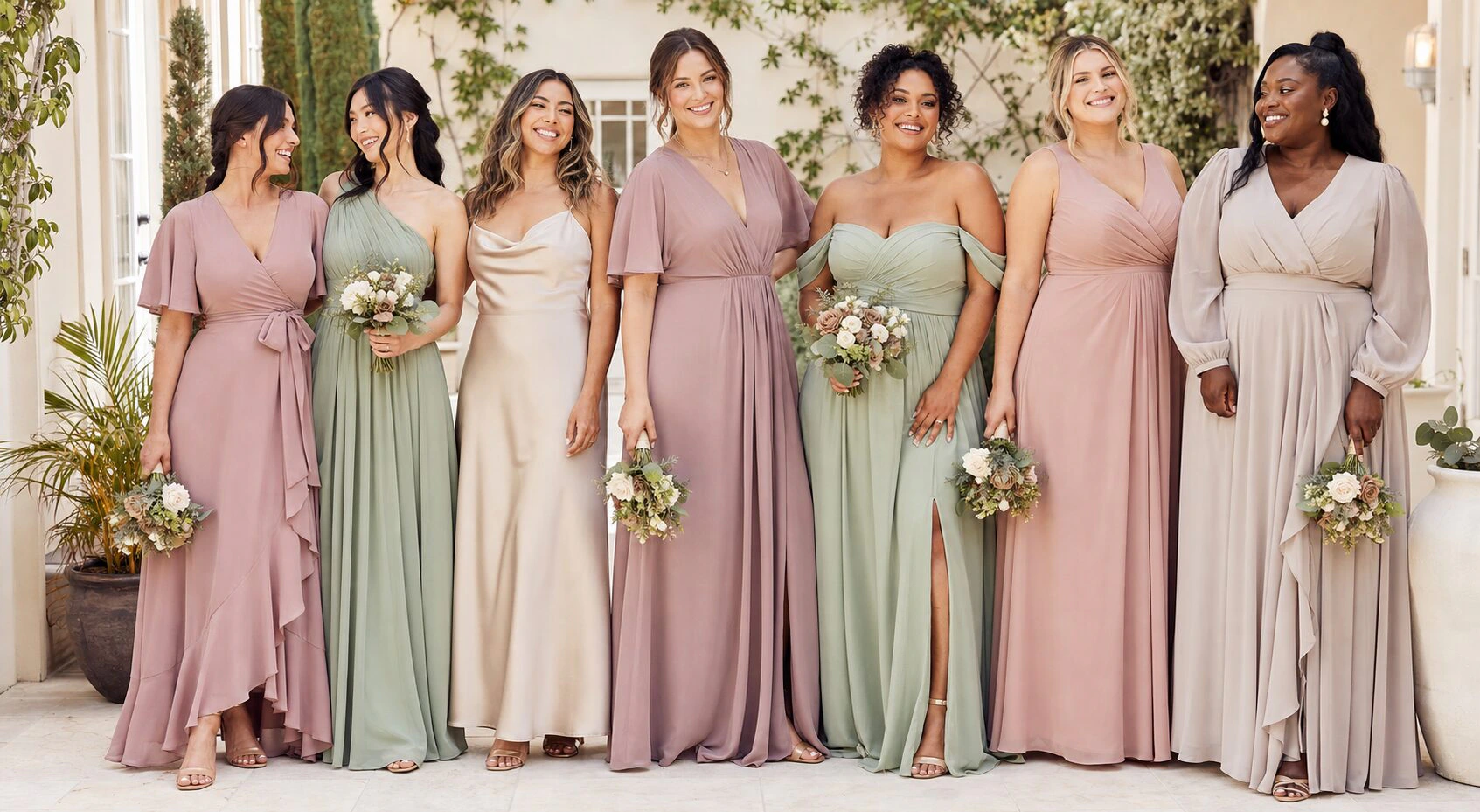
Bridal stylists also point out that mixing lengths across a party (some midi, some floor) has become a popular way to let bridesmaids choose what suits their body and comfort while keeping colour and fabric consistent. It’s a lower-stress compromise than forcing one length on everyone, particularly for parties spanning a big age or height range.
Finally, don’t forget the practical side of the night. If your reception runs late, comfort during the reception matters as much as how the dress photographs during the ceremony. Plenty of bridesmaids change into something easier for the dance floor, which is why bridesmaid pyjamas and loungewear have become such a common gift for the morning after, they’re not just for the getting-ready photos anymore.
Frequently Asked Questions
What is the best bridesmaid dress length?
There’s no single “best” length, it depends on your venue and formality. Floor-length suits ballrooms and evening weddings, while midi is the most versatile choice for outdoor, daytime, and garden weddings. If you’re unsure, midi is the safest middle ground because it works across almost every setting and body type.
How do I know which length is right for me?
Start with the wedding’s formality and location, then factor in season and how much movement your bridesmaids need during the day. If your bridal party spans different heights or body shapes, midi tends to be the most universally flattering option to build around.
What should I look for when buying?
Check the fabric weight against your wedding season, confirm the hem works with the heel height you’re planning, and order a sample or swatch before buying for the whole party. It’s also worth checking how the length reads against your actual venue, not just in product photos.
Are there budget-friendly length options?
Yes, midi and mini lengths generally use less fabric and cost less to alter than floor-length gowns, which adds up quickly across a larger bridal party. Shopping dedicated budget ranges is also a smart move if you’re dressing six or more bridesmaids on one shared budget.